All posts by Phoebe Sparrow Wagner

Artist, author, poet

Artwork and a Word about my Self-Portraits

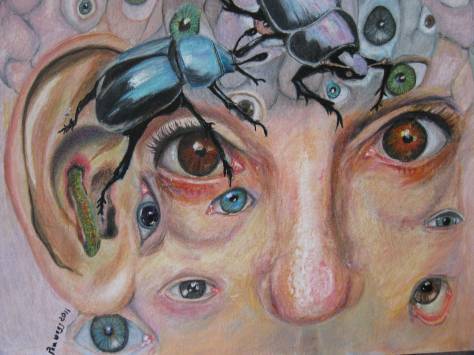
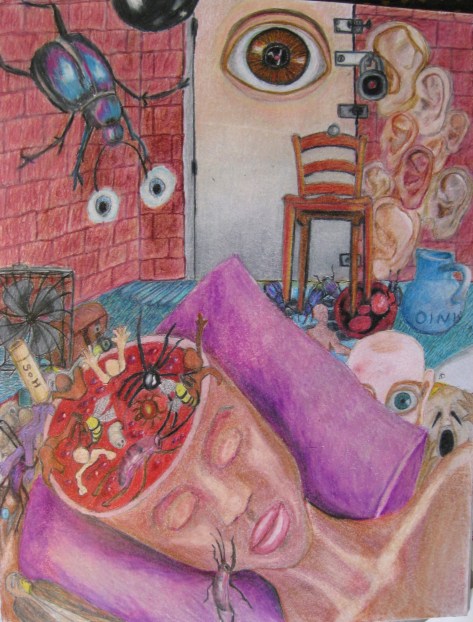
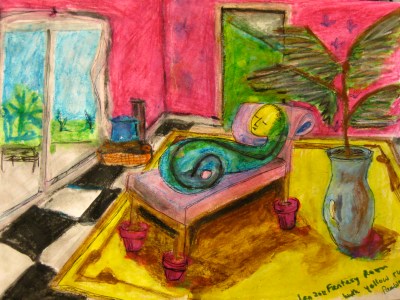
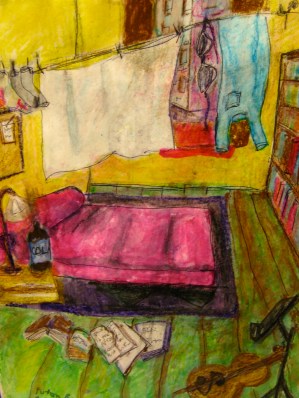
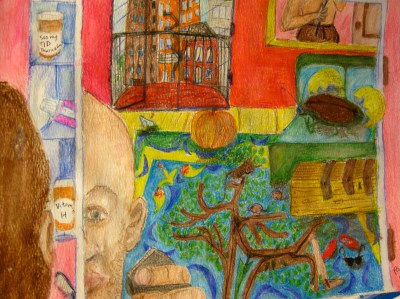
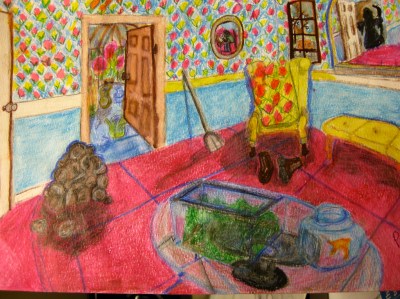
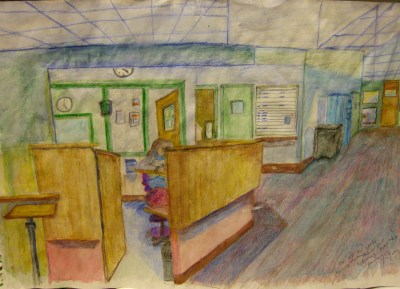
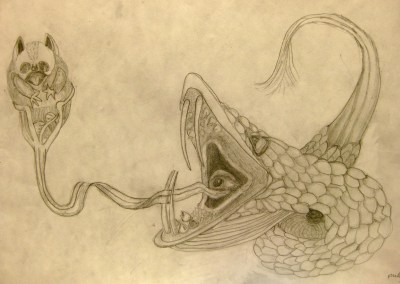
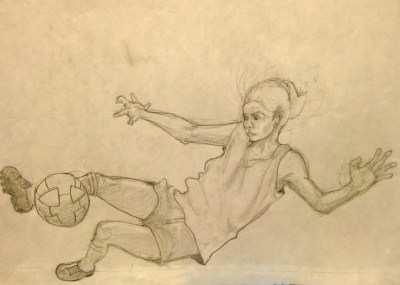
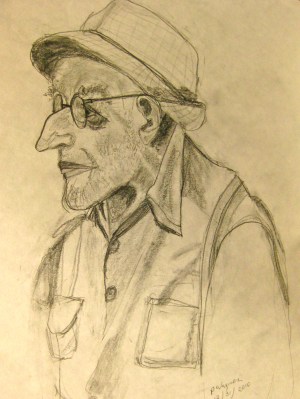
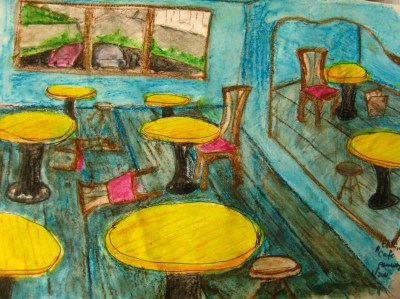
I wanted to write a bit about the artworks that I posted yesterday without any explanation. The first one was the only one I planned in any sense of the word, and even then I cannot say I really knew what I was going to do when I started it. My process in these drawings is to simply start with an image, say, in the first one, I started by drawing an eye, and then to see where my subconscious takes me. Once I have established enough  images  – just a few usually — that are coherently related to one another on the paper (or not) then I look to see what is in the “negative” spaces, which fill up with images too. You can see this most clearly in the middle  and third works.  I know how the pictures were made, since I drew them, but in looking at them objectively now, I can see that an observer might not see anything conspicuously “unintended.” And of course, what does “unintended” mean when it comes to the subconscious?


But in the picture I will post below, this “technique” if you will, predominates. (You either like it or you hate it) I hesitate to call it a technique because that sounds like something consciously adopted, where I feel it simply reflects an unconscious change, something that happened co-incidental with Joe’s final days and then took on a life of its own after the trauma of his death. But let me post the picture I am talking about, the one that I started on the very day they took him off the ventilator, and then I will continue.


Death comes in brilliant colors -- look more closely to see what is there.

All I can say about this is that a person here is cutting the cord that is connected to a heart and a pot and is not plugged in…and the person with the scissors is a little excited by this in a way that implies pleasure…I am saying no more, except to reiterate that I drew it, or started it the day Joe died or more accurately was killed.


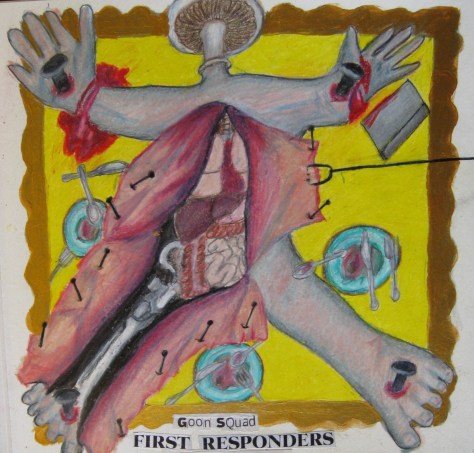
After that, I started doing more and more “honest” pictures, pictures where I did not try to please anyone, but was simply drawing and painting what I felt like. The next one after this one was the Beauty SLeeping with Bugs one, which was in the post yesterday. And then the self-portrait series, which began with the earlier Dead Meat one, Goon Squad: First Responders. In that notebook, I endeavor to draw only “self-portraits” though not likenesses. I am not sure what to call them, conceptual self-portraits perhaps? The second one is a very loosely drawn portrait of me as an animal, done in a different sketchy style (I haven’t photographed it or I would post it.) The third is Pam as Ornament, which I will post below, and once again I had nothing in mind when I started it, except the concept. The Santas came out of nowhere, esp the one that is only a head on a tray!


I guess I have nothing more to add for now.


I have been working on my memoir, which I have tentatively titled “BlackLight: a Memoir of Madness and One Woman’s Struggle for Recovery” — so far after only about 5 days work I have 27 pages done (more, really, just not organized and polished). Would be happy to hear any comments or suggestions for a better title (which I believe is a request I have made previously).


Thanks all.

New Art Works

"What's Bugging Me?"

Dreamscape — not the best photo — colored pencil drawing

Beauty Sleeping with Bugs

Natchaug Hospital Stay #2 and Update with Picture

Just wanted to update you on where I have been and how I am: I  spent 6 weeks at Natchaug Hospital in Willimantic, Connecticut this past July and August and though I was discharged as much improved, I  am still having a difficult time, both readjusting and well, simply having a hard time of it. Although in the hospital they did a little adjusting of meds, increasing both the Geodon and the Zoloft, I am not convinced that either one made much of a difference nor that it did less harm and more good on balance. In any event, Dr C and I (at my request) soon eliminated the 25mg increase in Zoloft, and are now dropping the 80mg increase in Geodon. She is concerned that the 240mg is making me very irritable and more upset and frantic rather than providing enough relief  to make it worthwhile. Yes, the voices are much improved, but that could be the passage of time and perhaps due to a general decrease in paranoia, who knows? All I can say is that I cannot take this general state of overwrought irascibility, a tendency to snap at anyone who “looks at me crosseyed,” as my mother used to say.

Natchaug Hospital remains a very good place, the best I know, and just as I remembered, not least because they have a philosophy of kindness and compassion towards patients. In fact, they are excellent because they have a philosophy and are not simply flying by the seat of their pants, hiring whoever comes along needing a job, burned out or not. Not only is their philosophy based on compassion and not on controlling the patient, but they see no point in rules for the sake of rules. It is clear that if there is something in the unit set-up that doesn’t serve a particular patient, the Natchaug staff will bend it as far as they can and try to accommodate each patient’s particular needs. As I was frequently told, why make someone miserable when you can make them happy? It is difficult to be happy in a psychiatric unit, and many patients are miserable because of their illnesses, but not once did I ever see a staff member add to that misery willfully and certainly not to mine. (I frankly could not say this of two Connecticut area hospitals, one in Manchester and the other in Middletown.)

One thing that makes many patients happy at Natchaug, by the way, is that caffeinated coffee is provided at breakfast, a rare blessing in in-patient psychiatric settings.  And since everything is served cafeteria style, so you can have all you want.

They used to provide hot decaf coffee on the unit itself, which was a treat. Because one very ill patient tossed a cup of coffee at a staff member, however, and she was injured, and because for some reason they decided that that patient could not be restricted individually from having hot coffee, now no one is permitted hot drinks on the unit at all. Yet, I suspect that even he would have not thought it unfair to be kept from the coffee pot! I know that in other hospitals I have had restrictions placed on me that others have not, and no one thought it wrong or unfair to me…Anyhow, I dunno what to think, but it was their policy, a misguided one, perhaps, but who am I to say? I know everyone went nuts for a while about having to drink lukewarm “swill.” Finally, though, the patients simply gave up on the “coffee” machine and did without. Anyhow, I have to admit that when I first saw the hot coffee machine, I couldn’t believe it, not because I was thrilled — though I was — but because I saw an “accident”or worse already in the making…

Note: one of the few hard and fast rules  at Natchaug is one they cannot change because they will lose accreditation: no smoking. Smoking is simply not allowed, not even on hospital grounds. While certain patients have tantrums about this and might cause an uproar from time to time in order to try to force the staff to allow them to use the courtyard to smoke “just one cigarette, just this once, please, I am absolutely desperate!” it is simply not possible. But people are allowed the patch and gum and every effort is made to help smokers quit. Even though some staff acknowledge that the policy is unfortunate, even unfair, nothing can be done about it.

I was not, however, comfortable for most of my stay there, and was paranoid a great deal of the time. Of course, I did not understand that the staff was aware of this, so when I began to come out of my delusions of persecution, it surprised me mightily to discover that they knew that paranoia was the reason for my hostility all along. Nevertheless, up to the very day I was discharged, I was hearing people talk about me up and down the hall and at the nurses’ station.

Well, that is all I am going to write for today because I am, as of  a week ago, in the middle of writing my new memoir, and as the days progress I plan to put parts of it up here, for comments and for suggestions. Feel free to do both!

I will finish here with one of my latest drawings, which represents how I felt when I was restrained at Middlesex Hospital, both the time I described in a recent blog post, and the other(s) (for which I have amnesia) when Josephine told me I was more or less “out of control”…to which I can only respond: Violence begets violence, and perhaps if they had not perpetrated on me what they did, things might not have gotten out of hand, But then, that hospital is one that is guided by the Control for Control’s Sake philosophy and the nurses were bitter and angry people…Needlesstosay, they hated me if only because I refused to roll over and play dead, if not die.

Forthwith the picture.

Pam as Dead Meat: Let's Eat!

Happiness is….

You know what they say, that happiness is not to be found in how much money you have or in the things you own or can buy, nor even in how many friends surround you or how many people love you. The poem about Richard Cory, upon which Simon and Garfunkel (remember them?) based a once well-known song, just about says it all:

RICHARD CORY

By Edwin Arlington Robinson

Whenever Richard Cory went down town,
We people on the pavement looked at him:
He was a gentleman from sole to crown,
Clean-favoured and imperially slim.

And he was always quietly arrayed,
And he was always human when he talked;
But still he fluttered pulses when he said,
“Good Morning!” and he glittered when he walked.

And he was rich, yes, richer than a king,
And admirably schooled in every grace:
In fine — we thought that he was everything
To make us wish that we were in his place.

So on we worked and waited for the light,
And went without the meat and cursed the bread,
And Richard Cory, one calm summer night,
Went home and put a bullet in his head.

We all know it’s true, both the cautionary tale of Richard Cory, and that money doesn’t buy happiness. At least we know it with the left sides of our brains. Alas, this is still the side that does the intellectual calculations of how many friends or about the nice car we’ll need to have before we will finally be happy. And if we didn’t know it before, all we have to do is listen to the news because nearly every week it seems there is yet another story about a celebrity who seemed to have it all – money, beauty, acclaim, adoring fans – who ended up destroying himself on drugs and alcohol or who committed suicide (“no one had any idea she was so depressed…”) at the height of her career.

But if money and things and friends who love you don’t offer a path to happiness, what does? Is there a map, a guide, an instruction manual, a recipe? One look at the number of books on the market purporting to teach you how to be happy tells me there are lots of people making lots of money trying to tell you they have the secret. And given the number of books they sell, an awful lot of people out there are desperate enough to spring for them. If you have bought any of these books and found their secrets to be The Secret, or even to be one effective secret that worked for you, I would love to hear about it. Truly, I am not being sarcastic. I am a writer, and I believe that writers are for the most part sincere. Not all of them, mind you, but most of them. And so when a writer writes a book promising happiness, I believe that he or she probably believes it. I just don’t happen to think most of  it ends up being effective.

But maybe it’s me, I dunno.

Let me explain. I have had many, many struggles with self-acceptance and self-regard over my lifetime (I am 58 years old at this writing, so you can see that I am far from young) and I assure you that I am far from winning the battle. My self-esteem is very low. So low in fact that I hesitate to say more… But at any rate, when I say my self, I mean my inner self, my soul, my – well, whatever it is that one might want to distinguish from the “self-that-produces,” the working self. What I mean is, I know that I write well, and I am learning to become a better artist as the days go on. But those skills have not fundamentally affected my self-esteem, only my level of confidence. And there’s a big difference between the two. I have a lot more confidence in my abilities than I did years ago, partly due to greater skill and long experience – though only in my writing — and partly due to caring less what others think, because there is less at stake at my age. My self-esteem on the other hand remains utterly unconnected to this, and largely unaffected by it. Whether or not I love or utterly despise myself has little or no bearing at all on whether or not I am able to write or paint or draw well. All it might do is affect what I write well or paint or draw about.

And I can be proud of my poem or essay or my drawing, proud of what I produced, without that having the least effect on how much I fundamentally love or hate myself.

But, and here is the thing: I do not believe that hating or loving yourself matters in the search for happiness. Or at any rate, it is not the sine qua non, the primary requirement before you can be happy. In fact, I think in the happiness department, self-regard is over-rated. It is not that I want other people to feel badly about themselves so much as that oddly enough     I think it has little to do with whether or not one can find happiness.

Maybe I should amend the word happiness to contentment. I do not like the first word all that much, as it smacks of little yellow smilie faces and balloons and other inanities. Happiness is decidedly not inane, but our emphasis on the importance of it has made it seem so. Contentment as a word and concept has been all but forgotten in the rush towards the seemingly bigger motherlode of happiness.

So let’s switch gears and say that we are on the search for contentment, which also is not found in money or friends or in being loved by others. So where do I think you can find contentment? (Clearly I write this with my own agenda in mind…why else write it at all?)

I think contentment – indeed, even happiness – does come from within, and it starts with forgiveness.

Forgiveness? Why that of all things, you ask? It seems like so many other emotions and “emotional acts” should be more important – like loving yourself and others and being compassionate etc. But I assure you that without forgiveness, you can have and be and do none of those.

Kindness and generosity were always supreme values to me, even when I was a child. It hurt me inside to see anyone going without something that I had it in my power to give them. But it was many years before I understood that forgiveness was also a crucial value, that it not only partakes of both compassion and generosity but presupposes both. Not only is forgiveness an act of kindness but it is freely given and therefore an act of extreme generosity. You cannot force forgiveness any more than you can force a “sincere apology” despite what our parents might have thought when they made us “say you are sorry and you better sound like you mean it.”

Okay, so forgiveness is critical for contentment, maybe, but forgive what or whom? And why? First of all, everyone is scarred by their pasts, everyone has baggage from childhood. In fact, while some people had more than less happy childhoods, everyone has bad memories that they cannot shake, that have stayed with them and in effect traumatized them.  Second, scars are simply an unavoidable fact of life. You can’t get through life without them, and childhood I’m afraid is a rough and tumble place where you pick up the bulk of them. Three, who “caused” our childhoods, for most of us? Answer: our parents, or whoever took the place of our parents. That is why our first job is to forgive them. I’m serious, and while we are at it, we have to forgive childhood itself, all of it. It doesn’t matter what happened, or how terrible, it really doesn’t. If you do not forgive it, if you do not forgive everything that happened to you, you cannot let your childhood go and get on with the present, which is where happiness, where contentment lies. Contentment is not in the past, that much we know, and no one knows a single thing about the future. But if you cannot forgive the past, and especially the childhood where you got all those scars you carry around now, you will never move beyond it to experience an undefiled present.

Look, I believe that forgiveness comes from inside the brain, but heals a place in the brain we like to call the heart. And I believe that forgiveness is more healing for the person who forgives than the forgiven. So I wish you could forgive all those people who harmed you too. All the people, relatives, friends, lovers, rapists, molesters, thiefs, betrayers and more…because I truly believe it would be good for you and for your heart. But I think it is essential at a minimum if you want to be happy to forgive your childhood, the entire experience of it, not the individuals or the single events, just the fact that you were a child and had to go through it. Once you can forgive it, you see, you can let it go just as it has and be gone.

After you have forgiven your parents or parent-stand-ins, and your childhood, you are well on your way. Many people would say that this is a step towards self-acceptance here, and that is how you reach happiness, but whether it is or not, is not important to me. In some ways, self-acceptance is not what I am after so much as acceptance of the world, both of the past and of the present. And when I say “acceptance” I mean such utter acceptance of it that you can forgive it. Because only when you can forgive, so I believe, can you really accept the world. And when you can accept and forgive the world both past and present, then you can be happy.

( I realize that I have put my poem below on this blog before, but clearly it belongs here, though it is for a second time. And dang, I do not understand why this program will not allow me to get it single spaced!)

TO FORGIVE IS…

to begin

and there is so much to forgive:

for one, your parents, one and two,

out of whose dim haphazard coupling

you sprang forth roaring, indignantly alive.

For this, whatever else followed,

innocent and guilty, forgive them.

If it is day, forgive the sun

its white radiance blinding the eye;

forgive also the moon for dragging the tides,

for her secrets, her half heart of darkness;

whatever the season, forgive it its various

assaults — floods, gales, storms

of ice — and forgive its changing;

for its vanishing act, stealing what you love

and what you hate, indifferent,

forgive time; and likewise forgive

its fickle consort, memory, which fades

the photographs of all you can’t remember;

forgive forgetting, which is chaste

and kinder than you know;

forgive your age and the age you were

when happiness was afire in your blood

and joy sang hymns in the trees;

forgive, too, those trees, which have died;

and forgive death for taking them,

inexorable as God; then forgive God

His terrible grandeur, His unspeakable

Name; forgive, too, the poor devil

for a celestial fall no worse than your own.

When you have forgiven whatever is of earth,

of sky, of water, whatever is named,

whatever remains nameless,

forgive, finally, your own sorry self,

clothed in temporary flesh,

the breath and blood of you

already dying.

Dying, forgiven, now you begin.

Recovery – What is it?

I recently wrote a post on my About Schizophrenia blog that addresses this question.


“Recovery, recovery, recovery, what a whale of a word. And by whale I mean a big whale, a white whale, a veritable Moby Dick of an obsession, only it is one that it seems no one is able to define in any quantifiable way. Not at least so that makes sense to me. “Recovery is a process.” You have heard that one, no doubt. I have used it in talks any number of times myself. Well and good, but so is digestion and so is having a heart attack, and in the first case you let it go on about its business in the background, whereas in the second, you definitely want to interrupt the process as soon as possible. So, okay, recovery is a process, as I blithely voice to my audiences, but what do I in fact mean by that?…”


You can read the entire post here:

http://aboutschizophrenia.blogspot.com/2011/05/recovery-recovery-recovery.html

A Death of a Friend from ALS

Joe C

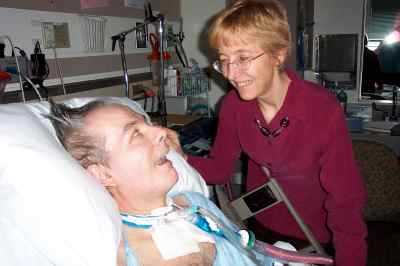
My longtime dear friend, Joe Cornelio, died at the end of April, after living with, and I mean, living with, ALS (Lou Gehrig’s disease) for five years. Although he spent the last four of those years in a chronic care hospital on a ventilator and virtually helpless, he never once gave up on life or stopped loving it. He was a miracle of a man and even at the end I believe he would have continued to fight to live, even if all he could do was move one eyeball to say yes or no. It is entirely possible that he would have wanted to live even without that ability, but we will never know.

It is difficult for me to write about the day he died, or about how it came to pass that he was removed from his ventilator, but if you will bear with me, it may do some good (for me at any rate) to put the pieces together and get it onto paper.

I believe that Joe was misdiagnosed for many many years with schizophrenia, when in fact he had had Asperger’s from childhood. Now, that’s a long story in itself and though I could make a case for it, I cannot prove it. But I am not the only one who knew him well to notice that he never once exhibited signs of psychosis or even real delusions or true paranoia. Furthermore, from what I gather, the only reason the diagnosis came about or  “took” was because he was put on Trilafon by a well-known psychiatric incompetent who was later “defrocked” and when Joe looked the drug up in the PDR and read what it was used for, he concluded that that meant he must have schizophrenia. From then on, so his story was, he told subsequent doctors this diagnosis, and apparently they simply took it on faith. In fact, for all the years thereafter until his terminal illness of ALS, the one doctor he saw not only never questioned this, but also never even reconsidered his absurd concomitant Dx as bipolar, even though Joe clearly had one of the most placid temperament possible and certainly wasn’t the slightest bit moody. No one so far as I know ever even considered that there might be something else going on. Even when I once went with him to see his non-medical therapist, did she really seem even to want to think about the possibility, as if it might be too much trouble…Perhaps, though I cannot recall, it was too late, if in fact this was after Joe’s ALS diagnosis.

But as I said, that is a long story, and not being a doctor, I suppose I can’t make the diagnosis, except that as his closest friend, I do and I feel that a great injustice was done. Not only was he saddled with a serious psychiatric diagnosis, and a stigmatizing one at that, but that particular neuroleptic medication rendered him much too tired to work as an engineer. All his adult life that was what he really wanted to do. Work. But the drug sapped his stamina…Worst of all, although eventually on Zyprexa which helped what might have been poor social skills due to Asperger’s, after he had been on it for years it caused the diabetes that ultimately cost him his life.

Speaking of engineering, all the years I knew him, Joe thought, breathed and ate engineering in one fashion or another. It is not that he was an automaton or a bore so much as that he applied engineering thinking to every problem that came up in life, even to our quarrels. Or better to put it, to my various emotional upsets. Whenever I got in some sort of “state” his approach was always to remain calm and to break things down into little pieces and to try figure out, or to help me figure out what was wrong and (just like a man) how to fix things. The beauty of this approach was that it so often worked! He never fed the fires, and he never took things personally, which was pure magic. Sure, he could be irritating for the same reasons, since when he was the source of my irritation, he rarely responded and he never listened to anything I had to say, unless someone in authority said the same thing, and then they got the credit. This hurt my feeligns time and time again, for I felt that he never took me seriously, and discounted everything I said as being worthless for my lack of degreed expertise. However, I came to accept that and by the end it was just a joke between us. I would find him a real expert to tell him what I already knew, just so he would believe it.

Anyhow, for all his faults, and even the dead are not blameless, he managed his last illness with amazing gracefulness and not a word of complaint. The day before he was hospitalized with the pneumonia that put him permanently on a ventilator, he saw a new doctor, who actually gave him a clean bill of health, so to speak, and said his lungs were clear! Joe came away from that hour and a half appointment not saying a word, even though he could not breathe well, and had been to see him because of it. The doctor must be right, no? After all, he was a doctor. (So much for medical degrees and expertise…) It was only later that evening when he went into a breathing crisis that Karen drove him to the ER where they found him suffering from aspiration pnsumonia, a common result of ALS when the throat muscles are too weak to prevent saliva and food and liquid from entering the lungs. He was immediately taken to the ICU and spent  3 months there, first with the aspiration pneumonia that almost killed him, and then, just as he was being weaned off the ventilator, with 2 more cases of hospital acquired bacterial pneumonia, which made it impossible.

After that, it was four years in the Hospital for Special Care in New Britain, where the care was indeed special. They were wonderful to him there, and I believe he would never have survived as long as he did without them. But in the end, Zyprexa had caused diabetes, which he did not even know he had until the ICU tested his blood sugar, and it was uncontrollable even during the years at the HFSC. During the final year the tissue around his  tracheostomy started breaking down and would not heal, which is not unusual in diabetic skin wounds. Eventually the hole that held the tube grew so large that the air began leaking so much that he was not getting enough oxygen without the pressure beign increased dangerously, and during his last week, his lungs began to bleed, probably as a result. He went in and out of consciousness, according to whether or not he had had a transfusion.

Amazingly enough, though, one of the last times I saw him completely alert, conscious and able to communicate, he told me by moving his eyes and indicating letters on a letter board ( he had lost the ability to control his computer, which for years had spoken what he spelled with the gaze of his eyes) that he was “still chugging along.” When I asked him if his life was still worth it, and if he was still happy with it, he answered without hesitating, YES.

He knew he was dying, but he begged me to make sure no one killed him,  that no one just pulled the plug on him or let him die through neglect. I promised him that, and asked his cousin, who was in charge of funds to hire an aide, just for someone to sit with him during hours when the hospital might be short staffed. This man, Ben, turned out to be an angel in disguise, apparently, though I met him only on the final day.

Why the final day even came as it did I will never know, I suppose. I still do not understand the rush, when the very day before from all reports Joe had been quite conscious alert and seemingly content. All I know is that I got a call the next morning that he was going to be taken off the ventilator that afternoon. I asked first if he was unconscious, and was told, um, yes…but it didn’t sound convincing. Then I asked if this was his wish. The response was that it had been pre-arranged back when he had first become ill.

I wanted to say more, but I was up against two strong men, his cousin and the doctor. And under the pressure of the moment, I forgot that I had any rights in the matter, if I did still. I forgot that at least in Joe’s living will I had been designated at one of the medical representatives, and that the cousin was supposed to consult with me before making any end of life decisions for Joe, and then only if Joe were in a persistent vegetative state or completely and permanently unable to communicate. But so far as I could tell, neither of those conditions were true, had not been true up until now and could not be shown to be true within the space of one day. Yet the announcement was so sudden and so abrupt and definite, that I had no chance to say, Wait a minute, what is the rush?! I simply stammered that I would be there asap. I now wish to god I had stood up for Joe. I know he was conscious when I got there, I know that he could have communicated with me and probably have indicated whether or not he wanted this done. But I didn’t dare ask him, or even bring it up, lest they kill him anyway and my letting him know in advance only increase his terror…Would they have done it expressly against his will? I had no idea! I was terrified that indeed they would have. I didn’t know what to do… I had brought in music for Joe to listen to, because I thought that he was unconscious, but he didn’t seem so to me and though he couldn’t respond, he did seem to see me. And even his cousin talked to him with the same apparent understanding.

But it was all grotesque, because I knew what we all did, and were dancing around not saying, which was that Joe was going to die within the next ten minutes. NO one even said a word. (I admit that I did, privately, indicate to Joe when all were out of the room, that I would be there all of the afternoon, for as long as he needed me, but I didn’t tell him exactly why. Well yes, I did say that the plans he had agreed to at the start of his illness– I cannot recall what I in fact said, but I let him know as gently as I could what was going on. Was I cruel, unintentionally? Well, get this: The doctor who was going to pull the plug came in and in front of Joe, as if he could not hear him, told us all what was going to happen, how he would make Joe unconscious with morphine and then turn off the ventilator, and related  each stage that Joe would go through as he died…He told us this blow by blow right in front of Joe, right as I am sitting there at Joe’s side. But when I asked him to speak directly to Joe, he said, “No, not in Joe’s frame of mind, that wouldn’t be helpful.”

HUH????? What was that supposed to mean?

I will probably be asking that for a long time. Why did he not act like the compassionate physician he was supposed to be? Where was any shred of compassion? For god’s sake, if he was “helping Joe not suffer” where the hell was his empathy for his mental suffering? Did he think that just killing him was not going to cause suffering? I mean, what the hell?

Well, I cannot go further with the details, except to say that I left after Joe was essentially no longer Joe, once he was in a coma. All through his illness, Joe had never seemed any different to me, had never looked or become anyone any different from my old friend. But  at the moment I looked up from his hand as I stroked it, I realized that he was gone (though technically alive) and that Joe was not there. I bolted then and there, realizing that I wanted not to see anything more.

Joe is gone now, and I had a really hard time for several weeks. The funeral was held very quickly an hour away in his home town, so few of his friends who had stuck by him could go, if any. However, a few weeks later, we had a memorial service for him in the hospital, a service I personally found somewhat hurtful, but that is another long story. In any event, I wrote two poems for him, which I read for it. Only one can I print here, as I hope to publish the other before I put it in my third book.

DESIDERATA

for Joe Cornelio

When you die,

let there be lightness in your limbs, so they can rise

to lift you from your bed.

May there be clarity in your speech

so your tongue can once more speak the names

of those you love. Let those syllables wash

your tired face. Take up your hands, reach for mine.

You can wipe your eyes now.

Let your smile widen and shine as it can.

When the perigee moon rises above the water

let it pour gold through the trees,

let the fish leap in the blue ripples of evening

and the frogs that are left sleep in the cool mud.

Wherever you are, may you remember

both the friends who stayed and the friends

who scared, for all of us loved you,

blankets to your chin, and let that warm you.

And should the light fail at the end of the tunnel,

remember: only when it’s dark

can you see the stars.

Latuda: brief personal review

Due to a personal tragedy, I have been off line for a long time. Please go to my other blog to read this review, just written tonight.  I will be back here soon.

http://aboutschizophrenia.blogspot.com/search/label/Latuda

Thanks all,

Pam

Two new artworks

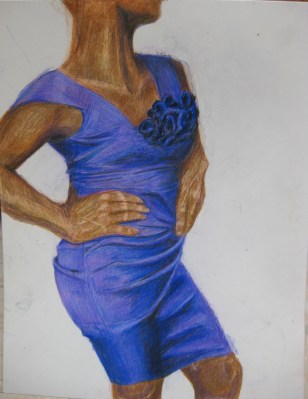
Female Torso, posing in tight dress

I took an image off the internet and substantially changed it (enough so that I made it my own, according to those in the know). I wanted to see how to draw folds in fabric, especially how it draped around the human body. It also interested me to continue to study the hand, and I enjoyed drawing these. Josephine told me they were too big. One person said they made the woman look like a man, even a drag queen, but my response to that was, well, it only adds a nice bit of ambiguity, which is fine by me! In fact I prefer that to the clarity of the following piece, much as I know that my brother will love it, and that is is “better” than the drawing that preceded it in this blog (see the entry below).

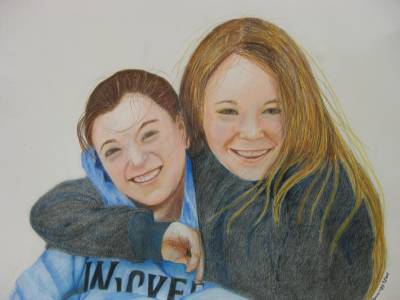
Claire, older sis and Adriane, the younger, best of friends

Both of these drawing are done entirely in colored pencils. I used a colorless blender sometimes, but mostly used either white or a lighter color on top of the other colors in order to “smooth” out certain surfaces, and on others, like the black fleecy top that Adriane wears, I used only the technique of drawing tiny circles in black on top of indigo blue, to imitate the texture of nubbly fleece.

BTW, I still see some flaws, which I aim to fix before sending it on to my brother, but I won’t masochistically point them out this time…Why flagellate myself if no one else will necessarily be stunned into unconsciousness by them?

I want to write about Joe, but it has been very upsetting, so I am trying to draw a dream I had about him a couple of nights ago…If I am successful, I will post it here. Or I will write about it in time.