From my art blog
Walls, walls, and walls…
When people think of Robert Frost and quote his poem “Mending Wall” they use this in support of fence making: “Good fences make good neighbors…” but rarely have they read the poem all the way through. Here is the heart, I believe, of this poem , at least insofar as it pertains to physical walls:
Before I built a wall I’d ask to know
What I was walling in or walling out,
And to whom I was like to give offence.
Something there is that doesn’t love a wall,
That wants it down.”
You can read the poem in its entirety, here
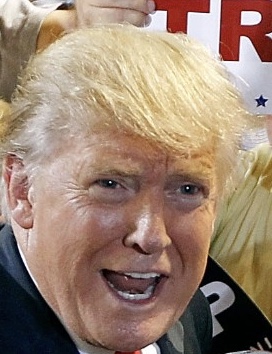
OH DONNIE BOY…(Scary!)
(Sung to the tune of Danny Boy)
Oh Donny boy, republicans are gawking
Your racist house of cards won’t long abide
The Dems are here and Michael Cohen’s talking.
If it’s all true, impeachment’s justified:
The loans you got, the tax bills you evaded
The conning schemes and hushed-up bribes you paid,
Your wall, your wall, which Mexico won’t subsidize
Its clear that you won’t get that Nobel prize…
But we won’t care or listen to your keening
We won’t weep moats for loss of your golf greens
We’ll celebrate by speaking truth to trumpery
We’ll speak it loud, from sea to shining sea.
So slink you back, in orange jumpsuit, cowering,
Mike, Paul and Rog will go to jail unbowed
It’s not fake news we’ve caught you with your panties down
Oh Donny boy, oh Donny boy, who’s winning now?
by phoebe sparrow wagner 3/2019
Le renard, or The Fox (Work in progress now finished)
See new art on my other website. Le renard or the fox, from Le Petit Prince.


i just read or re read ”the little prince” in French Le Petit Prince, and was inspired by the story to paint this fox. I am still working on it, (see below for update of featured Image) as the paws need attention but here it is so far…
Finished drawing with white tipped tail…still making changes as white tip may be too long
See my Art Blog…arteveryday365.com
Omg, This Guy is a Genius! (and I’m Half in Love with Him)
I would LOVE to do what this man is doing. 12 minutes. Please watch!
This song — for Lynnie —should need “nothing added”
This Song was Playing When My Brother Called to Tell me Lynnie had Died…
I will never not cry when I hear it…
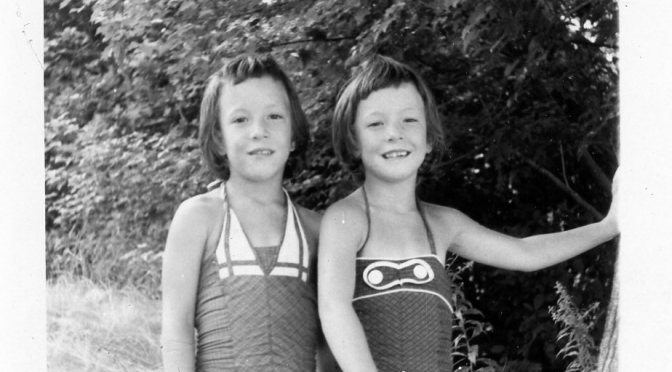
Carolyn Spiro Silvestri MD was my twin sister…how I miss her!
The night before my sister, my identical twin sister died, I had an extremely vivid dream about her, rare for its vividness as much as for the fact that I do not remember when I last dreamed about her.
The dream was as follows: I was in a mute state and unable apparently to function as the world would have wanted me to, and I remember Lynnie was there, but not talking to me but to some functionary who wanted her to sign some papers for me essentially taking over my care and becoming in charge of my life. The word dementia was thrown about, and I remember thinking that even if I screamed I could not get it across to her or to anyone that I was NOT in the midst of dementia, but simply caught in some state that made it impossible for me to communicate with them. Much happened that struck me even then as unnecessary because I knew I was conscious but simply did not know how to bridge the gulf to Lynnie and the other person that I was still in there…some time later, I discovered that soya products had been missing from my diet and that once these elements of plant bas3d life were replaced I would be able to come out of my state of apparent suspended animation and live again. Instead, it seemed that no one believed me, or could even hear me say, I’m fine, I’m here, I just had a soya deficiency which is now replenished. I don’t need a Lynnie to take charge or be my conservator.
I woke, Not from a sweat drenched nightmare, but nevertheless feeling uneasy and struck by the first two facts, that I had dreamed extremely vividly, remembered the dream, and that Lynnie played a huge role…I did not think too much about this the rest of the day, until Chip called with news that Lynnie had died, suddenly and unexpectedly, that afternoon. Then I remembered the dream, and how strange it was that she had appeared to me so concretely and vividly just the night before. Was she telling me something?
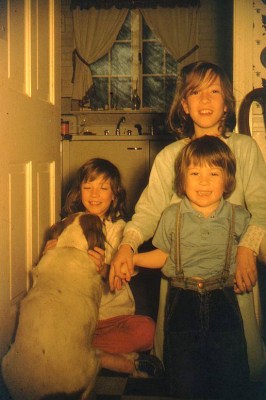
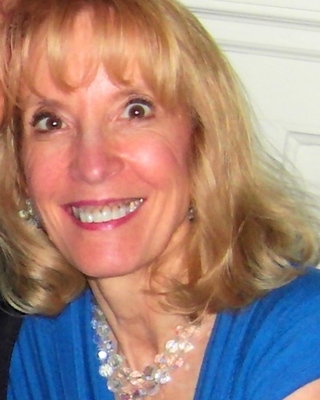
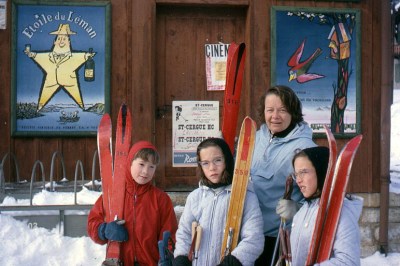
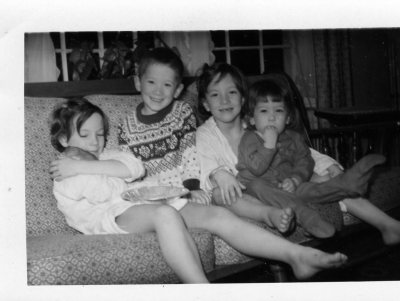
Click on each picture below to see title, if caption missing.
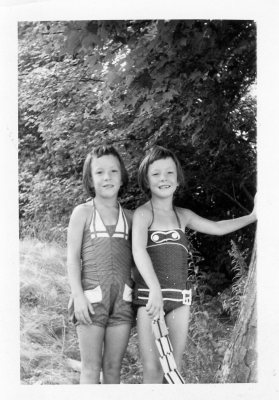
(mostly photos from our childhood. )




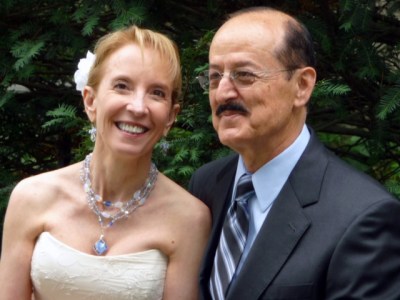
Carolyn Spiro Silvestri on her wedding day

I’ll see you again…
Memorial Photograph of Carolyn Spiro MD, my Twin Sister

Carolyn Spiro, MD, May she R.I.P.
My twin sister Carolyn, known to me as lynnie, died last night, suddenly and unexpectedly …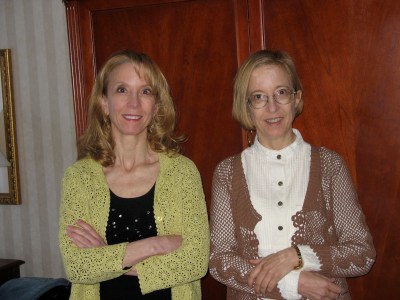
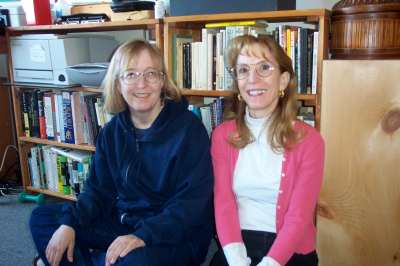
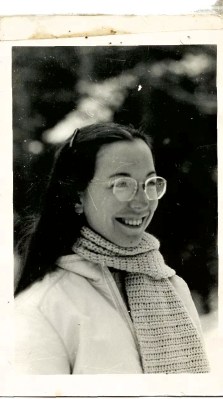 Poor lynnie… May she Rest In Peace.
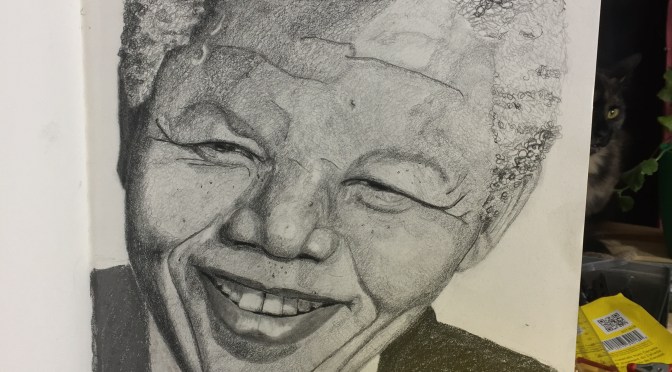
Portrait of Nelson Mandela
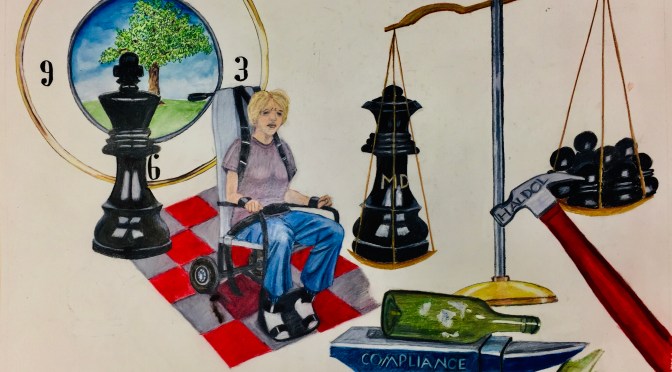
Restraint Chair Art, Work-in-Progress

OTC hearing aids and lower prices-soon!
this is the fact sheet that I obtained from senator Elizabeth Warren,s website.
The Over-the-Counter Hearing Aid Act of 2017
Approximately 30 million Americans experience age-related hearing loss, including over half of adults between the ages 70-79.1 Yet only a small share of Americans with hearing loss – around 14 percent – use assistive hearing technologies, primarily because they cannot afford to buy costly hearing aids.2 Hearing aids are not covered by Medicare or most private insurance plans, and out-of-pocket costs for a single hearing aid average $2,400 – far out of reach for many consumers.3 As a result, individuals living in poverty are substantially less likely to have access to hearing aids than those with higher incomes.4
Complex hearing aid regulations exacerbate this problem by restricting the availability of hearing aids. In 1977, the FDA imposed a set of special regulations on hearing aids, including a requirement that individuals obtain a medical evaluation or sign a waiver of that evaluation before being allowed to purchase or use a hearing aid. After an extensive review, the National Academies of Sciences, Engineering, and Medicine found “no evidence that the required medical evaluation or waiver of that evaluation provides any clinically meaningful benefit” and recommended “removing this regulation to serve consumers’ best interests.”5
Both the National Academies and the President’s Council of Advisors on Science and Technology (PCAST) have also recommended making some types of hearing aids available over the counter – similar to the way in which basic reading glasses are available without a prescription. PCAST’s analysis of the hearing aid market concluded that “consumers find it difficult to shop for the best value.”6 Hearing aids are typically sold “bundled” with fees charged for evaluation, follow-up, and adjustments to the device, even though many consumers never use these services.7 Allowing hearing aids to be sold over the counter will expand consumer choice, open the market to innovative hearing technologies, and drive down prices so that millions more Americans can access affordable hearing aids.
The Over-the-Counter Hearing Aid Act of 2017
The Over-the-Counter Hearing Aid Act of 2017 implements recommendations from PCAST and the National Academies to help the millions of Americans affected by hearing impairment. The Act:
• Makes certain types of hearing aids – those intended to be used by adults to compensate for perceived mild to moderate hearing impairment – available over the counter.
• Removes an unnecessary and burdensome requirement that consumers obtain a medical evaluation or sign a waiver of that examination in order to obtain an OTC hearing aid.
• Requires the FDA to issue regulations containing safety and labeling requirements for this new category of OTC hearing aids.
• Maintains existing safety, labeling, and manufacturing protections and applies them to OTC devices in order to ensure that OTC hearing aids are held to the same high standards as other medical devices.
• Requires the FDA to update its draft guidance on Personal Sound Amplification Products (PSAPs), consumer electronics products that may use similar technology to hearing aids, but are intended for use by individuals with normal hearing.
————————-
1 Frank R. Lin, John K. Niparko, and Luigi Ferrucci. 2011. “Hearing Loss Prevalence in the United States,” Archives of Internal Medicine 171: 1851-1853 (online at: http://www.ncbi.nlm.nih.gov/pmc/articles/PMC3564588/).
2 National Academies of Sciences, Engineering, and Medicine. 2016. Hearing Health Care for Adults: Priorities for Improving Access and Affordability. Washington, DC: The National Academies Press (online at: http://www.nationalacademies.org/hmd/Reports/2016/Hearing-Health-Care-for-Adults.aspx), p. 183.
3 President’s Council of Advisors on Science and Technology, Aging America and Hearing Loss: Imperative of Improved Hearing Technologies (October 2015) (online at: https://www.whitehouse.gov/sites/default/files/microsites/ostp/PCAST/pcast_hearing_tech_letterreport_final.pdf), p. 1. National Academies of Sciences, Engineering, and Medicine. 2016. Hearing Health Care for Adults: Priorities for Improving Access and Affordability. Washington, DC: The National Academies Press (online at: http://www.nationalacademies.org/hmd/Reports/2016/Hearing-Health-Care-for-Adults.aspx), p. 21-22. Sergei Kochkin. 2007. “MarkeTrak VII: Obstacles to Adult Non-User Adoption of Hearing Aids,” The Hearing Journal 60: 24-50 (online at: http://www.betterhearing.org/sites/default/files/hearingpedia- resources/MarkeTrak%20VII%20Obstacles%20to%20adult%20non- user%20adoption%20of%20hearing%20aids.pdf). Karl E. Strom. 2014. “HR 2013 Hearing Aid Dispenser Survey: Dispensing in the Age of Internet and Big Box Retailers,” The Hearing Review 21 (4): 22-28 (online at: http://www.hearingreview.com/2014/04/hr-2013-hearing-aid-dispenser-survey-dispensing-age-internet-big-box- retailers-comparison-present-past-key-business-indicators-dispensing-offices/).
4 Kathleen E. Bainbridge and Virginia Ramachandran. 2014. “Hearing Aid Use among Older United States Adults: The National Health and Nutrition Examination Survey, 2005-2006 and 2009-2010,” Ear and Hearing 35: 289-294. 5 National Academies of Sciences, Engineering, and Medicine. 2016. Hearing Health Care for Adults: Priorities for Improving Access and Affordability. Washington, DC: The National Academies Press (online at: http://www.nationalacademies.org/hmd/Reports/2016/Hearing-Health-Care-for-Adults.aspx), p. 120-121.
6 President’s Council of Advisors on Science and Technology, Aging America and Hearing Loss: Imperative of Improved Hearing Technologies (October 2015) (online at: https://www.whitehouse.gov/sites/default/files/microsites/ostp/PCAST/pcast_hearing_tech_letterreport_final.pdf), p. 3.
7 Karl E. Strom. 2014. “HR 2013 Hearing Aid Dispenser Survey: Dispensing in the Age of Internet and Big Box Retailers,” The Hearing Review 21 (4): 22-28 (online at: http://www.hearingreview.com/2014/04/hr-2013-hearing- aid-dispenser-survey-dispensing-age-internet-big-box-retailers-comparison-present-past-key-business-indicators- dispensing-offices/). National Academies of Sciences, Engineering, and Medicine. 2016. Hearing Health Care for Adults: Priorities for Improving Access and Affordability. Washington, DC: The National Academies Press (online at: http://www.nationalacademies.org/hmd/Reports/2016/Hearing-Health-Care-for-Adults.aspx), p. 242-243, 258- 259. Consumer Reports, “How to Buy a Hearing Aid” (July 2009) (online at: http://www.consumerreports.org/cro/magazine-archive/july-2009/health/hearing-aids/how-to-buy-a-hearing- aid/hearing-aids-how-to-buy-a-hearing-aid.htm).

No comment necessary… this is VERMONT 2019
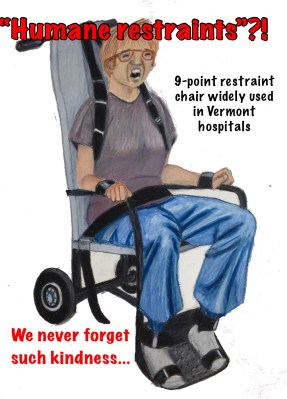
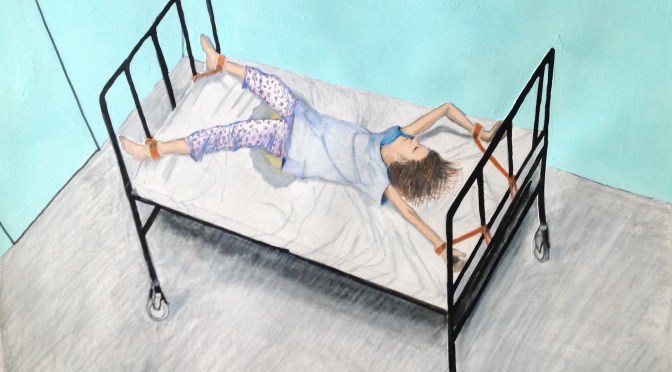
See my art at Jim Gottstein’s psychrights Everyday Horrors site
Award-Winning Short Story — 1 page — and art
THE DRESS
by Phoebe Sparrow Wagner (formerly Pamela Spiro Wagner)
I will never forget The Dress. Worn only once, with three quarter-length sleeves cuffed in white, and a demure white collar, it had two layers of navy blue crepe skirting, with a dropped waist and a sash. This was the first “dressy” dress I ever picked out all on my own.
The first thing about The Dress was that it was not the pale pink tent that I had worn to my first mixer with Sheffield Academy, which I was convinced scared away my freckled red-haired date, not that I minded much, once I saw him dance. The second thing about The Dress was the look in the eyes of the boy at the Gunnery, where my second mixer was held. This boy was matched with me strictly by height. I don’t know why, but something clicked with us, and the first thing he said to me, to my huge relief, was, “I hate dancing, don’t you? Let’s take a walk.” With that, we linked arms and spent the evening strolling arm in arm around his campus.
To say that nothing happened would seem almost hilarious these days, except that nothing did, besides our shared and passionate discussion of Plato and the books we’d read and other schoolish stuff. By the time the bells rang to call everyone back to the buses, I knew, because after all, I was a teenage girl who had read books, what might happen. I also knew, because I was an avid fan of the advice columnist Ann Landers, that no self-respecting young girl allowed a kiss on her first date. We had been walking arms around each other’s waist all evening; I liked him, it was equally clear that he liked me. It was inevitable what would happen next. But I was a good girl. What to do?
I tried to say good-bye, smiling sadly and keeping the distance that would protect me. My adoring young man nevertheless leaned in to kiss me. Turning my cheek, I rebuffed him. I did not mean to hurt his feelings, but I knew that Ann Landers was watching me and would be happy my virginity was safe. As I climbed onto the bus with a heavy heart, I looked back and waved but my date was nowhere to be seen. I took my seat, feelings mixed about whether the rebuff had truly been a success.
Then someone behind me spoke. “Good for you, Pammy, not kissing the black boy!”
What? I looked at her. My classmate was smiling grimly. “You didn’t kiss that -–“ and she used the terrible word I had never heard anyone say to my face.
In that moment, I knew that if I could have, I would have raced off the bus and grabbed that young man and kissed him full on the lips, and to hell with Ann Landers and her crappy advice.
But it was too late to change anything. Too late to let him know why I had not kissed him, too late to kiss him in spite of my classmates and too late to spite Ann Landers and my proper upbringing. Too late, too late, too late. I never wore that dress again.
—————————-
This short account, all too true, won first place at Vermont’s Counterpoint’s annual writing contest in 2015. You can see it and the other first place winner at
Click to access Counterpoint_Summer_2015.pdf
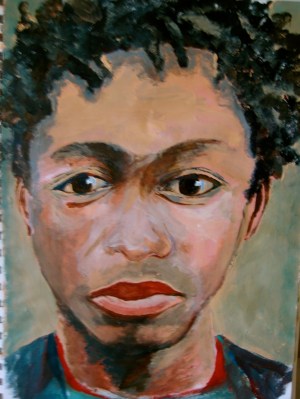
Below is my very first painting done in about 2009 or 2010 when I was first starting to do art. I called it First Love, and now you know why.