I did these and many more at Natchaug Hospital. The portraits are in pencil, but the most colorful — interiors, which I have never done before — were done with Crayola watercolor pencils, a medium I have never used.
A dragon with a, hmmm, long tongue and eye in its mouth…
Girl, Playing Soccer
Most of these images, but not all, were taken, or copied from photos in National Geographic. Once in a while — the dragon for instance — I “made them up.”
Man in plaid hatInterior #1: Cafe with Yellow Tables, Window and Mirror
The above was the first interior I ever tried to do. It is a bit crude, and not all of it made it into the photograph, but hey! Anyhow, I am not sure how many photos I can put into a wordpress post, so I will stop here and do a third entry above. If you have not read about my Natchaug Hospital stay, it is in the post below, which I wrote tonight as well.
I’m much too tired and drained to write right now, but I wanted to post this first study of my next painting, which will be titled, well, as the post is, The Ogre that Ate Manhattan. For those of you who have read this blog for a while, you will understand that I refer to myself. The study posted here is very different from what I envision will be the finished version, but I was just practicing ogres and buildings etc. The medium, by the way, is colored pencil, except for the blue background, which is acrylic.
This is how the final version of the unfinished sketch that I posted below finally turned out. I managed to print out the photo of the sketch using a photosmart inkjet printer and watercolor paper, spray that with fixative so the ink wouldn’t smudge under erasures, then draw on top of it as if it were indeed my original sketch. In such a fashion, I was able to re-complete it “better” as it were than the original “wrecked” version. And indeed, I believe it is a great deal better than the version as shown below, for all that it is a complicated combination of photographic print-out of the original sketch, combined with an overlaid color pencil drawing. The strange thing is that in the end, because of the rather poor quality of the original sketch-photograph, the background came out this dull, slightly green color (due to the lighting, not the paper it was on, which was actually white. Nevertheless, it turned out to be a perfect background for the finished drawing, and so I did nothing in the end but finish the portrait against that greenish background.
A technique I am learning/teaching myself is one I thought I would never understand, let alone be able to do and that is how to do a kind of underpainting of whites or light colors, the highlights, before adding the darker tones. I do not know, of course, if one is actually supposed to do that with colored pencils, but I did so anyway, figuring it might be time to try it. So given the original sketch to work with, I then heavily applied light peach and white tones where you can now see the lighter areas on the face, and only much later softened them with the darker chestnut browns and darker umbers, though clearly much peach shows through where the light is meant to strike the face on the left.
A “real artist” would know how to do this beforehand, I expect, but I had to learn as I went, so it was all a process of delightful discovery, which is why I hope you will forgive me the foregoing description. It always amazes me to find out how many colors there really are in what seems to be a solid colored expanse, when you really look at it. I used blues and greens in Sophronsie’s skin tones as well as the peach-tones and whites. There are also some yellows and reds. And in some places I even used a silver pencil. It took me a while before I could even understand that the whites of the eyes are not white at all, not even slightly blue all over, but all sorts of colors, and that only if you painted them in a kind of pale multi-color would they begin to seem realistic. What is also interesting is that comparing the “white” skin on the child that I did in the earlier picture, or any of the other “white” portraits compared to the African American portraits, there is really not a great deal of difference in the colors I used. In fact, I start out with the very same peach and white for both skin colors, and only towards the end does this change, when I add darker tones for the darker skin, but it really only takes a little, and then not a great deal. This is so striking because it seems to say, in some profound way, that when you really look at all of us, “under the skin” (which skin people take for being so different) we really are all the same. Of course in every real sense we are the same, despite our differences as individual human beings: genetically this is true, and philosophically, and morally and spiritually and in every other sense that matters, at least to me. We are all human and of the same “stuff” and nothing else matters. Nothing.
__________________________________
(There are not supposed to be any gaps in the following poem but for some reason it doesn’t cut and paste as it should and so it appears with the spaces…ignore them..)
HOW CAN YOU EVEN THINK SUCH A THING?
There’s no excuse for it, I know, there’s none at all, but reading
about the death of the famous poet’s poet wife from cancer,
so cachectic and etiolated her limbs are thinner than a Giacometti
I find myself disgustingly hungry and envious, both.
It is not that I want to die, not even slowly, not even
an after-the-fact-romantic death recalled for years
by other poets. No, I like life, I even like living.
But I want this house, yes, I want this small empty apartment
filled with food rich and fattening as truffles, dark, creamy truffles
made of French chocolate and wrapped in tissue-thin edible gold
so expensive it’s a mortal sin to eat even one as long
as Africa starves and cholera saps the strength of flood victims
in Pakistan. Except that leaving them to melt and flow molten
on the August windowsill feeds no one while I, longing,
linger over my dish of celery and one small onion, lusting
to taste a life I can never enjoy, to taste a lust not for chocolate
exactly, but for the life that rich chocolate represents,
appetite throwing wide its arms and crying, Yes, yes, yes!
I hope I am not encroaching on Sr Jo-Ann Iannotti’s copyright, by sharing this photo, but if I am I trust she will let me know. In any event, this is one of hers and it is everywhere at Wisdom House. I believe it is a beautiful example (if that is the proper word for it) of the spirit of Wisdom House. Of course, the physical labyrinth, is stunning by itself, but somehow this photo captures the experience of walking it and the process of meditating and “being there” in a way that mere words describing likely could not. Surely, if nothing else, this photo alone is a wonderful way to “advertise” Wisdom House, if it ever needed such a thing. If you can, visit http://www.wisdomhouse.org and look at the virtual tour photo gallery. That way, you will get a good idea of what the place looks like, and perhaps get something of the flavor of people’s first impression. I know that even the first time I came here, despite my misery concerning all that silence, I knew it was a special place…
Jo-Ann says she has no idea who the woman in the labyrinth center is, that it was a fortuitous shot and nothing more. Frankly, though, I suspect getting the photo took more than mere luck, even just to have been there to capture it! It exquisitely represents both the spirituality of this place as well as peace and peacefulness.
Clearly, you can tell where I am: at Wisdom House again, having a good time this time. I only wish I did not have to depart tomorrow.Even though I spend most of my time alone, the mere presence of other people, laughing and talking and obviously having a great time, buoys my own spirits and makes me laugh aloud myself. I think it is great that they are laughing so uproariously, and it is great to see everyone with their doors wide open, people, women my age, sitting on each other’s beds, gabbing like college girls. The lovely thing too, about Wisdom House in general is the absolute faith in people’s basic trustworthiness: NO one has a key to their rooms, and no one seems to feel worried about anyone entering or stealing a thing. I frequently leave my computer and writing equipment right out in the open on the sun porch, without the least qualm, feeling secure in the knowledge that everything will be just as I left it when I return. Indeed, the sense of trust that I know Jo-Ann has in people is infectious, and I somehow know that everyone who comes here is trustworthy at least for as long as they are here, even if they might not be all the time when they are not.
Now, I may be naive, but I too have been known to be overly trusting, and I think that is a better option than not trusting people. At the same time, though, I can be extremely paranoid as you know, and I do mean “at the same time…” I suppose that is difficult to comprehend: I will simultaneously give away whatever I can, if I feel I own too much and yet also feel as if people are secretly stealing from me, taking things I need out from under me, without even asking or telling me, which makes me angry, because I am already generous, and never ask for a single thing in return, but I’m sorry and feel bad to admit it, but somethings I am not ready to simply have things taken from me without my say so! I feel guilty about this, though, as if I am so attached to material things that I cannot part with something that someone else needs more than I do (for why else would someone resort to stealing it???). Why do I need to be so attached to anything, that is, to any mere object? It will never save your life or your soul!
I am drifting though…forgive me.
One great thing about this weekend here is that despite my having slept till noon today (after spending several days before last night with very little sleep, and even last night beginning to fear for my brain and my sanity due to sleeplessness as I was up till 4am involuntarily) I have pretty much gotten the book organized and put together. Now, that means only that I have made the organizational decisions, which is the major part of the problem. But I needs must (!) still go through the actual computer manuscript and change it, to make it conform to these editorial decisions. Not extremely difficult, just time consuming. At the same time, certain poems need editing and some rewriting/fixing. This I enjoy, the perfecting of the lines I don’t feel are quite right yet, but it takes time and energy. (I even have a two relatively new poems to add!) Alas, I will not be able to come up here to take the time for myself to do nothing else. Too bad, as it has been very convenient and much more than that. It has been, well, useful in the sense that I have been productive “to the max,” able to say NO to email and phone calls, not even walking with Diane L or doing laundry or cleaning or shopping, just writing all day. I suppose taking my usual 2 miles walk would be a good thing, but for just a weekend here, I would rather not…And although I brought art supplies just in case, I haven’t even taken out my sketch book, that is how good the writing, and the editing, have been going!
—————————————————————————-
Speaking of the labyrinth at Wisdom House as I did at the top of the post, let me segue into a few words about paranoia: I have not walked the labyrinth, nor even approached it. The closest I have come is to sit at the top of the stairs looking down at it relatively from afar. The very idea of “doing it” makes me feel both rather shy and then scared to do so. I am in fact scare that God might strike me down, should I have such temerity as to try it. I am also squeamish, not sure I could relax and not feel paranoid, not feel so much on display that I could not concentrate or let myself be “unaware of being observed” — whether I am in fact under observation or not.
That of course is the essence of paranoia: it matters not a fig whether something is really happening, it matters not another fig if someone’s really after you or really against you: if you feel it, if your amygdala is working overtime to generate that feeling, the intense feeling of fear that it is meant to generate, well, that’s it. That is how you are going to feel. And “the feeling is primary.” That’s what Dr O told me time and time again. You feel the fear first, and primarily, and then the story or reason for feeling it attaches to it. But if the fear gets entrenched or doesn’t go away, the story,, that is, the brain’s explanation for the feelings of fear only gets more entrenched, because how else can you deal with fear? It is extremely difficult to feel fear unmitigated without somehow understanding it as coming from somewhere, or being stimulated by something, having a cause or reason. The brain always wants to make sense of things, and it does this whether one “wants to” or not.
So even though I am aware of what paranoia is, I have never been able to control my thoughts when it is happening. It is only after the fact that I can, now, sometimes, look back on a difficult situation and with a clearer head understand how I might in fact have been paranoid in my behavior due to my fear- induced understanding of what was going on. It is very very difficult to override such feelings, esp on such a fundamental level.
I wish I could write more now, but I’d better to get back to my writing before I have to get back to sleep. As it is, it is 1:50 A.M. and we — Ann W drove here with me — the other fellowship person — have to drive home tomorrow around noon. I wish dearly it were not so, but there you have it. For now, I will leave you with a poem that will go into the manuscript of my second book of poems, which I call at least for now (several people have been enthusiastic about the title, except my father), LEARNING TO SEE IN THREE DIMENSIONS. I share it with you now, because while still unpublished, I do not think I will seek publication for it elsewhere, separately…The first one, for my old (and former, but possibly dead now) friend Roland, was previously published, but in a much different version. I apologize if the lines come out with large spaces between them, but the cut and pasting function never seems to allow single spaces… OR stanzas for that matter, as this poem was originally broken up inot five different stanzas but now appears to be in only one long one… The second poem is about Joe, and describes my own encounter with fear of botulism, which has similar symptoms to ALS — so I feared — and my nostalgia for his voice, which I will never hear again, except on his answering machine, and on one or two micro-cassette tapes we made some years ago…
FOR A FRIEND SUCCUMBING TO AIDS, 1980s
For Roland
This could be your whole life,
thumbing a ride to wherever the cars are going,
the casual, tossed out hellos and good-byes
that turn around the axle of your quick life —
that far, just that far, and then you will stay,
forcing a stranger’s town into the shape of home.
Yet you’ve lived a dozen lives — in the Keys
with the one you finally loved, in western Portugal,
Nova Scotia. Last year, already marked, you spent
the winter in your bed,which just fit in a backyard shed
in Vernon, Connecticut. And there was a life
to accommodate each place, its sweetness and pain.
When we met, you taught me the local architecture,
the difference between Georgian and Greek Revival,
and you thanked me for the poems you gave me.
Then you called late one night, drunk enough to over-
dose. Thoughtlessly, I rescued you, a dying man…
You never forgave nor spoke to me again.
Now once in a while a car slows, pondering
your beard, your emaciation, the known and unknown
risks, sees you finally, and explodes away from the shoulder
where you stand, all its doors locked simultaneously
against those Kaposi’s inflorescences that stain
your dying…Roland, Roland, don’t you know
we all die in shame and alone? We die, perhaps,
not far from home, or perhaps, like you, wandering,
Yes, I am going to visit Wisdom House again, this coming Friday and stay the weekend…
But I haven’t even told you about the first time there, so forthwith I will make up that lapse.
I had no difficulty driving up to Litchfield from the Hartford area, despite my usual tendency towards sleepiness,. This was largely I think because I left home at 8:30 a.m, an hour after waking, and got there by 9:30, well before my 11 a.m. sleepy hour when I ought never to be on the road (unless well medicated, and armed with a strong cup of coffee to boot). Barely had I gotten my suitcase out of the car and was deciding which door to roll it towards, when I heard a voice call, Hello, and saw an arm wave over the hedge.
Sr Jo-Ann is, well, I do not want to say cherubic, because that isn’ the word I want. If I use it, it would only be in reference to her size, and her positive demeanor. Very cheerful, so far as I could tell she was never without a kind smile for everyone. As for her size, well, I am not quite 5’3″ but in comparison to this tiny, tiny Dominican sister, I felt like a giantess! I do not often tower over people, but in Jo-Ann’s case, that wasn’t hard to do. 8D
Be that as it may, we went by elevator to the third floor of what used to be the convent (?) I suppose you would call it, of the Daughters of Wisdom community, first built in the 1940s as a residence and then later with a college added on to it. I must have “lucked out” because it turned out that I had been assigned a room with a private bath; it seemed that the room had once housed a mother superior or at least a fully professed and senior nun/sister, as opposed to a novice, postulant etc. Now, the dormitories have all been refurbished and turned into single or double rooms as well, so none of the accommodations are anything but just as comfortable, but some do share bath. I had assured them I had no objections whatsoever to doing so. But as it turned out, it didn’t seem that there were many people housed very close to one another, so that shared bathrooms or no, it would have posed a problem either way.
Mother Superior’s room or not, it was just perfect for me, and really nice. I dunno what I was expecting, a room perhaps like what I’d gotten when I found myself at that horrible YMCA in New York City (back in the early 1990s when I was so ill and on my way “to Orlando” — a long story) which was almost literally a cell, just a closet of a room, with a cot, a sink and a hard wooden chair, and that was it. The bed had a stinking blanket and ripped sheets and the walls were dirty and stained as well. The window looked down on a grit-filled air shaft…SO when I saw this room, with a window looking out onto the woods and grass, and a full bed with a nice bedspread, a desk and chair and a small arm chair, I frankly was in love with it immediately. Plain, yes, but exactly my “cup of tea”.
The first words I said to Jo-Ann were “Oh, how lovely,” and I hope she knows I meant it. Sure, having done some public speaking in various places now, I know that a few hotels, like the Hilton, can be “fancier”, but in terms of where I have been most comfortable, Wisdom House beats them all. The hotels are always too cold, and too, I dunno, cold in every sense of the word, I guess…
But there is more to talk about that just the bedroom, and it is getting late so let me move on. We went for a tour of the building then, and I was astonished at how many little nooks and crannies there seemed to be for a person to hole up in and write or be alone. Now that may have been an illusion of sorts, because I was overwhelmed and it was all new to me. But it seemed that every other room that Sr Jo-Ann pointed out to me was another one she said could be used for quiet times or writing or reading. I was also very pleased by the fact that there were several places where coffee and tea was available literally 24 hours a day.
I had come a day later than others, though, so the quietness of the silent retreat was in full force. This did not prevent Jo-Ann from talking to me, not at all, though we did speak in low voices so as not to disturb the retreatants. But I came to understand that a silent retreat did not mean no one was allowed to talk, only that silence was to be respected and honored as much as possible, or at least that quiet was. But at meals, the spiritual directors usually sat in the talking dining room as did I and Joanne the other writer and Jo-Ann as well.
The first day went all right, as I recall. At least, I had lunch and sort of enjoyed meeting the sisters who were “running” the retreat, in the sense that they were acting as the spiritual directors, and it was interesting to listen to them talk. I had never had any opportunity to be in the presence of “religious” before so it was simply an experience to observe them. And hear what they talked about. But at the same time, for some reason, I felt I had to make sure that Joanne was not left out, because she was younger than I, and I always feel responsible for people. So I would ask her about herself and what she was writing and where she came from etc. And I dunno, all this socializing was tiring to me, and I was glad at least when she left to go upstairs, so I could just sit and listen to the sisters. Until I realized that they were just being polite and waiting for me to get up so they could too! At that, I immediately stood and took my plate to the kitchen, apologizing for keeping them. Which of course, they denied, but what else could they do?
The next day, well, I can barely recall Monday, in truth, except that it was harder to stay sociable and not feel ugly, not feel that I was contaminating and upsetting everyone. At one point, I even left the table abruptly, and clearly upset, not because they had done anything to me or to upset ME, but because I felt I had upset or oppressed them, obtruded in on them, and had to betake mysefl elsewhere so they would have some breathing room. That was when I began to feel I could not stand it any longer. Already the silence had begun to take its toll. I had less trouble at night, because I enjoy the nighttime quiet. But it was during the day, when people were around, but ignoring me, and I suppose ignoring everyone else as well, that it was difficult (the retreatants each had a meeting every day to speak to their spriritual advisors, but I had no one at all to talk with…which was a big problem) Finally, on Tuesday late afternoon, I had had enough, or at least I was crumbling, and called Josephine in tears. I didn’t call for any reason in particular except to hear someone’s voice and talk. But when she heard me she said, “Why are you staying if you are so upset? You don’t need to prove anything to anyone. If you do not like beiing there, just come home, they do not care, and no one wants you to be miserable there. Just come home!”
You know, ordinarily, I would not have listened to her. I would have felt that there was indeed something to prove, that I did have to stay and make myself do what I did not want to do, to “prove to myself” if to no one else, that I could force myself to do what I did not want to do…i.e. punish myself, discipline myself, stick it out, despite my discomfort and misery…all the old sadistic childhood lessons. and because I think if it feels bad, if it is hard for me, it is probably GOOD for me, rather than just simply something I do not enjoy…
For some reason, though, this time I heard Josephine, I heard the sense she made when she said that NO ONE CAREs if I proved anything…No one wanted me to prove anything and I was NOT in fact proving anything to anyone by staying. She was right. She was absolutely right. All I was proving that I could make myself miserable yet again. “Go ahead, pack the car and call me when you are leaving,” she said, and I finally answered, “Okay, you are right, I am on my way. I’ll call you when I am in the car.”
Luckily, I thought, everyone was at afternoon mass for the first half-hour of my packing up and carrying things to the car. It was only during the final trip to the parking lot, when I carried my pillow and sweater out, that anyone saw me. I kept my eyes averted and my head down, pretending nothing was wrong. Why make eye contact now, when it was too late? But I did catch a glimpse of Joanne, the writer, sneaking her dinner on a plate and bringing it upstairs to her room. I wondered whether she was too busy writing to eat in the dining room, or if perhaps she was as miserable as I was…
Finally I was ready to drive off. Just as I was about to call Josephine to tell her I was on my way, I thought about Sr Jo-Ann and decided I really ought to tell her I was leaving. I knew in my heart that she would not try to make me stay and would not reproach me for leaving, but I was embarrassed for her to see that I was quitting, frankly. And I didn’t want to be a burden on her. That was what stopped me from trying to find her in the first place. I called her this time though.
“Pam, is that you? Would you mind if I came out to the parking lot to say good-bye?” Jo-ann asked.
“No, not at all.”
I stood up outside the car so she could find me, and by the time she approached me, I was in tears all over again. I am afraid I cannot now remember why, except that partly what upset me so, aside from the sheer loneliness and isolation, was that being there with all the sisters and the religious aspects of the place, had brought up a lot of memories and old feelings in me. Maybe some not so old feelings as well. I had been reading Thomas Merton, or trying to, and yet the very fiirst pages of his journal, Entering the Silence, about his “becoming a writer and a monk” were so terribly disturbing and even destructive to me that I could not bear reading any further.
I spoke to Jo-Ann about all this, and about Joe as well, and about our small argument and my big reaction to it, my exhaustion and inability to decide how to have a life in the light of his Lou Gehrigs disease and whether I had a right to one at all…Well, needless to say, if she hadn’t been enormously supportive and wonderful, I would not have made it clear that I would love to come back there for a “second chance” this weekend. No silent retreat this time, either. This time the N.E. Choristers and singing will fill the rafters. Which should be jolly to the max. I look forward to it, but if for any reason I can’t stand it again, (which I surely hope will not be the case) I now know that I can seek out Jo-Ann, one, and, two, that it is perfectly okay to say, Enough is enough, and go home.
Most recent drawing: a portrait (from photo) of Josephine’s niece, done as a thank you to her brother, Megan’s father, who helped me out removing and moving in a recliner chair this spring. Nothing particularly “artistic” about it, just a simple likeness…
Unfortunately, while I loved this stage of the drawing, as I progressed I fear I ruined it…Or at any rate, it changed so drastically that I don’t know what to do with it, or where to go with it now. So I am putting what I have aside, since I no longer have this, to work on some other time. I wish I had taken a better photo of it at this stage, though. Anyhow, for what it is worth. Here she is, as she was…
Elder with Flaming City in Mouth
Then this is the more updated drawing as it got “over-processed.” Actually, what happened was that the watercolor paper did in fact start to wear out under my many erasures, or at any rate the color, the pigment grew so thick that when I erased it piled up under the eraser so that I had to keep erasing more and more of the drawing each time in order simply to erase one spot, because I’d otherwise leave behind chunks of unsightly “solid waste” of clumpy pigment. Eventually I couldn’t even draw on the paper any longer, it had become so mushy under that burden of erasure and redrawings, and so I decided to finally be done with it and decided quickly to do what the erasing suddenly brought to mind: an upside down city-scape, somewhat surreal, floating in the person’s mouth, and on fire…Do not ask me why! It is simply because that is what I “saw” in the patterns left behind by the unerased and uneraseable lines and colors on the paper…
TO tell the truth, I am trying to figure out how to either redo or “fix it” into something that I can work with further, can figure out what to do with as is, or how to cover up without making it look “collaged together, since that was not the effect I started out looking for. I’m eager for suggestions if anyone has any!
And yes, I came back from Wisdom House yesterday, after 2 and a half days instead of 7…I was rather upset there, though the place was lovely and I thought that if the circumstances had been a little bit different I could have loved it…but I will write more tomorrow or today in the P.M. For now, I just wanted to let you know…
I have decided, with Sr Jo-Ann’s help, to arrive at the Writer’s Fellowship on Sunday morning, rather than Saturday evening, so that she can meet me, rather than have me face a crowd of fifty (silent) people alone. It was in fact her idea, but she offered to take me individually on a tour, and show me where to go and so forth, introduce me, which she thought she would have more time for on Sunday morning than on Saturday when everyone else was arriving. This also was a relief for the simple fact that I am so frantic with things I have to get done that it helps to know I have all of Saturday simply to relax and if I haven’t done so before, to pack. It isn’t as if I am bringing a great deal, not many clothes or “stuff”– after all, I am mainly going there to write. But that in itself entails bringing such things as my computer, a printer and a ream of paper at a minimum, and I want to bring a small hot pot and cup and coffee as well, since I cannot rely simply on sheer excitement to keep me awake, no more than I ever can. Not even Ritalin, which as you may know I have taken for decades to combat the nearly constant and excessive daytime sleepiness of narcolepsy, really keeps me alert. In fact, often coffee does a better job…On the other hand, I intend to take Zyprexa every day I am there too, which is sedating. This is just so that I know I will be able to read and stay as unafraid of things as possible. Once I get home, I’ll stop taking it, but why not keep on top of things as long as I am there?
I have written several poems in just the last week, but alas, I am unable to share them here. I have learned that many contests and publications do not allow the appearance on the web of poems you want to submit to them or enter there, or else they will be disqualified. Thus I can only post ones that I am certain I will not try to publish or else that have already appeared in my book or previously in another journal, review or magazine. I wish that were not so, as I am thrilled with some of these poems. I also wish that I had not been so quick to enter a few of them into a certain contest, as with a little more rewriting, say, the 110th version rather than the 100th, I might have felt even better about them. Ah well, too late for recriminations. If a given poem is not accepted where I sent it, there are a thousand other venues that might take it when I submit it again.
Enough for now, it is already late and I needs must (how’s that for an archaic expression?) get to work finishing up the dishes and printing out poems. I will need at least 60 for my second book and I have to have copies I can work on at Wisdom House. There are a dozen other things to do before I go to bed tonight…zo I will bid you adieu, au revoir…
I hope I can post something from Wisdom House next week, but if not, I will do so when I get back. Hasta la vista!
I don’t want to tell you why i drew this or what I meant or intended by it (beyond whatever the title evokes in you). All I want to say is that it was largely drawn in colored pencil on watercolor paper, with a tiny bit of acrylic paints, the black background for instance, and the ecru skin of the blue-haired figure, but not the skin on the other other woman, where all the details as well as the skin itself was done with pencils. It is amazing how forgiving watercolor paper is – usually it is imposssible to erase plain old colored pencils, if they are not watercolor pencils. But on the watercolor paper, you can erase as long and as hard as you like, and the paper will remain intact. So it is not so difficult to get the marks off.
Welp, If you feel like commenting, I would love to hear any interpretations you would like to share. If you give me permission, I will also put them up here with the picture.
To all whose websites I had linked to, I had to take them down because my email was hacked, but I will post them again soon. The email problem is completely resolved now.
First I will paste in what I wrote back in 2006 about Delusions of Grandeur, henceforth reduced to the easy-to-understand shorthand, DoG. (Sorry, all you dog-lovers out there!) Then I will elaborate and/or explain where I differ in my thinking now.
From July 2006, then (with a few edits for easier reading):
Delusions of Grandeur
Where do they come from? Mine were usually of a negative grandeur as you know. I was the devil, the most evil person in the world, I needed to kill myself or burn myself to a crisp in order to save the world from my poison. I even went so far as to set my leg on fire, prelude to setting myself on fire in order to do this, and burned marks on my forehead to prove I was Cain, so people would be warned and stay away…as a result I have had ECT, been restrained, isolated, locked up for months and all the other humiliating things they do to people they think might seriously hurt themselves or others. And obviously I might have, and did. But whence came this sort of thought? And why do others believe they are God or Jesus Christ or as one person I met claimed, the song-writer who provided John Lennon with his music. Their delusions may seem more positive than mine, yet I know they suffered much as I did, probably because they too went unbelieved and scoffed-at. Where does this kind of false belief, clung to in the face of so much evidence to the contrary, come from?
I’m not completely sure but DoG seem, both in their positive and negative incarnations, to derive from a terrible feeling that you lack self-worth in the world, your secret knowledge — if you have SZ or another devastating mental illness, that it has robbed you of everything you were supposed to have, be and do, that you are entirely useless and empty and without value in life. The illness itself produces this feeling, and the feeling is secondarily strengthened as a result of having the illness. People who develop DoG respond to their feelings of worthlessness with the conscious or unconscious fantasy of a powerful false-self to make up for the lack of real power — to do, to be, to create in life. Others, like me, accept our lack of value, only we exaggerate it until it becomes the dominant factor in our lives and colors everything, so that we cannot but refer everything to it and see all through its lens. We become convinced that if everything in our lives is contaminated by our worthlessness, maybe everything in the entire world is contaminated as well.
I don’t understand the transition from feelings of worthlessness to actual belief in false and grandiose facts, the transition to delusion. But I believe the connection is there, from lack of any sense of self-esteem transitioning somehow to delusions of grandeur. And that either positive or negative delusions all derive from a negative feeling, a lack of positive self-regard. I don’t think anyone who truly feels good about him or herself would ever suffer in such a way…
I must have gotten tired near the end there, as it feels to me as if I simply gave up midway, and relinquished my train of thought, and my pen, so to speak, before I’d even tried to finish. Be that as it may, on rereading the piece, my first impression, the first thing that struck me and struck me with a punch was my use of the past tense when I was describing my own experiences with DoG. This seems to me, even now, as stranger than strange. Does it mean that there was actually a time, and relatively recent to boot, when I did not believe myself to be the devil, not feel that I was evil, did not secretly want, though in a controllable way (controllable in the sense that I will not do it, so fearful am I that it would eventuate in another terror-filled hospital stay…) to destroy myself via the flames? So it seems, but if so, I have as assuredly forgotten how that felt, how such thinking was as an experience, as I have the entire 6 weeks I spent in the hospital this past April and May. Which is to say, “utterly and completely.”
What I can say now, is that it is much harder to write about DoG at any distance, or with any real so-called insight into myself (despite reading my own words) because the feelings of evil and worthlessness I wrote about in the past tense then are so strong now, in the 2010 present. I won’t, at this time, ask (rhetorically) What happened? That is for another essay. But I will admit that for me to continue with this discussion I will have to refer to what I have observed about others and their DoG, rather than any I may or may not experience myself.
Zo! Here are basic definitions, lest you have forgotten them. For my nutshells, I quote the online Free Dictionary (thefreedictionary.com).
Delusion: an idiosyncratic false belief that is firmly maintained in spite of incontrovertible and obvious proof or evidence to the contrary.
Delusion of Grandeur or Grandiose delusion: delusional conviction of one’s own importance, power, or knowledge or that one is, or has a special relationship with, a deity or a famous person.
delusion of persecution a delusion that one is being attacked, harassed, persecuted, cheated, or conspired against.
delusion of reference a delusional conviction that ordinary events, objects, or behaviors of others have particular and unusual meanings specifically for oneself.
Now, thinking about the problem I had when I first wrote about DoG, take that fellow I met, the putative song-writer of all John Lennon’s songs. He was not a happy guy. He gave not the slightest appearance of being thrilled that his songs were so popular and that Lennon had chosen them out of all the offerings he could have picked to sing and record. He claimed that he had given them freely, and wanted neither fame nor fortune, as I recall. But what troubled him, it seemed to me, what that “we,” the — I dunno what you would call “us” — ordinary people, not the rich and famous, not the celebrities with whom Lennon would have hobnobbed, but the (where did I get this word?) lumpen-prole. Actually, I think it was rather much smaller than that, even. I think what troubled him was that other patients and staff members in the hospital (at that particular time) didn’t care, appreciate, value or even believe his great contribution to the musical world. Nevertheless, despite the use of very controversial ECT (shock treatments — which were rarely used in schizophrenia, and even today are not used often for SZ) his delusion persisted throughout his stay, and by the time I was ready for discharge after 2 months, he was being transferred to a longer stay facility.
Needless to say, whether a delusion of grandeur is “positive”, which is to say that the power one arrogates to oneself is “good” –one is God or Michelangelo or John Lennon’s songwriter, or whether it is “negative” in the sense that one believes one has the power of The Black Plague, the Great Influenza or Satan etc, there can on occasion be little else to distinguish them. Unbelieved, scoffed at, dismissed, ignored, no one thrives. For some reason too, and again this is solely from the point of view of my experience, people with schizophrenia experience this dismissal, this isolation (from and by others) much more often than those with bipolar illness. This is not so incomprehensible either.
Someone who experiences mania may and often does espouse vastly grandiose delusions, but they can at first be so ebullient, so enormously cheerful and expansive (I think of poets such as Walt Whitman, whose Leaves of Grass, written and rewritten so many times, and so long and expansive itself it almost screams manic-depression — if you can forgive an exceedingly amateur diagnosis) that people are drawn to them, at least at first and for a time. In the grips of mania, a person can convince “anyone to do anything” they are that persuasive and indeed charming, in every sense of the word. But at a minimum, most do not drive everyone away from them, not at least in the beginning. So when a manic person says they wrote the songs that John Lennon sang, one is tempted to at least half believe them, and say, “Hey, you did? Cool! Tell me more.” But that fellow in the hospital, no one so much as listened to him, nor gave him the time of day when he went into his “thing” about Lennon’s songs, and so he was simply left alone to talk to himself.
Hmmm, have I wandered off the topic, or gone too far astray from where I was supposed to be heading? Well, if I have, forgive me. It’s the sort of thing I do all the time in my journal, and frankly it is far too late at night for me to remedy it, alas. So I will stop here, take a stab at proofreading, and hope I have written at least a few things for you to ponder.
As you know, I will be away from the 14th through the 21st, at the Writers’ Fellowship, so if I do not write before then, never fear. I shall write when I get home. (On the other hand, since a Silent Retreat will be going on at the same time, and since there is also Wi-Fi connectivity in the main social area or somewhere — and no one there to socialize with, who knows, I might even avail myself of the internet, and post something from there!)
Get to bed and sleep tight, all youse who are still up with me.
PS I do not know why the paragraphs in the last half keep running together but they simply will not separate no matter how many spaces I edit in between them…sorry!
Sorry for my long silence. Things have been busy at best, sometimes just plain hectic.
On the good side, though, this: the Writing Fellowship. A place called Wisdom House in the northwest hills of Connecticut offered free fellowships of 2-10 days for low-income writers from this area to come and stay to work on a writing project. I applied immediately, wanting time to organize, come up with a title, and send out my second book of poems to the Barnard women’s second book contest. Well, after speaking to my references and to my new psychiatrist, they accepted me, the sister in charge calling me last night at 9pm to give me the news. (As my friend, Leila, put it when I told her how late the director called, “nuns do not keep bankers’ hours!”)
Now the only reservation I have vis a vis the fellowship is that it is going to be held while the rest of the center is on a “silent retreat”. This means that everyone else, aside from the two other writers and me, will voluntarily not be talking the entire time. According to Leila, they will not be looking at others or even raising their eyes. While I wanted time to write, I have to admit I anticipated a more convivial atmosphere, or at least a less daunting one. This does not sound exactly friendly. Spiritual, yes, but not friendly. Sr Jo-Ann does, on the other hand, and she has offered her help in any way she can (since I have been more than open about my illness) but I don’t know that she understands quite how difficult I may find this. Even the problem of getting to the dining hall, the speaking one or the silent one, or eating with other people, should I manage to get into the building wherever it is, may pose a huge obstacle, if my experience at the art and crafts center two years ago is any predictor.
Well, I am determined to go, so I will not let my reservations, nor even the tears I shed last night in sheer terror stop me. I must confess however that I am not without mixed emotions in face of this overwhelming silence — and the resulting loneliness or something much worse — I fear I may confront.
On a somewhat brighter note, for six week, I took an art class in New Haven, at the Creative Arts Workshop. I wanted to learn the rock bottom basics, which I figured I needed to start with. Even though I have successfully painted some portraits, I know I need to learn fundamental techniques, both in drawing and painting so I’m not just floundering around, painting more in hope than with real confidence and skill. But getting to the class meant that I had to drive to New Haven — on the interstate — for the first time in more than 20 years. Unable to drive home that same night, I spent two days a week there, staying at my parents’ condo, usually with my father there (my mother was usually at the shore, at the other house). I enjoyed that part of it almost as much as the class. We were so long estranged that I love just seeing him and getting to talk with him, no matter what we talk about.
The class might easily have been too much for me. Three hours of drawing could have sapped all my energy and taken the enjoyment out of it. Instead, somehow the time just winged away, and after the first class, which was the most tiring because I had not yet adjusted to how long a span of time 3 hours was, I got into the rhythm, and never once left early. In fact, I often left with the teacher, just so I talk with her about art.
Now, I say all that as if it were easy and not problematic at all. Certainly no one in the class would have any idea that I feel as I do, but in truth I became quite certain, and remain so, that the teacher soon grew– how do I put it? — sick of me. Overwhelmed by me. Found me overbearing and overly enthusiastic and therefore unpleasant. I know my presence was too much for her to take and so I tried to tone it down, tried not to ask too many questions or talk too much so I stopped staying after class, or showing her what I had done during the week…And frankly, I am a little scared that if I sign up for her next class, which will be a continuation of the last one, it will upset her and she won’t want me there.
In point of fact, I felt the entire class was laughing at me most of the time, that they agreed with her and that they mocked me whenever I left to use the bathroom or to wash my hands of the charcoal that we used so often.
It was only just before the final class, when I brought my sketch pad and showed two people what I had been practicing, that they seemed to realize that I was serious about drawing and art, and not just a foolish older woman taking a class for entertainment. One young woman, Jennie, actually talked to me then, and said I was “very talented.” When she asked for my Facebook page, I gave her the name Pam Wagner, which of course she will never be able to locate me with, alas, as I would be happy to communicate with her.
Nevertheless, I remain wary of the teacher, and of taking her next class, lest I be more than unwelcome. Lest I be bothersome and actively hated. I feel it incumbent upon me to spread myself around, spread the burden around, spread the miasma I cause as wide and therefore as thinly as possible so as not to sicken anyone seriously. The only real solution I can think of though is to completely shut up and be as minimal a presence there as I can. To not be visible in any way, to make no sound or impression…To do the work, and learn what I can, without, so to speak, making a mark. That way I won’t bother anyone or disturb the peace, or anyone’s peace of mind.
Then there are less positive aspect of being “busy” — Well, no, I cannot dig into this at the moment, except to say that I need to take a break from seeing Joe. Joe, if you recall, is my long-time friend (24+ years), who has Lou Gehrig’s Disease and has been in hospital for 3 years, mostly paralyzed and on a ventilator. I have visited him almost every week, sometimes twice a week, all of that time, but now I need to take some time for myself, take some time to think about what to do.. It is true that I have sometimes been away for as many as 6 weeks, but that was when I was hospitalized, and while to Joe it may feel only as if I am absent — who cares why!– to me it is not voluntary time off and certainly no vacation!
I love Joe, but only as a friend, not as a girlfriend despite what people think. And if the people in the hospital believe otherwise, it is only because I told Joe when he first became ill, that I would “be his girlfriend” — the one dream he always cherished and held out for and hoped would come to pass for some 24 years! And mostly because it was the one gift I could give him, knowing that it was a dying man’s wish-come-true.
The problem is that when he was in fact dying, when he had terrible aspiration pneumonia and could not breathe without assistance (at which point, most people with ALS, or Lou Gehrig’s, opt to die, knowing what the future holds) he asked to be put on a ventilator. Hence, for the past 3 years, I have had to act the part of devoted “girlfriend” (completely non-sexual, though, just as our relationship has always been). And it has long been assumed that my love for Joe is the sole driver behind my visits. Not pure loyalty, mind you, but in some sense my own selfish need to be with him. It seems not to have occurred to anyone that maybe I do it mostly for him, to help him and keep him company…rather than because I myself want anything from it at all.
This is not to say that I don’t enjoy seeing Joe, or that I resent spending time with him. Most of the time I do not, or when I do, it is only because I feel I cannot say, No, I cannot come today, or worse, No, I do not want to come today, not even when I haven’t slept and am utterly exhausted. Usually when or after I visit, I feel better in some sense — at least about us. I feel less guilty and more needed (a double-edged sword!)
But I admit that it is extremely tiring to have to stand up the entire visit — an hour or two — and pay exquisitely close attention in order to understand what his computer (which takes eons to do it) translates from his spelling into speech. When I finally get home after the 30 minute ride back with Josephine, I am wiped out for hours. Even on a good day, the rest of the afternoon is shot just because of visiting him, and that is true even when I only stay an hour.
Well, I said I wasn’t going to go into it, esp not with details, so I will leave that alone, except to say that recently we had a big — what was it? Altercation? Spat? Misunderstanding? Who knows what to call it, but it left me me feeling unappreciated, taken for granted, and most of all, just plain angry. Worse, it induced this exhausted feeling in me that left me hopeless and desperate. That is why I wrote Joe and told him I needed some time off, needed time to reflect and think about things. I did not ask him for it, nor tell him what I needed it for, nor how long it would take. I did reassure him I would be back. But otherwise I simply stated my needs and informed him what I was going to do about it.
I haven’t heard from him since, but unless he is still upset or angry with me, which would be unlike him, he is simply giving me the space I need.
That is all I have the energy and time for tonight. I hope to go out for another of the 2 mile walks that a friend and I have set for ourselves to do as often as we can. We are trying to get in 10 miles a week, but so far I think the best we have done is maybe 8 miles. Still, that is MUCH better than doing nothing at all, which was my usual, until we got together to spur each other on. Usually it is she who gets me up and over to the park to meet her, and I who keeps her going at a great clip. So we help one another and get our gabbing done into the bargain.
Thanks for your patience. I have another entry planned, and hope to work on it tonight for posting tomorrow or the next day — about delusions of grandeur and other symptoms.
Before I tell you about the most recent medication change, I want to let you know about My Pyramid Tracker at http://www.mypyramidtracker.gov, a website of the USDA’s Center for Nutrition Policy and Promotion. My Pyramid refers to the new and improved USDA food pyramid (http://www.mypyramid.gov) which, by the way, recommends only five and a half ounces of meat or beans a day, which is just a little over a quarter of a pound. The pyramid tracker website is one I highly recommend, however, especially if you are interested in losing weight or in keeping track of what you eat and how much you exercise. In fact, it is a website worth looking at even if you are only curious about how many calories you expend in everyday activities. You can use it every day or once a week or on any schedule you choose, and all you need to do is follow the easy instructions at the end of any given day to see how you did, though it helps if you jot down what you eat during the day, so you don’t forget entirely. Every time you log in, the site keeps track, so you can see stats later on about how you are trending.
My Pyramid and the Pyramid Tracker are great sites for general nutrition info, calorie calculation and the general calculation of energy expenditure in your daily life. You can compare what you expend to your daily calorie requirements. That is, by counting such activities of daily life as dish-washing and childcare and yard-work as forms of exercise the site will tell you how many calories you expended on them. It also calculates your BMI — body mass index — your ideal weight, and how to achieve it as well.
If you happen to be interested solely in finding out how many calories are in a given food, however, the Nutrient Data Lab website is great. It has a large number of brand name foods as well as fresh and raw foods as well: http://www.nal.usda.gov/fnic/foodcomp/search/index.html
Should you be on medication that causes weight gain, or makes it difficult to lose what weight you formerly put on, check out those sites (above). They could make a big difference, or at least be a helpful tool in your efforts to keep your weight under control. But two things nonetheless are very important:
Please, do not beat yourself up if you cannot lose weight.
Remember that will power is a matter of chemistry, not bad character.
In fact, in FACT, it is your meds and the chemical changes that they produce in your brain that has caused you to gain weight. It is NOT your schizophrenia and it is NOT your fault. Do not believe whatever they say about research “proving” a close link between your diabetes and your having schizophrenia. That is utter B.S. Diabetes is on the rise everywhere in the country and its increase is directly related to obesity: one gets obese because one eats more calories than one expends. Being more than a little overweight is known to be a huge factor in Diabetes, type II (insulin insensitivity).
Now it is true that you might have been or become overweight without the meds, but I assure you that certain meds all but guarantee it. When researchers have the gall to say that somehow obesity is directly or in some sense causally related to schizophrenia, or that diabetes is genetically connected to schizophrenia, that is a load of hogwash, and I suspect those researchers are on the take from certain well-known drug manufacturers. I’ll bet that for many of you who were once thin before you took medication, whether it was the older drugs or the newer atypicals, it was only when you started taking antipsychotics (and some antidepressants as well) that you began to gain weight, sometimes massive amounts. But “they” want to tell you that it has “nothing to do with the meds” no, it is YOU, it is your illness, not the Zyprexa or the Seroquel or the Risperdal that caused the weight gain, or for that matter, not the Thorazine or the Mellaril or the Prolixin. We know better. They also want to tell us that if we die 25 years earlier than our peers, that is our mental illness speaking or our own fault (somehow) and not their iatrogenic — that is to say, medically-caused, doctor-caused — drug-related obesity, diabetes and heart disease. I won’t even mention the generally dismissive attitude of many doctors towards the physical complaints of anyone with a major psychiatric diagnosis, it is no minor problem.
So, what to do? Well, there is not much you can do at this time, if you have found a med that works well for you and are able and willing to tolerate the weight gain and potential side effects from it. In some ways I admire those who will make this trade-off, though I worry that they will lose their new found lives early because of it, in which case is it really worth it? But I know that for some people it indeed is, and I would never question their choices. For me, I am lucky enough to have responded to at least one less-weight problematic drug besides the miracle drug/drug from hell Zyprexa, which is the combo: Abilify/Geodon. The Geodon by itself seemed to me virtually worthless, at least it seemed to do almost nothing for me in terms of improving my cognition or creativity. The Abilify vastly increased my cognition and such, but at the expense of extreme irritability and rage. However, the serendipitous co-administration of the two solved the problems of each so that now I can feel creative and cognitively less impaired (I still cannot read, alas) and yet I am not at all irritable or enraged. Added to that is the fact that my appetite is under control again. While I have not yet started to lose weight, which is already at a decent level, according to most people (just not me) I no longer find myself raiding the fridge constantly or exhibiting uncontrollable food-seeking behavior all day, hungry or no. It feels much better not to feel yanked around by the nose by a med that never let me feel in control of myself…
But what happened to the Saphris? Well, two things: one, I simply could not sleep, and that is a weird thing for someone with narcolepsy to complain of! It was great to be awake all day, but I was awake all night as well. I would but up except for an hour or two for days on end, and it was exhausting. But worse, according to my psyche, was the fact that I ate less than 700 calories a day, walked 8 miles a week, — keeping track via mypyramidtracker.gov and the nutrient data lab — and yet after 2.5 weeks, I didn’t lose a single pound. This was so terribly depressing that I had to change it, had to go back to the Geodon and Abilify on which I got to the weight I was truly comfortable at a couple of years ago…Now, though, I have to try hard, and i will, because I am determined to get there. My father is always saying, Appetite comes in eating. Well, he is absolutely correct. But the opposite is also true, because the less I eat, the less I want, and the more I forget to eat, the more I, well, forget to eat…As far as I am concerned that is fine with me.
I think that is all that I have energy for today, because I want to continue to read Karen Sorensen’s site and blog, which I haven’t seen for a long while. Her art is so creative. It might be called, as my professionally trained artist friend said, Outsider Art, but nevertheless she has such an imagination that I feel stunned. I simply cannot let myself go and “let it all hang out” as we used to say in the “old days.” I don’t know how to do it, not graphically. Not pictorially. I am so hung up on getting my pictures and portraits perfect that I cannot relax and let my mind run free. I can do so in poetry, let things happen, and to hell with what my inner self is “really” saying, Let the shrinks figure it out! But in a painting or collage, I have to be in control, I don’t know why. Perhaps because I am so new at it…?
Thanks Karen. I love your gallery, where I can “flip through” your art works and see them en masse.
I also have to visit Kate Kiernan’s Ying and Yang blog as her writing is as good as her art, which is saying a great deal. I am not sure which I like better, though I don’t really need to choose, as her writing is very different from her paintings. Kate is also a terrific songwriter/singer as well. On her blog you can sample all three. She is truly one of the most talented people I know.
You can find both Karen’s and Kate’s websites on my sidebar.
I have to tell you that I do not usually watch VH1. In fact, thinking that it was always and only a music channel, and moreover that it featured music of the sort I do not generally enjoy, I have never watched it. But I was up all night last night because I couldn’t fall asleep and I was channel surfing, trying to “bore myself to sleep,” only to come across their amazing program, The OCD Project. Yes, it is comes under the rubric of a “reality show” and the OCD sufferers featured might in fact be “on stage” in the same way that I suspect those “Housewives of New Jersey” on Bravo Channel are (the dames in that show must be acting, they are so ridiculous!). But it is hard to believe this is the case. Even if I am wrong, it doesn’t matter, because if they are performing in any sense of the word, the enactment of the disorder of OCD is so compelling and the treatment so gritty and potentially life-changing that I am going to recommend it to everyone who happens across this post.
Please, whether or not you have schizophrenia, bipolar or Lyme and you have come to this site because of those: if you have any interest in or symptoms of OCD, check out THE OCD PROJECT at the following link. Once there, scroll down to the links to the full episodes. Click on Episode 101 first, then the clips to 102, then the full episode 103 and you will be all set for Episode 104 when it appears either on TV or on the website.
Good viewing! I think you will be impressed and may learn a lot. I know I did. Let me know what you think.
Perhaps more important, let the producers of the show and of VH1 know your feelings, because such programming about mental illness is so very important and their efforts in that direction ought to be encouraged.
The Saphris and Abilify continue to do me good without causing any particular harm or objectionable side effects. Except for the pills’ bad taste and brief oral anesthesia after taking Saphris –surely a tiny price to pay for what seem to be big benefits — I can’t think of anything I would improve about it. Perhaps it would be good to feel inspired to get back to “doing artwork” again, which has not happened. Not yet. But I think this may be due to the fact that I have been focusing on writing poetry to the exclusion of almost everything else. On the other hand, I can read, a little, which is good, though it takes some effort to sit with a book and concentrate. When I decide to make the time and do it, I can. I am also, I think, losing the weight I gained on Zyprexa, slowly but surely, which is only to be expected, since the Abilify has all but caused my appetite to vanish completely. I am back to forgetting to eat, rather than emptying the fridge at all hours of the day and night.
That brings me to the subject of another post I will write soon: how drugs affect the appetite and how my experiences with Zyprexa and Abilify make me certain that while appetite may be all in the brain, it is “brain-chemistry” for everyone, even for those who do not take medications. It has virtually nothing to do with so-called willpower.
Thank you for the link to the Dr. Manny Show. There are indeed many faces of mental illness. Some people have mild cases and are able to work and function at the same level as anyone else.
Congress passed mental health legislation in 2008 providing for workers who have psychiatric dysfunctions to be covered under their employers’ health insurance at the same rate as employees with physical illness (certain exclusions apply). That was a positive step. However, acute mental patients do not benefit by that law, because severe mental illness is often too debilitating for victims to work, especially without the psychiatric treatment they need. In fact, people with acute schizophrenia, bipolar disorder, PTSD, and other conditions frequently resist treatment even when it is available to them.
Unfortunately, 1.25 million mentally ill Americans are currently imprisoned for offenses ranging from simple vandalism or disturbing the peace to murders. Last January, Rep. Eddie Johnson (D-TX 30) introduced H.R. 619, a congressional bill to resume Medicaid coverage for inpatient psychiatric care for patients in crisis and for people who require long-term containment in a secure treatment environment (such as patients who have done violence).
H.R. 619 is an important bill that deserves our support. It was largely the removal of Medicaid funding several decades ago that led to criminalizing mental illness. That in turn led to many other problems, such as overcrowded prisons and a burdensome prison budget. Hundreds of thousands of acute patients were “de-institutionalized” in the 60’s and 70’s only to become homeless and/or prisoners. Thousands of acute mental patients continue to be dismissed from mental hospitals and prisons without subsistence assistance and provisions for continuous monitoring and treatment under programs like Kendra’s Law.
Assisted Outpatient Programs like Kendra’s Law have been proved to reduce homelessness, arrests, hospitalizations, and incarcerations by up to 85% (among New York participants, compared to their circumstances three years before becoming program participants). The impressive rate of reduced arrests and incarcerations also indicates that community safety was improved significantly as less crime was done, and it also follows that the prison budget was lessened by helping patients with living arrangements and mandating continuous psychiatric care for ex-offenders and former inpatients who often lack the wherewithal to make wise treatment choices and avoid psychiatric crises.
Assistance to the Incarcerated Mentally Ill (AIMI) supports Rep. Johnson’s bill, H.R. 619, as well as NAMI, Treatment Advocacy Center, and many other mental health advocates who believe resuming funding for inpatient treatment is best for patients and for America. In fact, 100% of police officers I polled agree that prison is not the place for severe mental patients, where they comprise 60% of the inmates kept naked in solitary confinement cells.
I solute Congresswoman Johnson, a former psychiatric nurse, for introducing H.R. 619, and I hope everyone who is concerned about human and civil rights will support the bill and end the discriminatory practice of punishing Americans for being sick. I pray for another bill to be introduced to address the second cause of mental illness having been criminalized in America – the lack of continuous care and subsistence assistance for released prisoners and former inpatients. Kendra’s Law should be applied nationwide so that acute mental patients will be treated, not punished, for having a common, treatable health condition that requires monitoring and care just as diabetics and heart patients receive.
Inpatient hospitalization was not included under the national health care plan, so it is very important to pass H.R.619 as a separate bill. Please write an email to your representatives tomorrow and ask them to co-sponsor the resumption of Medicaid for psychiatric hospitalization and to institute Assisted Outpatient Treatment progams, which would not only be more fair and humane to sick people and their families, but would also save taxpayers billions each year as our prison rolls decrease.
Thank you, Pam, for this forum and for the useful information that WagBlog always has. I will share the link to the Dr. Manny Show with many people at my Care2 Sharebook and at FreeSpeakBlog, where we often publish mental health news as well as other matters that have to do with promoting human rights for prisoners.
PS Please VOTE for H.R.619 to replace prisons w/ hospitals for acute mental patients. The link below will take you to OpenCongress.org where you can use your voice to say to our elected officials, “We care about the least of these, His brethren: naked, sick prisoners.” (Matt.25:36) http://www.opencongress.org/bill/111-h619/show
While many Americans celebrate the health care reform bill’s victory, please agree that millions of citizens should not be left imprisoned or live under the threat of prison because their health care needs were omitted. Put the “NATIONAL” into health care reform by supporting H.R.619: Medicaid funding for psychiatric hospitals instead of prison cells for mentally challenged people – a change that will save money and restore lives!
Thanks in advance for voting. Please invite others!
I think you know that I was quite ill until starting in 1996 when Zyprexa came out, but not truly until 2005, when a complete transformation occurred. However, when I relapse, I “relapse good” — as my medical record from the October hospitalization attests, with nearly constant locked seclusion or restraints for 6-8 days etc. Nevertheless, I am with you, though reluctantly, as I also know how terrible the side effects are of some of the older medications are as well as the newer ones, and the horrible state of affairs when a harried or burned out psychiatrist simply rams them down your throat without consultation at least after the acute psychosis resolves and you are able to discuss such things.
When I was in Manchester Hospital, I begged to be put back on my anti-convulsants and the Abilify/Geodon combination that had served me well for many months, believing, with reason, that I was suffering from a flare-up of my neurological Lyme disease, an illness that had always and invariably produced severe psychiatric symptoms. I needed, I knew, an increase of those drugs rather than a wholesale change to the “old drug” Trilafon. But did the doctor listen to me? No, he did not, despite my ability to say as much to him, my psychosis consisting not of incoherence but of paranoia and command hallucinations to harm myself in order to atone for being the Devil…I could and did argue with him, vehemently, and steadfastly, refusing to take the Trilafon, until he instituted a standing restraints order for every time I was non-compliant.
These are the sorts of things that trouble me about forced treatment and/or outpatient commitment laws. It is not that I think people suffering from severe psychiatric illness do not need or deserve treatment, only that the treatments available are not always effective or tolerable. And until they are, I am not sure that the only way to go is only to force medication on everyone willy-nilly, not, at least against their protestations of extreme discomfort. At the very least every effort must be made to find a medication or medication combo that keep the psychosis at bay while making the person as comfortable as is humanely possible…which is difficult when a psychiatrist is saddled with a hundred patients to see in a week. It took Dr O and me six years or more to find the right combination of drugs, and to titrate them precisely enough to treat my symptoms, reducing them significantly while keeping unpleasant side effects to a minimum.
There is much about the treatment of the mentally ill that is so disgusting I cannot begin to cover them all here, though your comment is very thorough, which is why I have put it up as a regular post. I appreciate your links to sites that do so as well. You did not mention one horrific situation: where under-utilized supermax prisons now house “uncooperative mentally ill prisoners” whose lack of compliance or cooperation is due solely to their illness. Though it is well-known that such brutal conditions drive “normal” or reasonably sane prisoners to insanity, can you imagine the brutality of forcing a psychotic individual to reside in such isolation? (Note however that in years past, as you know, isolation and seclusion of disruptive patients in hospitals was also the norm, since “overstimulation” from the outside world was considered to cause their agitation…I have been in hospitals where, in bare seclusion rooms, I was not permitted access to letters or phone calls, visitors or even reading material. As for restraints, they too were inhumane as I was shackled SPREAD- EAGLE, to the four corners of the bed and not, as even then was considered proper, with my legs straight and my arms in position by my side. This treatment moreover was considered normative for agitated psychotic patients rather than cruel in the extreme as recently as the 1980s in some municipal hospitals in Connecticut.
I recommend the book, THE DAY THE VOICES STOPPED, by the late Ken Steele, who wrote of his experience as a 14 year old with the savage isolation policies in NY hospitals in the 60s and 70s, treatment that today seems literally incredible.
Well, I thank you for your contribution to my blog, Mary. You are welcome here at any time. I will post as many of your comments as I can.
Okay, all you poetry fans of mine, and anyone out there who reads this in general! This is a rather late announcement, but this Sunday at 5pm Eastern time (you will have to make the proper adjustments if you live in other time zones) Jane Crown, at http://www.janecrown.com will be doing a 90 minute interview with me http://www.janecrown.com/archive_radio/Pamela_Sprio_Wagner.mp3 that will be part personal interview and part poetry reading both from WE MAD CLIMB SHAKY LADDERS as well as new poems, and she may possibly include some reading and/or discussion about my memoir DIVIDED MINDS: Twin Sisters and their Journey Through Schizophrenia. I hope as many of you as possible will listen, and if you are not interested in poetry will listen out of interest in schizophrenia, as we certainly will speak of that.
By the way, Jane tells me that the show will be archived and “available forever” so if you cannot sit and listen for 90 minutes this Sunday, do not worry as you can do so at any time and for any length of time. Just follow the link or do a search for Jane Crown and radio or poetry and you should find it without trouble.
Now for an update: Well, first of all, let me say that I want to write an update but first I need to start my review of the poems I am going to read on Sunday, and read a little of DIVIDED MINDS, so I can recall what got into the book out of my 400pp original manuscript and what was cut. So forgive me if I put the update and rest of this post off for a few hours and get back to it maybe after 11 pm tonight. Or if not then, as I must get up early tomorrow, then I will write a new post tomorrow. For now, suffice it to say that I feel extraordinarily HAPPY!
I have decided to donate my completely lifesize sculptures, Dr John Jumoke, with his prescription pad reading : Rx Art, Poetry, Music,
Dr John Jumoke with Prescription for Art Poetry and Music
and the little girl, Trudy, his patient, to any hospital or clinic or doctor’s office that has room for them and can display them. If you are such an office or organization etc and would like to discuss the ins and outs of this, please contact me via http://artid.com/turtleworks.
The Walls: what prisoners call the Washington State Penitentiary at Walla Walla
Freeworld: everything beyond the Walls
For A.
You’ve been owned by the State
since you can’t remember when,
body, mind and what’s left of your spirit
shackled to a prison more shattering
than the Walls, where at 18 you ended your life
in the freeworld. Hadn’t the big house
always beckoned, ever since the first time
you entered a home and found it
no refuge but a place of pain
and abuse, of neglect so battering
you ran straight into the arms
of a detention center
where at least no one pretended to care?
Who cared anyway about just another
juvenile delinquent with a mouth
to feed? It was hard to say
when mere delinquency — a word
that meant only that you’d left,
that you’d “left completely”
but left what was left to the imagination,
left home, left hope behind, left off caring —
turned from trying to survive to the criminal.
Homeless, hungry, no better educated
than an arrested ten-year-old, you
stole bread, stole something middle class
and valuable and we, a nation
of Javerts, were too righteous to split hairs
and see you. But somehow an innocent
was killed and now you are up against the wall
in Walla Walla, amidst the teem
and clangor of that crazy
noise-filled space, with no hope, no hope
of freedom and even if it kills you
this time you swear you will redeem yourself,
reclaim and save yourself from the death
of that which still remains humane
in you. One aching brick at a time,
some walls are built, others torn down.
Outside the canteen window,
snowy egrets build their nests,
a beaver slaps the water with its tail.
I don’t remember exactly what happened to place Andy (not his real name) and his sister in the care of the State, but I know that certain authorities found them huddled in the bathroom of their house or apartment, hungry and dirty and frightened, and from then on nothing was the same. They were separated, for one thing, and Andy lost track of his sister for years. Foster care was a travesty. Though there are, I know, many good foster families and truly giving and loving people who do fostering out of the goodness of their hearts, Andy did not meet those. Most of the time his foster parents only wanted the extra cash and he was lucky if he was fed adequately and had a bed of his own. He was often beaten and had to work for his food. Desperate, he made the first mistake, but one that probably set him on the road towards the situation he is in today. He ran away. But for a foster child, a ward of the State, running away is truancy, a juvenile offense and several such episodes, he was considered incorrigible and sent to reform school, where he learned only more survival tactics and more violence.
You see where I am going with this? It may be true that some boys rise above this, some boys find it within themselves to turn their lives around and make something of themselves…But I do not believe that they do it themselves. I believe that some caring adult, someone, anyone, steps in and makes them believe in themselves. Andy never had that. He knew only abuse and more abuse, in the many homes he resided in and later in the various juvenile centers to which he was sent.
Finally, in a home as a teenager, he turned 16 and , he was an adult in the eyes of the state, no longer their problem, and he was turned out onto the street, unceremoniously, with no skills, no money, voila, no — nothing, but the clothes on his back and was told to get a job and make a life…This is crazy of course. Totally and completely crazy. But that is what happens, at least in Andy’s state, and I suspect in more states than I want to know about. Where do you go when, on your 16th birthday, your foster family wakes you early in the morning, and instead of presenting you with a special birthday breakfast and a birthday present, tells you to dress and get lost, get going, you’re an adult now and not worth anything to them anymore? I cannot imagine what on earth I would do.
Andy fell back on the skills he learned in reform school, like petty thievery (how else was he to get food?) and lying. And he ran with a crowd doing much the same thing. I do not know where or how he coped otherwise, nor where he slept, whether it was indoors or out of doors, nor for how long. I only know that at one point things escalated, and there was a gun involved, or perhaps it was a knife, but in any event, an innocent person was stabbed, or shot, and of the entire group only Andy was apprehended. But Andy was no snitch, and so he said nothing when pressed to tell who his “accomplices” had been, not even when threatened with a life sentence. which is what, in the end he received: Life without HOPE of parole. At age 18. Life without HOPE…
What does that sort of sentence mean, precisely? Well, for one, it means Maximum Security, because all long sentences are put into Max, esp lifers. It also means that at least in Andy’s prison, they wouldn’t bother to educate him or allow him to study for his GED, let alone a college degree. Why waste the money or the time on someone who was never getting out, never returning to the freeworld? It meant a lot of things, but mostly it meant hopelessness. And that was the hardest thing to deal with. That and the fact that you owned nothing, that you could count on keeping nothing, that nothing was yours. At any moment, everything you had in your possession could be confiscated, trashed during a cell search or simply ruined by flooding of the tier by prisoners protesting various atrocious conditions of their incarceration.
Andy knew that if he was to survive, he had to give up all attachment to things, to everything outside himself, and to know that he was himself, a person, and that no one could take that away from him. He had to know that he could rely on himself alone, and to trust that, no matter what they did to him. And they did plenty. You can read about the Hole, but what really happens there, and even beforehand is truly an abomination. During a cell extraction for instance, the squad, preparing to overpower the resistant convict, terrifies by virtue of their appearance and their “firepower.” To say that pepper spray is used is to deliberately mislead the public into thinking that the procedures are relatively harmless. A huge blast in the face of a chemical that makes one feel as if one is suffocating and cannot see is applied through the door window, until the convict is gasping and on his knees. Then the real extraction occurs, with an entire team subduing the prisoner, hogtying him in some instances, and removing him from the cell, which will later be trashed during a search.
People are disappeared, people are beat up, people die during a cell extraction, or simply when the guards are angry or sick of someone they can’t easily control and the death is hushed up. People die and nothing is said when a new prisoner is shown to the bunk they once occupied…
Andy has written a book length manuscript about his experience in the worst prison in his state, and the entire book follows a prisoner through one day in the life of the main character. I think it is magnificent. Andy went from a 7th grade education to writing like a college grad, teaching Spanish, and many other accomplishments, including authoring two book-length manuscripts and a full-length play. I am hoping to find a publisher to take a look at his novel/ memoir. If you know of anyone who might be interested, would you please get in touch with me?
Okay, so I was sort of wrong about Roy. He was disappointed about the hugging and kissing business, yes, but the real reason I had not heard from him was because he was holed up in his rooms, sick as a dog. That had not occurred to me (as usual); it had not even crossed my mind that there might have been other circumstances preventing him from immediately responding to my notes. No, in a trice I jumped to the worst conclusion of all, that he was, in a sense, “dumping me” — though we were hardly an “item” having had but two conversations face to face (still, why was he kissing me then?) — and all because I wasn’t giving him what he wanted…
Anyhow, I do feel better having told him my feelings, and having asserted my right to say no to hugging me, because now he knows that I do not want even that much physical contact, whether or not he had meant it to go any further. I talked to Lee about it as well at the very end of a troubled visit yesterday and he shared with me a little about “most men,” which was (something I didn’t know) that they tend to express their feelings physically, and that they also take rejection of offered embraces personally. So he suggested that Roy might have taken my refusal to hug him as a personal rejection. He suggested too that I write him a short note explaining that it was nothing about Roy himself at all, and telling him how much I enjoyed his conversation and so forth. Maybe I could feel things out and see if there wasn’t more there than I thought…It was, I think, good advice, even if, as it turned out, Roy was sick rather than rejecting me.
By the way, Thank you, Karen Sorensen, for your comment on yesterday’s post. And my congratulations on your lovely website and incredible artwork. I commend and recommend to anyone who sees this note that you check out Karen’s site which is listed in my blogroll.
of a kiss you can’t for fear of hurting his feelings
though you feel no feeling
of wanting it
refuse.
Roy (not his real name, though there is no chance of his seeing this) and I communicated almost exclusively by means of notes passed under one another’s doors for a long while. Oh, we would pass in the foyer or in the elevator and occasionally exchange greetings or ask how the other was doing, but we never had much in the way of conversation. I was always going somewhere or coming home from seeing Joe or Cy and was much too tired to want to talk. Also it was awkward to have a conversation in such a public place, what with the bored biddies in this place being so nosey and overly interested in what we might say to one another, however harmless.
You have to understand that this building has 250 units for the elderly and disabled, but it is in essence a community, and though some people like me keep to themselves, we nonetheless cannot help but recognize many of the downstairs regulars who sit in the lobby or in the community rooms and watch comers and goers and gossip about nothing all day long. Or gossip and spread rumors and hateful talk. There is a “circle of friends” that I hear is rather in-bred and exclusive with which I have nothing to do, being uninterested. But I know that others feel left out of it, and are in fact excluded. The Circle holds dinners downstairs and each member pays $5 a month for dues but they charge non-members $20 if they want to join them for any one dinner. I cannot imagine why anyone would, but there you have it.
Anyway, to get back to the tale (and I am telling it, mind you, because I am trying to get my mind off much more serious matters, of which I cannot speak at the moment…) Roy had not put any notes under my door for a few months when suddenly one appeared a couple of weeks ago. I had been feeling extremely troubled, and still am, so the note was welcome, as Roy has a philosophy of life that is very salutary and calming. Even if I cannot share it, that is, even if I find myself unable to trust it or believe that for instance this earth and this life is merely a school where we learn what we need to learn before we shed it and go on to what we need to learn next, even if I cannot believe that, I still like to hear him talk about it (in his notes). I responded and told him honestly how I felt, and what was going on that Lee, my doctor was concerned about as well. Roy responded by appearing at my door with a set of CDs — no, he couldn’t stay but he wanted me to listen to them, he thought they might be helpful — from the Dalai Lama discussing how science, specifically quantum physics and religion, especially TIbetan Buddhism complement one another.
No, perhaps memory doesn’t serve. Perhaps that was the time he did come in, did stay and we talked for about an hour before he had to leave. It was a very enjoyable conversation and I told him so. I told him specifically that he was not at all like Jacques, who came frequently to lecture me and pontificate about Thomas Merton and force his own poetry on me and never let me get a word in edgewise and if I did, gave it no thought or response. Our conversation, I said to Roy, had been an actual sharing, a con-versation in the real sense, not a monologue, and I appreciated that.
When he left he asked me to accompany him to the door, I said, sure, and got up, but felt a slight frisson, suspecting why he had asked. Indeed, I was correct, for at the door he turned and opened his arms for a hug. Not knowing how to refuse, and feeling unable to, I let him hug me, and tried to respond, though it was difficult and he sensed that, saying, “It can’t be that bad…” with a laugh. But he held on a long time, much too long for my comfort. Not that I was comfortable in the first place.
Then he said goodbye with a smile and blew me a kiss and left.
Well, that was that. He continued to sent me notes and one asked me to lend him my book of poetry. I left one in a paper bag at his door, telling him he could keep it. He hung the paper bag back on my door with a note that contained only a big smilie and an exclamation point.
I listened to one CD of the five he had lent me. It was difficult to pay attention, but I eventually managed to do so, washing dishes. Then one evening Roy knocked on my door (he has only a state-issued cell phone with very limited minutes on it) and I let him in. Again we had an enjoyable conversation and again when he left…well, the poem tells that tale.
But this time, well, I had to tell him how I felt. I knew that it would do me and him no good if I simply went along with this and pretended. I could not do it again, and just continue to feel raped. Things would eventually progress to a point where I could not tolerate even pretending…So I sent Roy a note explaining that while he had read both my books and thought therefore that he knew me well, I knew much less about him, and that he needed to go much slower. I did not enjoy hugging, not yet, and I was not experienced and did not know the ways of the world. I also said that I was used to rejection and would not fall apart if he never came back. I expected rejection from everyone so it would be nothing new. If he rejected me, well, that would also tell me something about him I should know now, before we got too close. I put the note under his door, and waited to see if a small yellow piece of paper, or even several, came back.
Well, I waited all the next day, and the next and the next. But no note came. Yesterday I returned the CDs in the same handled paper bag, and no note came. So I guess I know what Roy was all about, don’t I? It upsets me, as I liked him and thought he was deeper than someone just trying to get into my — well, you know the expression. I hate to think that that was all he was interested in, but maybe that is what motivates all men, after all. I do not know, truly, I do not. I have not had enough experience to know.
It is not that it had to be a platonic erelationship, I was willing to learn about relationships that were more than that, only that it and I needed time to grow. He ought to have known that, having read DIVIDED MINDS. But apparently like the men who forced sex on me in my younger years, he thought that he was different or better or — something. Well, he isn’t, wasn’t, and I learned my lesson, again.

 never used.

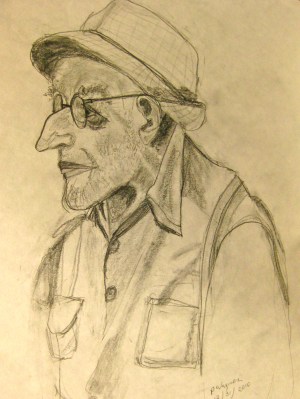
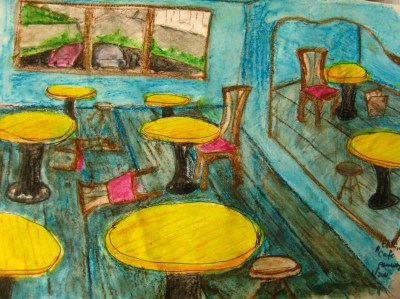


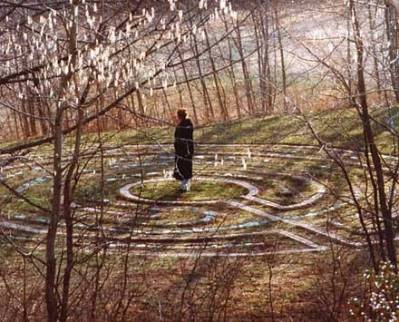








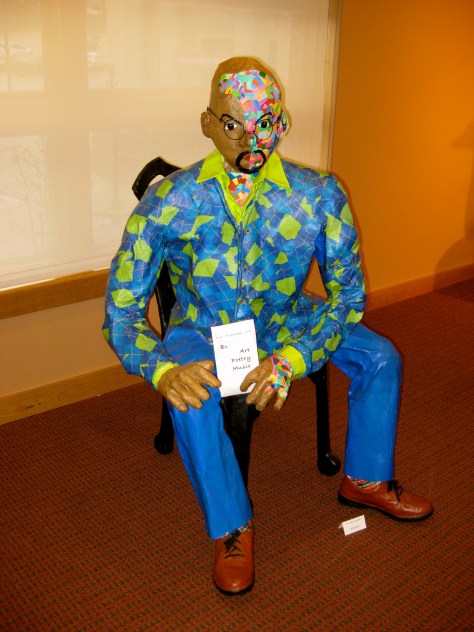

 WAGblog: Dum Spiro Spero