All posts by Phoebe Sparrow Wagner

Artist, author, poet

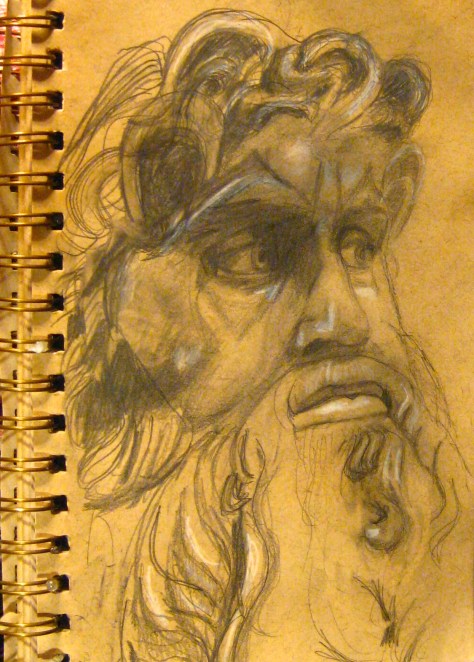
I draw what I want to whether it is correct or not…

I draw what I want to whether it is correct or not...

MichelAngelo’s Moses without the horns…

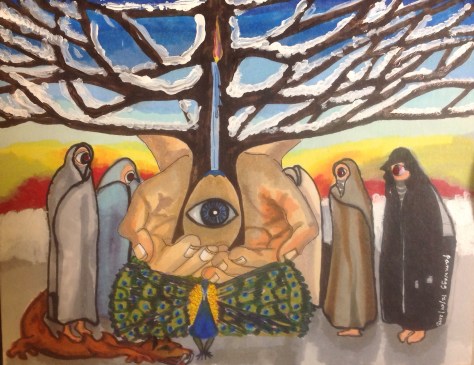
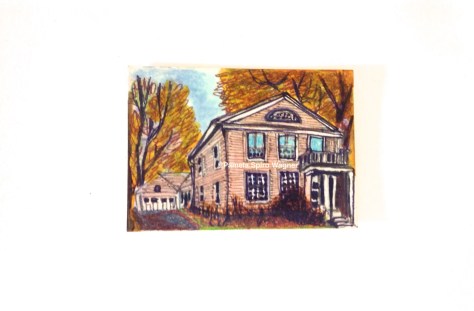
New art: The Watchers

The Watchers  and The wimter Tree of Creation
The Watchers at The Tree of Creation

Nail Polish BIrd Wading on Acetate Mirror Water

Wading BIrd
Wading BIrd

The bird was  first made of paper clay with floral wire legs, then I added a layer of modeling paste and  white glue. I painted it with nail polish, hence the lack of good detail as nail polish brushes leave a great deal to be desired! The water is a piece of blue acetate film glued to a mirror (both of which I used because i had them lying around…), in a serendipitously rippling pattern. The “shore” is actual dirt mixed with polymer matte medium, which also glued a few stones to the mix (just in case you wanted to know! ). The whole deal is glued to a box top to get it off the “ground.” Do click “Like” if you like this! (It took a whole lot of doing to get it even half right.) Thanks!


By the way, HAPPY THANKSGIVING! And to those who celebrated it HAPPY THANKSGIVVIKAH


NaNoWriMo – I finished it, and I’m a WINNER! But now what???

I did it! 50T words in a month...Now to actually finish the thing!
I did it! 50T words in a month…Now to actually finish the thing!

I want to finish writing the novel now that I have started it, and perhaps using the same agency I used for DIVIDED MINDS, if they want it, find a publisher. But we will see. I may have 50T words, and more, but who knows if it will be marketable at 100T words, and whether or not anyone will publish it. I may post another chapter here or not…I dunno. Doesn’t seem like it gets many readers (from my reading of the blog stats.) Anyhow, I don’t use the stats much because so far as I can tell much of blog land is a popularity contest of Like me and I will Like you back. And who knows who actually reads anything? So if I have a few loyal readers, that is all I care about. YOU, I  mean, who is there actually reading what I write. Thank you!


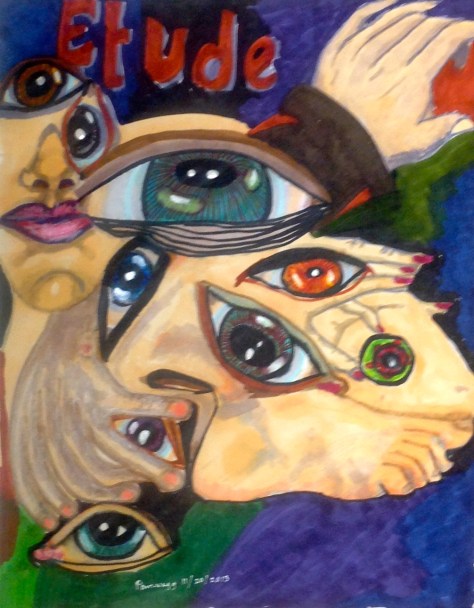
New Art: Study

Study/ Etude (or Your guess is as good as mine...)
Study/ Etude (or Your guess is as good as mine…)

NaNoWriMo Installment #5 We Are Hope’s Family: November Novel

Continued from yesterday:

Ah, what was Hope always saying? Life is a beach? He hadn’t quite understood her before, but now he did and it surely was. Life is a beach. But it isn’t any pure coral white beach, with sunny skies and clear azure waves. It’s just an old beach of a beach and then you die.

Fuck.

Prem rarely used profanity, so when he thought this word, it appeared in his mind separated out, as if in a paragraph of its own, highlighted, in bold.

Fuck.

What was the point in living if you were only going to die, ignominiously, and end up with your toe tagged in the morgue like any television corpse.  It hardly seemed worth it. What was he doing, why did he bother worrying about all these people in Building 22, who were just going to die and end up tagged at the toe themselves? How was it worth it, trying to hold the building together that was trying to fall apart after a hundred years of being mortared and bricked into existence? And how worth it was it anyway, just to upkeep a community of twelve individuals who many of them had rarely-to-never paid a cent into society, but only drew from it like the proverbial parasites that some, like Martin the skinhead, called them.

Martin had hardly a peg-leg to tap out that tune with, however, being something of “parasite” himself, Prem observed. But being copper had never stopped one saucepan from calling another tarnished, not in Prem’s experience. And just why hadn’t the disabled paid into society? Had any of them ever tried to get off disability? Was it their fault? Or was it the fault of a society that encouraged, even forced permanent disabled status on them, and with it concomitant poverty? Who could get out of the disability snare once caught in it? No one who had lived in Building 22 had ever, so far as Prem knew, outgrown or out-earned disability. In fact, the residents were forever finagling ways to earn just up to, but not beyond the strict earning limits placed on them, just so they could maintain disability and their subsidies and their small but stable incomes.

What a miserable trap. You could get a regular but miserably small income for life, if you agreed to be disabled by the system. But in order to get out of the trap, in order to try to earn a living and make your own way, you would in a stroke lose both the place you lived and your regular income, all for a life of insecurity and instability. And this at a time when nothing was secure or stable except the fact that there was no safety net, and no one cared about people in need except a handful of overused charities and churches. So who could blame a disabled person for deciding not to even try to work but to stay on disability and remain impoverished? Who could blame them when that meant at a minimum a roof over their heads and food on the table. It was a devil’s bargain, but Prem could see how sometimes the devil could appear a better partner than the faceless ghoul of potential homelessness and hunger.

“Earth to Prem, earth to Prem,” called Ernie while Beanie smacked her bony hands and made a resounding clap in the tiled lobby, startling Prem from continuing his thoughts.  He stared at them, realizing that of course the two women in their own persons made hash of his argument: They had both had had long working lives and deserved more rather than less of what they got out of the system. Nevertheless, it did not completely detract from his argument that two elderly women on social security were trapped in poverty just as the non-working disabled were.

“What were you thinking that took you so far away?” demanded Ernie, never one to keep questions to herself.

“I, I,–“ Prem didn’t know how to respond.

“Aha! You really were thinking something. It must have been juicy!”  Together the two ladies crowed.

Suddenly, Prem decided to take the question seriously. “Actually I was thinking about something. It wasn’t juicy, not the way you think, but it was – I don’t know how to put it. Can I ask you a question?”

“Sure.” The two spoke at one time.

“Okay, then. Tell me when you disagree with me. First of all, this is a society of “haves” and “have-nots,” right? I mean, we have huge inequality, you can see it right here — this building, Number 22, compared to others down the street is just one example.” Prem stopped as if one of the women had spoken. But he saw at once that they were simply waiting for him to go on so he continued, “Clearly it’s no good simply to give a “have-not” everything he or she needs. That’s just what we do now, and in my opinion it leads nowhere but to misery and protracted disability.”

“What if the “have-not” isn’t disabled, but just old? What if the “have-not” works full-time but isn’t paid enough to live on? There are a lot of other ways to be a “have-not” than to be disabled.” These objections came from Beatrice Bean, whose fingers held an imaginary cigarette. She pretended to suck on it, then flick the ashes.

“You’re right. I guess I am a little obsessed with the disability issue. But let me go with just that part of it. If the “haves” somehow could help the disabled “have-nots” gain a set of skills – any set of skills — to become “haves” like themselves, wouldn’t that be better?  There are plenty of skills that can be marketed. You don’t need to go to a regular workplace these days to earn a living.”

“I really hate that word, ‘marketed’,” Ernie interjected. “Why does everything have to be for sale? Why must everything be reduced to a matter of money?”

“Because it’s a capitalistic world, that’s why. You and I may not agree with it but we’re stuck with it, and until we can live in a world without money, the have-nots need to learn how to earn.” For all the conviction in his voice, Prem was not that comfortable defending capitalism, especially knowing how avarice had despoiled the natural world he loved so much.  But he knew that capitalism had ruled for centuries, and that it wasn’t going to change in his lifetime or the lives of these two women, so it was to all intents and purposes, a fact of life.

“So you are going to teach all the disabled people in Building 22 how to get a paying job? Good luck!” said Beanie with a wry smile. “I don’t personally think anyone here is going to thank you very kindly for it.”

“But don’t you see? That’s precisely what I mean.”

“What do you mean? Why should anyone thank you? If you have an apartment, a social worker, food stamps…you have it made in the shade. Why should you want to work?”

“Because people would feel better about themselves if they could work, that’s why…” Prem said, lamely. He then realized that he had made the mistake of so many do-gooder liberals, believing he knew what was good for those he wanted to help better than they did themselves.  But how could he know how they felt without asking them? How could he know whether they felt bad about themselves now or would feel better about themselves working? He hadn’t spoken to most of the residents about the matter. In fact, it had only been Hope, the second floor resident and artist, with whom he had spoken in any depth. It was she who had been so passionately outspoken about feeling trapped in “the System.”

Even as he thought about it Prem realized that things were complicated. Yes, Hope was an artist, and he felt she should be able to sell her work and keep the income at the same time, but wasn’t she also often ill and unstable? It seemed to him that she was hospitalized for weeks at a time, and as frequently as twice a year. What would she do without disability payments when she was ill, he wondered, and how would she survive or cope even as an artist during the inevitable lean times if her disability payments were cut off? Yet she was the tenant who resisted staying on disability, even as it was clear to him that she could not afford to chance getting off it, not unless she could sell paintings regularly or for large sums of money, something that was not likely to happen. People like Hope weren’t discovered by museums or fêted by the rich and famous to be made rich and famous. No, they simply did art and made art alone, steadily, keeping the faith that it was worth it simply because art to them was like food for the rest of us.

Hope wasn’t going to quit painting or making her sculptures just because no one “discovered” her. Hope did art because she had to do art or die. Period. If it sold, well then, good. But so far as Prem knew, Hope had never tried to advertise or sell in the manifold ways that “working artists” sold their art: by marketing themselves and their art in such a way that people come looking to buy. It wasn’t that she would not sell. Prem thought she might be very happy if someone wanted to buy a piece of her artwork. It was simply that she had other things on her mind than making art in order to suit the purchasing public. And what about the others in Building 22 – were they so very different? What did he know? Did he know enough to draw any conclusions at all?

“It’s just such a vicious cycle,” he said, as if finishing a thought he had started aloud.

Beanie seemed to have followed him. “Yah, I agree. But some of these folks have two or three strikes against them before they started out in life. Can you blame them for seeing a tiny fixed income for life better than the insecurity of not knowing whether you can earn anything at all?”

Ernestine Baker seemed to disagree. She counted off on her fingers, as if reciting a litany, “Darryl, Kashina, Bryony, Giorgio, Feder…and that strange woman, Hope. What cases. I wouldn’t want to be in their shoes for a second. I can’t imagine being one of them for a day, not even if you paid me. Talk about unfulfilled lives and unrealized potential!”

“But what are you saying?” remonstrated Prem. “That their lives are wasted? And if they are wasted, whose fault is that? Why have the disabled been allowed not to do something with their lives? That’s my entire point. Look at Giorgio. He was a talented auto mechanic. He wasn’t in the system all his life. He has skills. He just can’t use those skills right now. Feder has savant expertise that surely could be used somewhere productively. Bryony already works three days a week, and Kashinda is so young that it would indeed be a terrible waste if she never learned to do something with her life, except smoke pot. We created a real monster with Federal disability benefits: the same limitations that promote permanent poverty promote never getting better.” Prem could feel himself getting passionate, and wondered just where that came from. Why did he care so much? Why he sounded almost hysterical…

“Okay, what’s going on, Prem?” asked Beanie, peering at him with more than a little concern. “Why don’t you draw up a chair, sit down with us, take a load off…”

Baker, abashed, chimed in, “You want a drink, Prem? The beer is on me.”

His face warm, Prem had felt a sudden but urgent need to be gone. To be anywhere but here. Ashamed of himself, he apologized to the two older women and literally backed away even he spoke, forgetting entirely why he had returned to Building 22 at such an hour in the first place. By the time he remembered the water pressure situation that had occurred just that morning, he was halfway down the block with an old cassette tape playing Dave Mallett’s “Pennsylvania Sunrise,” a song that always made him yearn to hop a train and go places, never to return.

Pennsylvania sunrise…ten degrees at best.

Peerin’ from the window of a club car heading west.

After mornin’ glory…money for the miles.

Someone said I’ll do this for a while.


_____________


I promise more action in the segments I will share in upcoming days. I won’t share the entire novel but I will share some parts of it, enough to entice. I now have c 120 pp.  double spaced 37000wds.

NaNoWriMo – Additional Installment #4 November Novel

A piece from the middle of WE ARE HOPE’S FAMILY

In 2011, late October, Prem at 45, walked the hallways of his building, still only the manager, still earning a monthly salary from his father with whom he rarely spoke, and then only to discuss matters concerning the building’s upkeep.  He could not afford to go on vacation, or to buy a new car. He had never bought a new car in fact, but kept his used Honda on the road well past the time when others of his former socioeconomic bracket — that is, the friends he had grown up with — were trading in and up. He never thought in those terms, socioeconomic brackets meant nothing to him. He was just Prem Mukherjee, and he had more in common with the people he worked with, and for, than those who bought new cars every other year and cared about that sort of thing. But in point of fact, he had very little money to put in the bank or to support a family, had he had one. But Prem never married, never even found a woman he could fall in love with. Somehow none ever measured up to whatever standards his mind seemed to set, if he set any. He wasn’t sure he set standards, only that he was so busy and he just never socialized, never seemed to be looking for a partner and no one appeared before him to dazzle him. Perhaps he was meant to be alone. He never minded much, but the prospect of growing old alone, when he couldn’t work and might be ill didn’t feel right to him either. Nevertheless, whom could he meet and fall in love with and how was that ever going to happen?

If he thought about it, there had been a few women who had appealed to him over the years, but they had always been so unattainable for one reason or another that he had scarcely tried. Thinking them either too-career oriented or too wealthy to look at a (poor as a church mouse) Building Manager like Prem, he shied away from making his interest in them known. What would he do with a rich woman, anyway? He could not keep her happy, not if it meant dinners out at restaurants or the theatre or other expensive entertainments. His own idea of entertainment was a walk in the park or dinner by the fire in his apartment and reading a book aloud to one another, or just talking about each other for hours…

Yes, it was possible there was someone who would like things like that, but he hadn’t met her yet. On the other hand, he hadn’t met many women at all, so how could he know whether or not there was someone out there for him. Ever since the rupture with his father years before, he had thrown himself into the work of Building 22, and all the complexities inherent in dealing with Eleven disabled or elderly individuals. He had learned much along the way about Social Security and federally subsidized rent, not to mention the troubles and headaches of maintaining a 100-year-old structure in a world where most such buildings were torn down and replaced with new ones. How could he have found the time to meet someone, the right Miss Someone, when he had had so much to do that was so vitally important to twelve lives all that time?

Eleven lives? Well, it was more than eleven, in fact, in all those years, since people had come and gone in the 24 years since he had taken on the responsibility for the building and its upkeep. There had been deaths, and there had been moves too.  And the weird thing was that for the most part the moves-out had been almost as sad as the deaths. Building 22 was a little community, and while people might keep to themselves, for some were loners by nature, nevertheless the tenants knew one another at least by name and no one to his knowledge was ever ostracized or openly disliked, except once, not so very long ago. That tenant, Martin, was an irascible young man, with discernable emotional instability, a self-described “skin-head.”

The police were summoned on several occasions. Once it was to break up what had threatened to become a fist-fight between on the one hand Martin, spindly, shaved-head twenty-something with a pigeon breast and arms that were too long for his body, and Darryl Strakesley, the Building 22 resident who was, of all the residents, the most fully employed – he worked 30 hours as an usher at the Cinema Deluxe – and the least independent at one and the same time. Darryl, who had Down syndrome, was squat as a fire hydrant and nearly as immoveable. He was also almost always unflappable and this was a good thing, given his congenital heart condition, so when Prem heard that summer that Darryl had been begging Martin, the skinhead, for a fight, he knew something was wrong. Something had to give or worse would happen.

Prem wasn‘t there the day of the Darryl-Martin Brawl, as it came to be called. That day, city hydrants had been shut off in certain locations, lest children using them for sprinklers waste too much water when the region was in the grip of a simultaneous drought and heat wave. Building 22’s water pressure suddenly failed and none of the upper floors had running water. This would have been a disaster in the making at any time of year, but during the summer, in a heat wave, nothing could have been worse.  So Prem spent all afternoon fighting with the water company and the electric utilities in order to get their plumbing functioning again. It was only when he returned to Building 22 early that evening, to check on residents and make sure that the water pressure situation had been resolved, that he learned what had happened.

“Darryl took a swing at Martin,” old Beatrice Bean peremptorily informed Prem the moment he stepped into the lobby. Beanie, dressed in a lightweight housecoat, was seated in an inexpensive folding camp chair, the kind with a pocket for soft drinks, near the elevator.  She did not get up when he came towards her as her gnarled feet were blue-veiny and swollen from the heat, but she did reach out to shake his hand. “It wasn’t Darryl’s fault. How could it be? Darryl wouldn’t hurt a cockroach. Martin does these things to people. He makes you want to clock him.”

Beanie wasn’t alone. Seated with her, in a similar camp chair holding a cold beer, was her friend Ernestine Baker, who had been Beanie’s best friend for as long as Prem had known them. Superficially, they looked like sisters, both being tall and having masses of extraordinary white hair that would have made them stand out anywhere. But of course there were differences too, and it only took a second glance to see that Ernestine was both thicker and a little younger. Ernie’s voice was also higher and sharper than Beanie’s, who had once been a smoker and even now occasionally enjoyed a butt or two when she was offered one.

At 75, Ernie was not, for all that, the healthier of the two. Prem knew that she had had diabetes most of her life, and now suffered from complications that would set most people back but which Ernie took in stride, largely he thought from having anticipated them as possible if not absolute likelihoods in her future. Ernie lived on the first floor, apartment C. (Beanie, on the other hand, lived next door to Hope on the second floor in A). When she stepped on a thumbtack, and her toe became infected, for a while it seemed that nothing could go right. She lost the toe and then her entire left foot and was in rehab for three months before they released her, wheelchair-bound. But being Ernie, she refused to stay seated, and was up on crutches and mobile before the end of the year.

“Halloo, Premjit Mukherjee,” hailed Ernestine, half-rising, to air-kiss the manager. “You missed a ringside seat a few hours ago.”

“I hope no one was hurt,” said Prem, his brow once so smooth now deeply furrowed as if with permanent worry. “With his heart condition, Darryl should not be fighting anyone. You all know that. And with Martin of all people.” He remonstrated gently, but the look on his face was nevertheless puzzled and full of sorrow.

“Oh, Prem, never you mind,” answered Beanie. “No one would let Darryl fight Martin. At least we wouldn’t let him if we could stop him. But the operative word here is could.”

“What do you mean?”

“Well, for one thing, Darryl is a grown man, and while we try to keep an eye on him for Morelline, we can’t watch him every minute of the day. Besides, he never needed that before. It’s just this Martin person. He’s a nasty, spiteful snake if ever I saw one.”

“Martin’s a problem, I grant you that,” Prem said to Beanie. “But he has a disability, and you have to learn to live with him, or at least get out of his way so he doesn’t bother you. He has a right to live here just like everyone else.”

At this, Baker and Beanie glanced pointedly at each other with raised eyebrows. Then they turned back to Prem and exaggerated their attention. Sensing their intent, he lowered his chin into his chest, looking at them from under a knitted brow. “Wait a minute. That’s not fair. I know he’s not been very nice. He’s—he’s –“

“Premjit, Martin boasts openly that he’s a skinhead,” said Beanie. “He hates anybody who isn’t white and whatever else neo-Nazis are supposed to be. I know a lot of haters want you to be ultra-Christian, but in this case I think Martin hates even Christians …” Beanie sounded weary, as if tired of trying to explain Building 22’s animosity towards Martin, as if tired of explaining why skinhead philosophy was actually not as decent and reasonable a way of thinking as any other.

Prem made a wry face and nodded. Shrugged. Then seemed to apologize for shrugging. “I’m sorry. I know. I know. I don’t like Martin’s talk anymore than you do, really, Beans. But it isn’t right for me to take sides against a legal tenant. You know how I feel; you know me. Do you think I would approve of the things he says, the things he does? But…”

“But what?” asked Beanie. “But let Martin badger Darryl into fighting, and then stop Darryl from fighting, both at the same time. Just keep the peace so you don’t have any headaches? Is that it?”

Prem looked at the old lady with her swollen feet thrust into rubber flipflops of the cheapest kind. He could all but see the lightning flash from her eyes. He smiled. “Yeah, that’s about it. I don’t like headaches, you know. I like a nice cushy job, no troubles, no probs. Don’t get involved in anyone’s life, just do your job, collect your pay check and go home, watch Geraldo on TV…”  He struck a pose as if opening a beer and letting it slosh down his throat. “Ah, good!”  He made a gargling noise.

Beanie visibly relaxed. “Okay, okay, ” she said. “You get it. I should have known better.”

“So tell me what happened here today, Beans, Baker. Martin got Darryl riled, that much I gather. And I can see how that would happen, what with his racist talk and manipulating.” Baker cracked open another cold one from her cooler, distracting him. After a long sweltering day, Prem was tired and thirsty. He wished she would offer him one, but of course no one would think of offering the building manager anything like alcohol, not even an icy cold beer on a hot day. Resigned, he finished his sentence. “But how did it go so far, and how on earth did it end peaceably?” Ernie Baker snorted. “Peaceably, my foot. Oh, excuse me — I don’t have a foot. Well, my ankle, then. The police had to practically pull them apart. It was only because Darryl weighs so much more than Martin, and is so much bigger that Martin didn’t get away with saying the things that he said. I think he expected he could blab whatever filth he wanted to just because Darryl has Down syndrome and it wouldn’t matter. Did he think Darryl was also deaf? Next time he’ll think again.”

“What happened after the police stopped Darryl from hitting Martin?”

“Well, they were going to take him downtown, especially when that little shit wanted to press charges. But Morelline, Darryl’s mother, you know. Well, you know how she is, she persuaded Martin that she just ‘might-could’ look into a few things he was involved in, and she would, you know, if he went ahead.” Beanie stopped to glance at her friend Baker, who took a swig of beer and shook her head.

“Morelline once worked in government. She knows how to get information and Martin knows it,” Ernestine added.

Beanie continued, “Anyhow, by the time she was through the police were able to leave without taking Darryl, and that skunk Marti slank off somewhere with his tail dragging. It was a sight to see. I tell you, the rest of us tenants had a party on the rooftop afterwards. All that was missing were the fourth of July fireworks, which was just as well since I didn’t think we needed any more explosions for rest of the day!”

As Beanie finished her sentence, the elevator down the hallway thumped into service. There was a hum and a light went on signaling that someone on Floor 3 had summoned the car.  With a rapid whoosh it descended and when the door opened, a short squat man with a solemn face and the characteristic features of Down syndrome exited the elevator, Darryl Strakesley.  His mother, a tiny dark-skinned woman wearing a yellow dress followed him, her black hair neatly cropped against her head, gold hoop earrings completing the ensemble. Morelline Strakesley at 55 always looked exquisitely well put-together, and few suspected that she bought everything  she wore at Goodwill or thrift stores, her carefree days on a government salary having been many years before.

“Darryl. Mrs Strakesley. How are you?” Prem greeted them, the only two residents who shared a unit in the building. It must have been tight quarters for a single man and his mother to live together in one apartment, but they managed without discernable trouble. Each time he had seen their premises the place was neat and clean without being inordinately immaculate. The nice thing was that there was always a place for Darryl’s projects – he had learned in school to make potholders and to weave simple placemats, of which he made sets and sold them on the side. His small looms were set up in the living room, even though that was where his mother Morelline slept each night on a pull-out sofa bed. Morelline, who had once, so it was rumored, worked for government intelligence – whatever that meant to whomever it was told –was now too ill to do more than care for Darryl and spend her spare time reading and keeping up with the news, which fascinated her.  She had few people with whom she could converse about such things, but she read voraciously and widely, and she was on a never ending quest to find a cure for Darryl’s heart disease before it was too late.

As for her own problem, although it was clear she could no longer work, she would not see a doctor, convinced that it had been doctors who had caused Darryl’s Down syndrome. So while she wheezed and had trouble catching her breath, could scarcely walk sometimes due to swollen ankles and legs, she would only use her relatives’ extra inhalers for her asthma or ones they didn’t need. Or that other people gave her from their own supplies. Somehow she managed to get them when she felt she needed them. And somehow she kept on going, though the wheezing was never much relieved, it felt just a little better, and she felt better because she wasn’t paying doctors just to make her worse. Unfortunately, moving at all was often the triumph of matter over mind for Morelline, when Morelline’s body was the matter at hand, refusing to knuckle under and give in to her demands. It was clear that she detested asking for help at any time, but she especially hated it when she herself was in need, unable to breathe and wheezing like a broken bellows.

This evening, however, she must have been better, because she smiled and said that they were going out. Darryl didn’t have to work and it was unpleasantly warm indoors and so nice outside that she and her son were taking a stroll in the park, where crowds and summer lights kept it safe late into the night. Surprisingly, she said nothing about the incident earlier in the day. Even Darryl seemed no worse for the wear, sporting a coat and tie and a pair of old fashioned seersucker trousers. Together they looked like an adorable mother- son pair, going out on the town together on an ordinary summer night. No one could have known that the son had nearly been arrested that afternoon for assault, or that the mother had once worked, so it was rumored, for the CIA, and thought nothing of using the fact of her past employment to threaten someone, albeit someone menacing her son, into silence.

Prem and the others watched as Mrs Strakesley led Darryl through the double doors of Building 22’s lobby into the darkness of the street outside.  On the one hand, he didn’t know whether to be proud of the woman or afraid of her. On the other hand, he knew she was fiercely and defiantly protective of her son, and that she would die before letting anything bad happen to him. Darryl may have been unfortunate in certain circumstances of his birth, but he was also blessed with a mother who was determined to make a life for him as best she possibly could, given all that she had to handle. Whether or not this was good for him, Prem thought, it was impossible to say. But no one could deny the single- minded force with which she forged ahead toward her goal. Prem worried though. He worried about Darryl if anything should happen to Morelline, and he worried about Morelline because she seemed sicker than even she was aware. He didn’t know a great deal about asthma, about COPD, one of the seemingly popular and common diagnoses of the modern age, but he clearly remembered from his pre-med days the symptoms of chronic congestive heart failure: shortness of breath, easy fatigue, edema. Not to mention potential kidney failure that could add to the catastrophic nature of the illness. He was careful, however, even privately, to remind himself he was not a doctor and that Mrs Strakesley stringently avoided seeing doctors, so that even if he was right, and even if she knew what was wrong, she would likely refuse treatment.


(TBC)

30 Things to Stop Doing to Yourself

30 Things to Stop Doing to Yourself. From Bucket list Publications by Marcandangnel…words to live by. I loved these and while i rarely reblog someone else’s page or simply link to them. These 30 sugggestions were so simple and cogent i simply had to. Way to go marc and angel!

more later but for now i am on the train home from north carolina ans trying to write more on my. november novel. TTFN. Love you all!


pam

Sometimes it Takes a Village …to avoid the Hospital

Sometimes it takes a village...of caregivers
Sometimes it takes a village…of caregivers


I swore that after I left Hartford Hospital’s Institute of Living last January, 2013, having spent the better part of a month in seclusion and many many hours brutally and punitively four-point restrained, I swore I would never go anywhere that would treat me like such an animal again. But then, having twice been treated at Yale New Haven Psychiatric Hospital once in early 2013 and finally later on that same year, discharged with piriformis syndrome from having been forcibly held down and injected in the buttocks  over and over with 3 different drugs, Haldol, Ativan and Benadryl, I said that I would NEVER again permit such torture in the name of treatment anywhere, no matter what they called it. No not even at Yale.

Given the massive traumas I have experienced these past five to ten years in Connecticut mental hospitals, abusive practices that have only increased since my first hospital stays in the 70s, I decided last August, post Yale: never again. Never again  would I go to  ANY hospital whatsoever.


To that end, my family, my family of origin, since I never married and have no money of my own, has taken it upon themselves to hire for me (or let me arrange for myself the hiring of) several personal staff members to “come on board” for me in my apartment 24/7 starting in late December and if necessary work through January, if there is a crisis. I haven’t gotten through any January without a hospital stay in several years, so it is a good thing to be prepared, on the one hand. But the very fact that I need not fear the hospital now might also mean I can avert the worst of any crisis! Who can tell? All I know is that we are all talking about how to help me primarily stay safe from what the voices command me to do, and how to do so without panicking or calling 911.


One thing I insisted upon was NOT using any agency, because while they serve a function, I suppose, they also pay their workers shit. And someone who is paid $8 an hour is not going to want to do the same quality of job for me, while sitting with me in my tiny apartment as someone who is getting the entire $20/hour, if you get my drift. And why would they? I need people who are committed to keeping me safe from myself at the height of any craziness that might assert itself, and if the voices command me to grab a pencil and suddenly stab myself with it, as they frequently have, I NEED to know that the person I have hired will be right there with me, ready to grab it from me, not in the other room reading a book, or cooking, or yammering on the phone to a friend. For $20/hour I think it might not be too much to ask. At $8/hour it might be.


For $20 an hour, a person can stay awake all night and not need to work another job immediately upon going home, so I will know that if I wake up in my recliner and hear command hallucinations to set myself on fire, she or he will be right there to stop me. Because that is how it happens, has in fact happened just like that.


It is the only way to do it. Unless $20 somehow is not enough to cut it, pay wise, (and I cannot afford to pay more, over all) (the people I hired are also already not working other jobs either…) I think it is not a bad wage, is it? Honestly now, tell me. I am not asking for much else but for someone to sit with me, talk with me IF i feel like it, and watch me to make sure I stay safe. The worst thing would be boredom I imagine.  But I don’t usually bore people even when ill. THat is not often their problem.  The problems are other things, for me at any rate, and those are that the people that sit with me in hospitals have NOT done their jobs properly at all, and have ignored all the warning signs, even my open pleas to please please “do your jobs. I am on “one to one” for a reason!


No, in the hospital, the aides just turn their backs and stand in the doorway, facing outward, away from the room i am in, and gab with the other aides, completely  ignoring the person they are supposed to keep their eyes on at all times. It is crazy. I remember a woman named Jennifer deliberately turned her back to me no matter where I stood in the room, and if I went in to the bathroom, she left the outer room entirely…which was such a rule breaker. She knew what was happening, I think she was playing a game to see if I was truly dangerous to myself or not…Or really just didn’t give a damn.


Is it any wonder that at one point at one hospital, I  asked to get off that status. It was simple: I just told them I was safe and they were so glad to reduce their workload they stopped the one-to- one immediately. The next thing I knew the voices had me begging to use my makeup compact. the one with a small glass mirror in it.


“Sure, you can. Just make sure you bring it back to the nurses station in five minutes,” said the Nurses Secretary, handing me the little black plastic thing.


Well it took all of three seconds for me to stamp on it with a hard soled shoe, break the mirror and slice up my left wrist bad…


Of course, they punished me for that. Or they would have, I know. But I remember, I wrapped a huge wad of paper towels around all the blood and told no one for hours, so when I realized that I needed stitches and had to admit to what I had done, it was too late for them to respond with the punishment of 4-point restraints…


The point is, the aides weren’t evil. Not all of them, or at least their lackadaisical attitude was borne out of a lack of caring which itself was spawned by being paid little to nothing. Why should they care? It was just a job to most of them, and little better paid that flipping burgers at a restaurant. Worse than that, because they had no perks and no tips.


So when I hire someone to sit with me, talk with me, keep me safe both from myself and hospital abuse, I pay them $20 per hour (and even $30 per hour over time during snow storms etc), I expect them to be responsive and not lackadaisical. I do not think that is too much to ask or demand. My life and health and bodily integrity depend on it.

NaNoWriMo – 3rd Installment, November Novel: We Are Hope’s Family

Feder spoke into the darkness of Hope Ouestelle’s apartment. No one answered. “Hope?” Again there was no answer. He peered through the dimness of black and gray shapes that he hoped were just her papier mache people and creatures. “HOPE! Where are you? “ He stepped inside and moved forward, fumbling blindly for something to guide his way. Just then, his hand fell upon a lamp and he was about to pull the cord, when Hope yelled out from the bathroom.

“Don’t try to turn on the lights! I am doing something here and any light will ruin it! Just wait a goldarned minute, okay?”

Happy to hear her voice, Feder felt for a chair, slid into it and rested. At least Hope had lights, which meant that she had not lost her utilities the way some of the buildings tenants had, not yet at any rate. Not the way he had. Feder was ashamed of himself and was half afraid to admit it to Hope that he had spent too much money this month.  On  important things, yes, but also things that experience told him most people would not understand, like repeatedly paying to go through the turnstile at the Parkland, just to feel the rolling thump of the bars against his body. Why did he like this and why did he do this? He didn’t know what it was about that admission turnstile but there was a moment, right inside it, when the bars felt like they locked and might not release him, and he felt such anxiety it was almost pleasure, and then they did, they let go and that was so  — what? It was so mysterious a pleasure that he had to do it again. Yes, he knew that there had been a rate increase in the electricity bill this month, that he had to pay $30 more, but somehow entering the turnstile had used up that $30 and he hadn’t been able to pay his bill and now his apartment had neither lights nor heat.

What was Hope going to say when he told her? He wasn’t going to ask her for money. She wouldn’t have any extra in any event. He just hoped that she would let him eat with her in the evenings, and cook his supper in her apartment with her the way she had the last time this happened. She might even, maybe, perhaps, let him sleep in a chair in her artroom/living room if it got really cold in his apartment. That’s what she had done the last time and he could only hope she would do it again.

But he remembered what she had said to him the last time he slept there the previous spring, before he left for his apartment, after the weather turned warm again and daylight savings time returned. ”Feder, I cannot keep rescuing you from yourself. What am I doing? Am I helping you or hurting you by letting you stay here? I honestly do not know.”

Feder hadn’t known what to answer. How could she hurt him by letting him cook his food in a lighted kitchen or sleep where it was warm? How could it hurt him to help him? But Hope had her own ways of thinking and he had to keep that in mind. She did not understand the draw of the turnstile, and he knew she would think it strange to the point of bizarre. Everyone did. Everything he did looked strange to people. He was bad. Bizarre was bad, bizarre could get you taken away. But Hope should understand that. She was regularly taken away herself for what others thought was bizarre behavior: sitting in her artroom, talking to herself or to her papier mache people, or listening to voices of people no one else could hear, and doing what they told her to do, harmful things to herself, things like putting out cigarettes on her skin or cutting off pieces of herself with the sharpest of scissors. Talk about bizarre.

Feder at least had never been taken away. Not since he was a kid. But he would not think about those days. To think about those terrible days in the screaming room was to invite trouble, the many hours tied down to a bed because he wouldn’t – couldn’t – stop spinning. The times the teacher pinched his arm to stop him from reciting names after names of things she did not have the same need to know and hear…His need to tell her the dates of everything that ever happened to him and her need not to hear him, to silence him. How she had so much power to do so. No! Mustn’t think about those bad times, black times, screaming times…Mustn’t think. Mustn’t think. He had to think about something else. Think about the turnstile, the turnstile. How the heavy rollers came across to stop a person from crossing, then how they caught him and held him ever so briefly—that strange mechanism he was never sure he saw properly – and then how they always gently released him safely to the other side. He would think about the turnstile if he had to, until Hope came out of the bathroom.

But then thinking about the turnstile reminded him of the fact that he had not paid, could not pay, his electricity bill and how there was neither heat nor lights in his apartment. He did not want to admit this to Hope…The need to recite took hold, as it always did when anxiety got the best of him and he seized the information that was closest at hand: His name was Feder Prisma  and he was 31, born Jan 5, 1979, a Friday. Hope Outestelle, his best friend was age 57, born Sept 16, 1954, which was a Thursday, the 259th day of the year. Premjit Mukherjee, was their friend, and the building manager, aged 47, born on April 1, 1964, a Wednesday, the 92nd day of the year. Stashu Weissman, was from Poland, aged 79, b orn in 1931, Dec 25, a Friday 359th day of the year. Giorgio Ciabatta, the auto mechanic, at age 43 born, in Italy, Feb 19, 1968 on a Monday. Beatrice Bean age 84, was born on Sunday May 1, 1927, the 121st day of the year. Their Landlord Mr. Mukherjee, was age 71. He was born on Sunday, April 27, 1941, the 117th day of the year. On the fourth floor, Bryony Leurile aged 44 was born on the 82nd day of the year, Sunday, 1967, March 23rd. Then there was Kashinda Whitmore, age 27, who was born on the 305th day of the year, in 1984, on Halloween, a Wednesday. Darryl Strakesley aged 31 was born on  a Saturday, the 255th day of the year 1981, Sept 12th. Lupita Villareal, aged 62 was born on Sunday, the156th day of 1949, June 5. There were others, but he did not know their birthdays yet, so he started repeating the dates to himself. Hope  Oestelle, his best friend, was born on Sept 16, 1954, she was 57 now. It was on a Thursday–

“So, what do you think of this?” asked Hope, appearing suddenly in the equally sudden explosion of lights that came on all together when she flipped the apartment’s main circuit breaker.

Feder started.

He hated it when people wanted him to notice something. It was always a test he failed at. He guessed. “Your hair?”

Now that he said it, he looked to see if it was true that her hair was different. She had cut her hair as short as a man’s, yes. Not only that but it seemed that she had dyed it as well, a persimmon red.

“No, not my hair. That was just an experiment. Look.” She held out her hands, dangling papers for him to look at more closely.

It looked that she had been developing photographs, but these were very strange ones. So dark as to be nearly black, with purple streaks and outlines of leaves and circles.

“Kirlian photographs.”

“Yes! You know! Well, sort of. I am doing electro-photography, and developing the Polaroids myself. I wanted to see if I could make this camera out of things I bought at GoodWill, and it turns out I could, mostly. But Feder, I’m really disappointed. The photos are awful. I was expecting something different. These are ugly. I think auras should be beautiful…” She retracted the photos instead of handing them to Feder, and tossed them aside with a shrug. “You win some, you lose some. At least I didn’t spring for a real Kirlian camera. Those cost $500. I only wasted maybe fifty bucks, making mine. At least I can say that I built a working aura photography device, for all the good it did me.”

Just at that moment, Feder’s stomach took the opportunity to announce its hunger with a rumble. Hope heard. She looked at her watch with a frown.

“Haven’t you eaten, Feder? Do you want to have supper with me? I’m sure we can scrounge up something.”

Feder made a rueful face but nodded. “Yeah, I’m pretty hungry. Maybe you have some cereal I could put milk on? Captain Crunch?”

“Nah, I never eat cereal, Fayd, you know that. I could make you some oatmeal, but you hate my oatmeal. How about a peanut butter and banana sandwich and diet ginger-ale? I have some really good bread and about three bananas.”

Feder’s eyes lit up at the mention of his favorite sandwiches and he smiled for the first time that evening.

“Good. I’ll make the sandwiches if you peel the bananas and pour ginger-ale into glasses for us. Okay?”

Feder followed Hope’s carroty buzz-cut into the tiny kitchen and between the two of them they made short work of preparing their meal, then carried their plates out to where Hope’s art work occupied most of the living room. Hope pushed aside the Kirlian photographs and made room for Feder on the sofa, then flipped on the 12”  television propped on a stool on a milk crate in front of them. Eating intently, they hunched forward as the PBS show Nova’s logo blazed across the little screen.

“Oh, good, I was afraid we’d missed it, but we’re just in time,” Hope murmured between bites of sandwich. Feder never spoke while a television played; even when the programming failed to absorb his interest, the interchange of light and shadow on the screen never did. Television had calmed him from an early age, and his mother always placed his crib in front of a late night movie when he couldn’t sleep. Knowing she couldn’t talk with him now, Hope turned her attention to the program, hoping it would be about something interesting, something that would give her ideas for art.

People sometimes thought it strange that Hope, who was passionately an artist when she wasn’t ill, but who found it difficult to read or even concentrate listening to books on tape, nevertheless devoured television shows and documentaries on science. From natural history to physics, from geology to chaos theory and beyond, everything scientific intrigued and fascinated her, and she used what she learned in her art, in a multiplicity of ways. “What else is art for if not to express what science teaches?” She had said this to Prem one day when he asked her why she used cell motifs when painting her sculptures. “It makes no sense to separate them. If art does not serve science, what good does it do? Art can’t serve art. That would be silly, like a translator translating from one language into the same language. A waste of time. No, maybe art has other purposes too, but one of them I am certain is to interpret science, to express it for those who do not understand it any other way.”

When she had finished she looked up at Prem, as if surprised by her own words.. Not by the thought, but by the passion with which she had shared them, and the fact that she had spoken at length about such things to anyone, and even more so, to Prem, the landlord’s son. She remembered she had backed away, eyeing him warily. What did he care why she made art or what it meant to her? He wouldn’t give a damn. Why didn’t she just learn to keep her mouth shut and leave people alone? Now she would pay, that much she knew. He’d soon be spreading gossip about the know-it-all in Building 22, second floor apartment B, the one who makes the crappy art and couldn’t even read a book to save her life. It was true, her art was crap, pure crapola, and she knew it. If she was any good, well, she would be better at selling it, now wouldn’t she? And it was painfully true that she didn’t read, hadn’t read a book in years, simply could not. If she so much as opened a book she fell asleep. The rare times she didn’t, the words – indeed the letters themselves—soon swam and danced before her eyes impenetrably confusing, impossible to put them together in any sensible way and make them into single words, let alone string into sentences and paragraphs that made sense. She wanted to read books, but the books escaped her. The refused her eyes. They fled from her, as if defying her and mocking her. Nyah, nyah, they scolded. Eat your heart out, but you can’t have us! It was such a struggle, and Hope could do nothing, say nothing. She could not even complain or feel sorry for herself. Why? Why? Because…because…She didn’t know why. It was all her fault, all her fault. Everything was her fault and deserved punishment. No wonder the voices had for years told her to burn herself with cigarettes and intermittently wanted her to set herself on fire or cut off pieces of herself. No wonder. She was the scum of the scummiest. She was the scum of the earth. She was the devil incarnate. Hope pounded her fist on the arm of the sofa, forgetting that Feder was sprawled next to her. Luckily, he had fallen nearly asleep after the program ended. He raised his head at the sound.

“It’s nothing, Feder” Hope said, standing up and pulling a throw over him. “I dropped something. Stretch out now, and go back to sleep. I’m going to bed too,”

As he lay down, Feder called out to Hope, “Hey, Hope! What are you going to do with the electro-camera?”

“I dunno. I was going to take it apart. Why? Do you want it?”

Feder, half-asleep but serious, responded, “Yah, I have some ideas…Let me use it. I’ll pay you back if they work out.”

Hope, heading towards her bedroom, beating her head with her fists in a private frustration Feder failed to notice, replied as calmly as she could, “No problem, you can keep it for as long as you want it.” Then she closed the door between them.

“Thanks,” Feder mumbled to himself, tumbling into sleep.

“Jackass, you asshole…” Hope derided herself in angry mutters, still occasionally giving herself stiff thumps across the head. “You evil son of a bitch. Who do you think you are? You are the devil, the killer of the world.” She paused, stared blankly at something unapparent to anyone who might have been watching the scene, and mumbled a word or two. Nodded. Stared. Nodded again. Then she looked around, as if searching for something she had misplaced. She got up and padded across the bedroom to her dresser where she extracted a half-open pack of cigarettes. Approaching the bed, she stopped again as if listening to something. Again she nodded, twice. “Yes, I promise, I promise,” she muttered, then added, cryptically. “I will, if you will.”

Sitting on the edge of the bed, Hope pulled off her jeans. She extracted three cigarettes and lit them. Without hesitating she drew deeply on all three then immediately applied them firmly to the skin of her upper thigh, holding them in such a way that they burned but didn’t quite go out until she finally crushed the heads against her. Quickly, she repeated the maneuver, and again a third time. Finally, she pulled her jeans back on, drew her T-shirt down and hastily hid the remains of the extinguished cigarettes underneath the papers in the bottom of her wastebasket.

Calmer, but a bit dazed and still not ready to sleep, the cigarette lighter and pack in full view on her bed, Hope sat on the edge of the bed quietly, her head bowed, her hands in her lap. Her face, usually so mobile, was still and blank. But it was not a serene blankness. Rather, it was a blankness of confusion, as if she were not quite sure what had just happened. After about a half hour, she lifted her head, took a deep breath, frowned, and stood to clear away the debris of her recent actions. No point leaving any evidence around for Feder or anyone else to see. She could take care of her own wounds, and anyway, three times three wasn’t so terrible. She had done much worse before. No one ever died from nine cigarette burns, she just had to shut them up for a while…

It was well after midnight before Hope finally lay down under the covers and turned off her lights to sleep. And when she did sleep it was fitfully and to a book of troubled dreams. But sleep finally came and she didn’t wake until after Feder had left for the morning. She didn’t wake until the knocking at her door became outright banging.

No No NaNoWriMo….I have a NaNoMiGraine

No No NaNoWriMo….I  have a NaNoMiGraine

Foot in Mouth, Foot in Eye…I dunno what it means. I just drew it folks!

NaNoWriMo – WE ARE HOPE’S FAMILY 2nd Installment of November Novel

Chapter one (cont’d)

[Building 22 had been built in 1900 and its first elevator was installed in 1925 then reinstalled in 1955 with a (zibbit*) . In 19_5 when the Landlord first acquired the building as a young man new in the country, he installed a (zibbit*) elevator upgrades at great personal expense. But when the inspectors saw this elevator in January,1989 they didn’t like it at all. In fact, they condemned his entire operation at once and ordered a complete upgrade.  They insisted he install what amounted to a brand new elevator.]

The Landlord balked. He didn’t tell the Inspectors this. Instead he decided to petition the City and get a waiver to redesignate Building 22 as strictly for a non-disabled population.

The petition claimed that he was unable to afford the construction of new elevator without increasing the rent on his tenants and unless he  tripled their present rents, he could not afford them. But non-disabled tenants not only could afford the higher rents he needed, they would not need an elevator! Voila, the problem would now be solved via the stroke of a city official’s pen.

It might have happened that way, even in America, in 1989. The City is not a terribly corrupt place, but money has its perks and certainly it has a voice in places of power, as it does everywhere on earth. So had the Landlord decided to use his considerable power and money to back his petition, either somewhat legally or in a less than legal fashion, it is possible that he might have had his way. We have no way of knowing what might have happened. We only know what did happen. Which was that Silent Stashu Weissmann, Building 22, apartment3A, got wind of this plot and in his outrage shed his silence like a cloud releasing a torrent. He informed Bryony, the fourth floor tenant with cerebral palsy who had been immured in her apartment for weeks, dependent as she was upon an electric wheel chair and thus on the elevator to get her downstairs. Bryony was one of the few tenants who despite her disability had a regular job outside the building and needed to get to work on a regular basis. If she lost more than a month’s worth of time due to the lack of an elevator, she was threatened with the loss of her job, a job she cherished, even if at 20 she had held it for only a couple of years.

Worse, there was the possibility that without the income from her job, she might not be able to pay her rent and could be evicted, This, she observed to Stashu, was the height of twisted. Especially since it was the Landlord’s fault entirely that she was unable to get to her job.

“Ve do something about that,” promised Stashu. “If you cannot go vork, ve get vork come to you.”

“Yeah sure, that’s really likely.” Bryony shook her head.

Stashu agreed that since the War – nothing could be compared to Poland in WWII—but he hadn’t faced a worse situation since then, that this one beggared belief. Twisted was putting it mildly. The Landlord’s behavior was an abomination. And that meant a lot, coming from him.

Bryony nodded in appreciation.

“Ve write a letter, but not just any letter. A Letter to the Editor of the newspaper. They print, and people read and come to assist us. A new elevator, it will be grant us and they build it just for you. Trust me.”

Bryony had no reason to believe any of this, but she liked the idea of being asked only to trust this not unattractive older man with a Polish accent who said he wanted to write a letter to the newspaper in order to get her an elevator.

“Okay, let’s do it. We’ll write a letter. But what do we say? You talk it out loud and I’ll type.”

Stashu formerly and formally known as Stanley Weissmann  had been 15 when Bergen Belsen was liberated after WWII. Though he had lost much of his extended family during the war, he himself had never been a camp resident. A student at boarding school in the late 1930s, he had been lucky enough to be hidden by a family of intellectuals who took him in and, when it was safe enough, fled with him first to France and then to the United States in 1939. Nevertheless, Stashu  had seen plenty of brutality and read obsessively during his years in relative safety. Then the news and newsreels about Bergen Belsen came out. He absorbed everything he could about the camps and the treatment of the prisoners there. He could not learn enough, he felt, and such learning was not just of facts but was in its very nature penitential. He, Stashu, was not among the dead. He should have been. Therefore it behooved him to learn all that he could, all that there was to learn, and to never fail to pass on what he knew so that the world would never forget what happened. He did this so that the millions of people, killed during those years would forgive him, Stashu Weissmann, for surviving.

The western New England City was not a big place, only about 15,000 people from the inner core to the outlying suburbs, and if the truth were told it was insular, even parochial.  Many of the people who lived there were at least third generation Americans and a large percentage traced their roots back to the 1800s. By the 1980s it is at least likely that many could have gone their entire lives without meeting a single WWII survivor from Poland. Most would never have known such survivors resided in their City but for the reporter who wanted to tell Stanley Weissmann’s story. Stashu at first refused, remonstrating that he had no particular story to tell. He had lived in Poland during the war, had managed to escape, and now he studied the Camps so as to expiate his guilt. And so he could tell the world about them, and the world could learn and would never forget. His personal story was nothing; the only story worth telling was that of the camps… So, okay, said the youngish reporter with a little laugh, tell me about the camps then. I want to hear those stories.

And so he had talked, and talked at great length about the concentration camps. He told her about how when American soldiers liberated Bergen Belsen, and found living skeletons wandering the grounds, dazed and barely human, they showered them with Hershey bars to assuage their hunger, knowing nothing about refeeding syndrome. To the soldiers’ horror, within hours many of these survivors lay either dead or writhing in agony near death, killed by the very chocolate that was supposed to save them. He spoke about the Warsaw Ghetto, about the bruising poverty and brutality of everyday life inside, and about the Uprising, the heroism and the ultimate crushing defeat. He talked and talked and when he was through, he thought the reporter would ask him a little about his own life, but instead she only thanked him for his time and left.

When the story came out in the paper, Stashu was horrified to read that the title of the piece made him out to be himself a survivor of Bergen Belsen. Not only that but in every instance, the stories that he told about what others had endured in the camps and ghetto, the reporter simply attributed to his intimate personal experience. He felt like the scum on a pond. What had he said to her that she should have assumed he lived through all that he talked about? Surely he never said anything that would lead her to believe what she wrote!

That newspapers get the story wrong surely happens more often than people know. And paper do not print corrections as often as they ought to. If they did, it seems likely that papers would be often more corrections than news. Whatever is the case, as the story had it, Stashu miraculously survived both the Warsaw Uprising and Bergen Belsen, which made him much more of a heroic survivor than he was. But try as he might, nothing Stanley Weissmann did could get the paper to print a retraction. They insisted that it was the spirit of the piece that was important, not the actual facts. Besides, Stanley was a survivor, was he not? If he did not survive the real Bergen Belsen, well, he spoke eloquently for the few souls who did, and that was a terrific public service, so he should just be quiet about it and leave them alone.

Stashu didn’t see it that way. He saw only that the reporter had told a lie, had made it seem as if Stashu himself had lied about his life, aggrandizing himself in a most improper way. They kept on saying that it didn’t make him bigger, not at all, Before this, nobody even knew who Stashu Weissmann was. So how could they think anything about him at all? He was a nobody. A NOBODY! the man at the paper had actually screamed at him after Stashu explained the truth of the matter and he’d finally – finally—understood that Stanley was not even the “Stanley” their reporter had written about, the apparent saint of the Warsaw ghetto. If Stashu was not that humble amazing human being, a phoenix risen from the ashes living among them in their City, then why not scream at him like a common irritant, a bug, a miscreant that had the temerity to tell the City newspaper-of-note to change what it had written?

“We stand by our reporters!” insisted the nameless man on the other end of the phone at the newspaper, “Furthermore, I am not going to stand here and listen to someone who does not even speak English properly tell me how to run a newspaper. When you have had a proper high school education and go to college and get a graduate degree in English literature, then maybe you can criticize, but not before then. Good day!” Then the phone went dead.

Stashu felt like a fraud, even though he had never intended to deceive the reporter and knew she must have known the truth even as she deliberately distorted the story for dramatic effect. Nevertheless, the damage was done and the damage to Stanley was incalculable.

After the story came out, people tried to find out where Stanley lived. The newspaper refused to reveal his whereabouts, saying that the poor man wanted only his privacy, that he had been through too much and would grant no other interviews. But the City was relentless in its drive to cover their not so homegrown hero with accolades and awards. They proposed naming a city park the Stanley Weissmann  Heroic Parkland  and in an effort to teach youngsters about WWII and about concentration camps, they named a program in such studies in their high school curriculum after him as well. Some of this could have softened the terrible sting of the article, having as it did, some “good blow by” as Giorgio, the former auto mechanic disabled with rheumatoid arthritis and ADHD and  OCD in 3A put it.

But to Stashu it was all too little too late. He could barely leave his apartment by this time. Most of the other tenants in Building 22 did not know of the article, had not read the paper and did not know anything about Stashu’s history, either the truth or the fiction. They knew only that the gentleman in Building 22, Third floor, Apartment A had stopped coming out to feed the birds under the spindly maple trees in front of their building. They knew that he was seen rarely and at night, in dark hat and coat, leaving surreptitiously as if in disguise. The nice-looking older man who had once been as free with his bread crumbs as with ascerbic remarks, had now become taciturn. Worse, when spoken to, he responded only in Polish. His neighbors withdrew from him, not understanding. And Stashu retreated into what was left to him: silence.

It was Stashu’s letter to the editor that Premjit saw the morning after in the paper. Sitting with a cup of coffee at the breakfast table alone he read it casually the first time, not quite getting what it was all about. Then he read it again having taken in the signatures. Finally, trembling, he read it a third time, very slowly, registering the weight of each word, his face growing warm. When he was done, he took a pair of scissors and snipped the letter free from the larger sheet of newsprint and slipped the clipping into his pocket. Then he rose, ready to leave. He hesitated. Suddenly he had no wish to do whatever he had planned for the day. The luncheon, the games, the reading or planned events, they all seemed vapid and of little interest. He sat back down.

Taking out the clipping, he read it a fourth time., This time he nodded vigorously like  a man charged with a mission. Indeed, Premjit was charged and changed. From this moment on, Building 22 would become his – his what? Call it a mission if you will. Call it his purpose in life. Call Building 22 whatever it is that gives a life meaning and direction. Whatever you call it, Building 22 and all its twelve tenants from that moment on, with and without an elevator, became the central focus of Premjit’s life.

When he rose again from the breakfast table, Prem had scarcely touched his meal,  but he was filled nevertheless, filled with nourishing things like purpose and determination and a burning drive to help others. He was also filled with rage and bitterness, both of which eat at the soul. This created a stew of emotions that does not serve anyone completely well but in the young is especially problematic. Sometimes rage motivates young people to greatness. Certainly, they feel it does. At least it is true that they are prone to great wraths and to great deeds and who is to say that the latter can be accomplished without the former. It can only be said in Prem’s case that his enormous resentment towards and anger with his father, with regard to his treatment of the Tenants in Building 22, felt to him both motivating and liberating. Before he read Stashu’s and Bryony’s letter, Prem had felt at odds with his life, at odds with any future his father presented him. He hadn’t felt equal to any professional career, not even one that he could have rebelled into, say that of an actor (how his father would have detested that!) or an architect, had he any talent in those directions. But he had felt no strong negative emotions either. Since childhood his inclination had been to follow, well, the inclines and declinations that his life simply rolled into by chance, as if into a groove in the pavement or a runnel down the slope of a hill. His philosophy was that life should find the path of least resistance, for such was its proper path.

Up to the age of 23, until 1989, this “do nothing to resist life” policy had served him well, since he had had a successful school life and was poised on the cusp of adulthood with everything he needed for success there as well. But beneath the smooth exterior, Prem was discontented and in emotional disarray ever since college graduation in the Big City. He had come home to live in his childhood home with his father until he figured out what to do with his life but he was beginning to think the move had been  a terrible mistake. The Landlord was not a bad father. In fact, he had been patient and even forbearing on the subject of Prem’s future, assuring Premjit that he himself had gone through similar struggles upon reaching the shores of this great country, yes even he, who arrived with family money and the burden of a green card and went straight to work acquiring Building 22. Finding life’s direction was easier in the old country, his father said. One’s family often directed where one worked and what one did and whom one married and where one lived. In India your surname could determine your professional status and of course there was the huge question of caste, which was not supposed to affect people these days to the same degree, but you knew it still did. So life was in that sense easier back in India, easier to figure out who you were at any rate, if sometimes harder to adjust to if you found yourself in a bad fit.

Prem knew this was supposed to be of comfort, but none of it reassured him. He could not see himself fitting into a Landlord’s shoes at his age. He shuddered to think of ever fitting them. It was far too much responsibility and worse than that, the daily ins and outs of managing real estate simply bored him. He couldn’t imagine anything more uninteresting! He watched his father poring over the papers and tables that he used to manage his holdings, and felt actual pity for the emptiness of his life. How little there was to hold an intellect in all those papers! Prem wanted something more. But what? What could he do that would stay rich and juicy through a lifetime and yet still yield an income his father would be proud of? What would pay, have professional standing and status and yet remain intellectually satisfying? No matter what he thought about, no matter what career he considered, nothing fit completely, nothing that is that Prem was both capable of, inclined towards, and prepared to do.

Like many educated and intelligent young men rootless and without a clear career goal one year out of university, he convinced himself he wanted to become a doctor. He looked into how to go to medical school, become an anesthesiologist. He had the MCAT applications stashed in his bookbag and summer school curricula for premed courses, too, when Stashu and Bryony’s letter suckered itself to his consciousness like a relentless hagfish and wouldn’t let go.

————————–

*Zibbit is the NanoWriMo word for “place holder” when you cannot do the research or cannot find the words for a concept and just write without them…you can do the proper writing later…

NaNoWriMo – First Installment of November Novel (first draft)

WE ARE HOPE’S FAMILY 

In the beginning we called ourselves Hope’s Family just so we could get into the hospital to see her and to get her out of it too and so we could be seen as legitimate in taking care of her. But then the sound of the name began to ring in our ears like what Stashu calls the clarion bell of freedom, so we kept it and from December 2011 on that is what we have been known as, everyone in Building 22, including Premjit the Landlord’s son. We do not include, however, the Landlord. No. He is not part of Hope’s Family. He doesn’t like Hope one bit. He doesn’t even like Feder.  In fact, the Landlord was the reason we pulled together and became Hope’s Family in the first place. So while we are aligned against him, in a sense we have the Landlord to thank for making us one.

CHAPTER ONE: OCTOBER  2011

Premjit opened the door to Building 22 and noted the smell before he noticed the cracked doorjamb. Burned paraffin. Too much of it. Which could only mean one thing, that the utilities had been turned off again in some of the tenants’ unit and they were burning candles for light. Lord only knew what they were doing to cook their food. Premjit hoped they were using Sterno and not portable gas stoves in the stuffy little apartments all of which lacked adequate ventilation at the best of times. He could only hope against hope. Just last winter they had lost  a young man to carbon monoxide poisoning, and nearly lost the tenant in the apartment directly above him, when he tried to cook his boxed macaroni and cheese dinner on one of those treacherous stoves in his apartment. Not only that but after he passed out, he had nearly burned the building down but for the quick thinking of a neighbor who had smelled charring food, knocked on his door and when she had gotten no answer, quickly called the fire department.

This was an accident waiting to repeat itself. The writing was not just on the wall, it was on the staircase and on the walls and on the windows. You couldn’t cook with sterno. It took nearly an hour just to boil water for a cup of coffee, a single cup. But Sterno was too expensive to cook with even if they could use it. Something had to be done, and done pronto. All of Premjit’s tenants were on social security or disability, which meant a fixed income with little leeway to increase their payments to the Utility Company when there was a rate increase. This had been instituted a month before, for the second year in a row. Worse, the City had not been forthcoming this year with additional energy assistance. Oh, City officials claimed that private businesses and charities would step forward to help instead, that tenants needed only to look for help and they would easily find it elsewhere. But looking and finding help to pay for heat and lighting were too very different things.

Prem knew what the City did not. His tenants – well, they were not his, not really, yet he felt that they were truly in his charge, and were his concern in a way that his father did not – could not negotiate the tortuous ins and outs of getting private energy assistance. They were on disability for a reason after all, weren’t they? And for many of the tenants, disability entailed some measure of mental impairment in addition to a physical problem, if mental illness or intellectual impairment was not in fact the entirety of the problem.

Yes, Prem thought, Beatrice Bean – called Bay-a-tree-chay by those who had known her in New York City, but called Beanie by her real friends – Beanie, the spindly, towering former madam –turned-Cleaning-Coordinator, her thick poofed hair the color of old bones, even at 84 probably could help some of the others. But she was elderly and somewhat frail. She could not be expected to lead the entire Building 22 to private sector energy independence.

Then there was Stashu, Prem’s 70-something tenant. He was a resourceful survivor who would get heat and lights somehow if ever he lost them, which Prem doubted would  happen. Stashu  did not go without the basic necessities, having known deprivation in his youth that was almost literally unspeakable..

Building 22 had twelve Units and Prem estimated that as many as five could now be without utilities. Who knew how many would go “off grid” in the coming months? It was only October now, the first official month of “cold” weather according to City calculations, but temperatures still rose into the 70°s sometimes. What would the tenants do for heat in December when it sank below freezing in the darkest month of the year?

Premjit, though he was of Indian extraction, had never visited his father’s homeland, and had no close acquaintance with that extreme poverty. He had not been “hardened to the banalities of hardship” as his father liked to explain it. Far from it. Instead, as if in opposition to his father’s tough stance, Prem’s feelings had only grown more and more tender towards the tenants that the Landlord so oppressed. Which is why when his father refused to fix things like the doorjamb, which was more than merely cracked, he saw now, but broken clear through and held together only by the several coats of paint that disguised the imperfection, he felt not only impelled to repair things, but he also felt rage at The Way Things Are.

Prem loved his father, and he understood  completely how the Landlord’s upbringing in India had affected him in such a way as to harden him against the very people he ought to have treated with compassion, seeing them as privileged compared to those begging on the streets in his native land. But Premjit was not his father’s son, not in the traditional sense of those words. And the United States for all her flaws, was his home, and the poverty of the tenants was what he was familiar with, and pained by. Whether relative or not, he cared if they went hungry or were cold or had to use candles to see in the dark.

The worst of the worst case scenarios, which hadn’t happened yet in Prem’s memory, but which his father perennially threatened them with, was Eviction for Non-Payment of Rent. Disability status all but guaranteed a government subsidy that made paying rent possible for these tenants. But if ever the subsidy were withdrawn, if the Government in it is infinite wisdom and kindness were ever to renege on its agreement t care minimally for its disabled population (whatever you thought if the policy of disabling so many people, so young) the tenants would be out on the streets.

Homeless. The word struck fear into any tenant’s heart. To a one this was their greatest source of terror and vicariously Premjit’s as well. So far, no one had been evicted since Prem had become aware even vaguely of Building 22 in his consciousness, as a young boy living in a large white-washed stucco house in the suburbs, five miles away. That, despite the Landlord’s threats, so few had ever been evicted was testimony to the stability of the disability payment and to a subsidy systems that all but guaranteed rents were paid and paid on time.

Even Hope and Feder, the most unstable of the disabled in Building 22, paid their rent more or less on time every month. In fact, Hope managed to pay even when she was in the mental hospital. If she had to, she made sure that Feder brought her checkbook to the nurses station and  she wrote out her payment there, handing it to him to deliver to the Landlord well before the 10th of the month. Prem made a mental note to check on Hope and Feder, hoping that their apartments were not among those that had lost their heat and lighting. His two favorite tenants had enough  to struggle with, without having to deal with these additional privations!

Having calculated the cost of fixing the door frame and preparing  an under-the-door notice for all tenants in his head about not using portable gas stoves in Building 22, along with directions to neighborhood soup kitchens and inexpensive area restaurants where tenants who needed to could dine on the cheap until their heat and lighting situation was resolved. Prem made his way along the first floor hallway. Even as he walked, which was not that quickly or that quietly in his hard -soled shoes – he made noise because unlike his silent shoed father, gliding about the building late at night – he wanted Tenants to hear him and come out to join him, talk with him, share their problems, concerns, grievances. Or just to tell him anything they wanted to. He noted all the bulbs that had burned out or were dimming. He would replace them on his next walk-through.

Four floors with three units on each floor and a roof garden that Prem had put in a few years after taking over the Tenants care, Building 22 had always had an elevator, indeed it was supposed by law to have an elevator, being a building designated for the elderly and the disabled…Once upon  a time, Premjit’s father had put his foot down on the elevator situation, when the inspectors’ insisted that not only could  his perfectly respectable Schindler not be upgraded it had to be replaced by an Otis.

“Otis Schmotis” groused the Landlord. And he added some other choice words. But since he spoke in Hindi, Prem neither understood them nor could repeat them later on, though he understood the feeling tone behind them and “grokked” – understood instantly in that profound deep way—that the tenants not only would not be getting any state of the art “inferior Otis.” But neither would their beloved Schindler be getting repaired into serviceable employment again. Not if Pere Mukherjee had anything to say about it.

This hardness of his father’s heart shocked him into a new awareness. At the time, in 1989, Prem had been only 23 and not long out of college. He had had notions of applying to graduate school, maybe medical school, and becoming a professional, a doctor. But all those ideas had been as vague as dishes seen under the murky haze of dirty dishwater.

When the elevator situation in Building 22 swam into his consciouness, it was not lazily like a school of darting minnows on a sweet sunny summers day, but like a great white shark whose feeding grounds have been encroached upon: with ferocious gaping maw and sharp teeth, ready to swallow him whole.

He might have shied away, taken one look at Building 22 and the Tenants dire situations and said to himself: “I’m too young for this. It is not my fault. I didn’t ask to be put in the middle of this.” He could have turned his head and turned away, saying, “This isn’t a situation I am responsible for. I want nothing to do with it.” He was, after all, a very young man with a promising and full life ahead of him. He might have become a major player in a major profession. He might have gone far.

Luckily for Building 22 and its tenants Premjit did not see all this, or did not care. He saw only one thing: injustice and the fact that he could do something about it. It drove him to make a decision that day that changed, well, it changed only one small thing. Only a speck in the universe was really altered. But this speck was really the thing itself writ small, but he discovered it was the thing itself writ large too, like a fractal. Fractals! So much of nature as Premjit had read recently followed fractal geometries – sunflowers, nautilus shells, coastlines, mountain ranges, trees. Nature was all about the mathematics of roughness rather than algebra’s smooth perfections. With fractals, you needed only to change one input, one speck, and you changed everything. He was beginning to think this was true about people too.

————————————————

That is only part of chapter one. I have many more pp written, but i am off to North Carolina now to visit my brother and write. so I will add more in later days, perhaps from later chapters. We will see.

Art and Novel Writing

paint, pencil, ink, a little of everything in this one.
Salmon Painted House on Main Street in Wethersfield Trading Card…Copic Markers
Tree Of LIfe with quote from Proverbs
Tree of Life
Tree of LIfe  Tin box
Tree of LIfe (tin box)
Tree of LIfe (oval tin box)
Tree of Life with quote from proverbs on side
Tree of LIfe
Tree of Life
Frida Kahlo Eyeglass case
Frida Kahlo Eyeglasses Case
Blue-eyed Eyeglasses Case
Purple Glasses Case
Purple Glasses Case


Several years ago, someone told me something that paralyzed me for years…She said, You can’t write fiction. Period. Oh, she granted that I could write poetry and creative NON-fiction yadda yadda yadda, but she, I expect, wanted me to stop writing fiction for some reason, I dunno why…and so she told me I was NO GOOD at it. Needless to say, being as sensitive a writer as almost all writers are, I took her words to heart, and I believed her. Why? I have no idea. My first writing teacher at the University of Hartford, who had taught writing for years, told a colleague that my short story (at 60 pp)was the best  he had had from any student ever. Along the way other teachers had said similar things. Even my agent for the book DIVIDED MINDS just loved the very same story that this critic decided I could never write fiction because of…

But I didn’t listen to my agent, even though she had gotten my sister and I a contract at St Martins Press and had worked at big-time publishing houses for years. She knew publishable authors, this other person was an independent editor of technical writing, …but you know what? I listened to her strictly because she had something negative to say to me, and I always believe those who want to hurt me…ALWAYS. If someone tells me something good about me, I think they are lying or trying to get something from me. But if they tell me something bad, or hurt my feelings? Well then, they must be being honest and want to help me, surely!


Hah!


Where I got that crap from I dunno because this person clearly didn’t want to further my development as a writer, she only wanted to crush me. I would never have told anyone to stop writing, EVER.  It kills them inside. Unless they happen to have been raised in such a way that they fight back…I was not. I simply folded and said to myself, “She told me I was no good, that I would never be able to write fiction, so I might as well give up right now.” And I did. For ten years.


Then I got an email about NaNoWriMo in my inbox and something inside told me I had to do it. National Novel Writing Month is in November of each year and you are supposed to write approximately 1700words a day (or a little less) to end up with a 50,000 word novel by the end. Of course, that is really only a novella, but the point is to say you did it  in only a month. Truth to tell, I have written and never shown anyone, two novels, of 300,00o words each, one in only three weeks time. Then I rewrote it in nine months, But I felt it wasn’t good enough for public viewing so I never showed it around.


Anyhow, the point is, I can write a novel, whether good or bad who is to say, but I know I can do NaNoWriMo and I decided to take back my power from this chick who decided she had the right to tell me what I could and could not do. EFF her. No one can decide for me what I can or cannot write. If I am not “good at it” now, that is not to say I cannot get better. That was her thing. She thought no one could improve by practice! Fool!


I will deliver an installment of my novel in a few days. I already have 32 pages. I won’t dump it all on you, but I thought you might like a taste.


Cheers!

New Dreamrly Journal: Submit your art or writing!

image

I just wanted to alert readers to a new journal that Kayla Bowen is starting at Dreamrly. She is asking for submissions up through January 14, 2014, so there is still plenty of time for art and writing of all sorts. See this link. http://dreamrly.com/2013/10/22/collective-dream-arts-journal-call-for-submissions/

Here is what Kayla asks for:

“High-quality visual arts projects (submitted in digital format), poetry, creative nonfiction, comics,short fiction, book reviews, essays, creative dream recordings, etc. by January 14, 2014. Not all submissions will be accepted, but I encourage everyone to submit his/her work.

This is a great opportunity to showcase your creative work – and, once the journal is completed, you’ll have the opportunity to see it in published format and to purchase a copy of the magazine (likely for around $15, but I’ll know for sure as it gets closer to publication).

Email submissions or questions to kayla.themoderndreamer@gmail.com by January 15, 2014.”

Why not submit your best art/ writing samples if you happen do work on the subject of dreaming or dreams? Or try to do something for the journal now. It can’t hurt, and you have a chance at publication online, and maybe even in hard copy!

More to come but for now I just wanted to report that I am doing great. There are clear reasons for this, and they are not what you may think or wish to think. But though it is true that “it is what it is,” whatever is now, needn’t be the same thing tomorrow. Yeah, I know, that’s completely cryptic, but I cannot say any more right now.

I will only say that things are much better today than last week, and a thousand times better than the week before. Which is what matters. That things are looking up and that I am looking up and outward at the world, not curled up, shriveled up and looking only inward.

More later.

ADD ABILIFY?!

PHYSICIAN ABILIFY SAMPLES
PHYSICIAN ABILIFY SAMPLES – DO NOT ADD  TO ANYTHING! THIS IS NOT AN ANTIDEPRESSANT. THIS IS AN ANTIPSYCHOTIC AND A DANGEROUS DRUG.

I know, I know, you have probably seen the commercials, but I am new to television and I only just started to watch them…and I just saw one that has been running probably for years now with the sad little pill that gets people to “add Abilify” to their so-called “anti-depressant” in order to boost its effectiveness. I learned about this advertisement recently from a friend of mine who innocently enough told me, told me, that Abilify is “just another antidepressant”.

Excuse me? I said to her. Abilify is NOT an antidepressant.

“Yes it is,” she insisted.  “I saw it on TV.”

“No, Abilify is an atypical antipsychotic drug, not unlike Zyprexa or Risperdal. I don’t know what you are talking about, calling it an antidepressant.”

That’s when she told me about the sad little pill commerical. Well, okay, so the pill isn’t sad, the woman in the commercial supposedly is, and when the nice doctor she sees, adds the nice little Abilify pill to her so-called anti-depressant, she perks right up like an obedient child and, wow, the two pills work like magic to make the world right again. WOWEE!

So again the public is sold two lies, or maybe three or maybe half a dozen. First we are sold the lie that antidepressants do something in the first place. WAIT A MINUTE. Okay, they do do something, I admit it. They change the levels of neurotransmitters in the brain, yes, they do that. They alter something. Yes, and doing something, making a difference, altering anything makes people feel DIFFERENT and doing anything to change people’s feelings about ANYTHING when they are depressed can lead them to feel that it is better than doing nothing. ‘

But you have to understand that taking a mind altering substance to do something, anything at all, just to feel different, is not at all the same thing as actually treating a pre-existing chemical imbalance. And they know now that there is no such thing as a serotonin imbalance in the brains of depressed people. NO SUCH THING. In fact, they cannot figure out why people become depressed at all, but they do know that serotonin levels are not involved in any such simplified ways that the SSRI drugs purport to “treat.” Even Prozac researchers have admitted as much. Prozac researchers knew that their drug did not work way back in the 80s when Prozac first came out. They knew it induced suicidality in a large number of people, but they rushed it onto the market because Lilly needed a blockbuster drug, period to pad their pockets.

But that aside, the researchers to this day know that antidepressants do nothing to actually treat depression, because they have admitted that they do not understand what causes depression.

That said, does anyone who takes an anti-depressant understand what they are doing when their friendly psychiatrist or family doctor  “ADDS ABILIFY” to their nice little psychoactive cocktail? Well, in addition to experiencing some or all the terrible  but COMMON side effects of, say, Zoloft or Prozac (these are just those for Zoloft):

Inability to have an Erection Severe
Sexual Problems Severe
Altered Interest in Having Sexual Intercourse Severe
Drowsiness Less Severe
Dizzy Less Severe
Chronic Trouble Sleeping Less Severe
Low Energy Less Severe
Excessive Sweating Less Severe
Involuntary Quivering Less Severe
Loss of Appetite Less Severe
Weight Loss Less Severe
Head Pain Less Severe
Feel Like Throwing Up Less Severe
Gas Less Severe
Diarrhea Less Severe
Stomach Cramps Less Severe
Feeling Weak Less Severe

they might well experience  these COMMON side effect of Abilify:

A Feeling of Restlessness with Inability to Sit Still Severe
Feeling Restless Less Severe
Indigestion Less Severe
Incomplete or Infrequent Bowel Movements Less Severe
Drowsiness Less Severe
Dizzy Less Severe
Chronic Trouble Sleeping Less Severe
Increased Hunger Less Severe
Head Pain Less Severe
Feel Like Throwing Up Less Severe
Throwing Up Less Severe
High Amount of Triglyceride in the Blood Less Severe
Anxious Less Severe

These are the commonly reported side effects from common antidepressants Celexa and Lexapro: in terms of Psychiatric Disorders, to which one might be told to “add Abilfy”:

Frequent: impaired concentration, amnesia, apathy, depression, increased appetite, aggravated depression, suicide attempt, confusion.

Now, I ask you, everyone, DOES THIS SOUND LIKE A RECIPE FOR CURING DEPRESSION?  Any fool would look just at the list of side effects and say, uh, I would be more depressed if I experienced even two of these….But doctors think that people will feel better if they take drugs like these two together, and put up with these side effects, just because they are told  that “by adding abilify” and  their depression will go away.

The point is, the doctors are IN THE DARK. They read mostly what you do, and they see the same commericals you do. Most of them have no more idea whether the drugs work than  you do, and they only know what they are told by the drug reps and the drug companies….DO NOT BELIEVE THEM when they tell you that you have a chemical imbalance. They are either lying to you, or believing a lie they were told by someone else. ASK THEM questions, investigate. Ask  precisely what is the correct balance, what are the correct numbers…Do not be sheep. What were the studies showing any proof? Who did the studies and who  paid for them? Changes are you won’t get good answers, or if you do, your answers won’t make you any more secure than I am. Because drug companies pay for most of their own studies and they only pay for the results they want, ie what they want to hear…They do not want to hear that Abilify hurts patients, or doesn’t actually work, or that Abilify does not boost Zoloft’s anti-depressant IN-efficacy. No, they want to lie and “prove” a lie or else not prove it by not actually doing the study to prove anything. They want to market the drug and advertise things that have NOT BEEN SHOWN TO BE TRUE AT ALL. They want to market a lie, sell a drug and make money, without doing any research to prove anything, and pick up the pieces billions of dollars later, if at all.

I say, BULL SHIT

My advice? Don’t add Abilify. Add only Sunlight and Truth to everything.

Tuscany “Palazzo Podere”: New Art and Fewer Meds

Drawn from a photo...of a real "castle farm" -- I wonder if the owners will find me?
Drawn from a photo…of a real “castle farm” — I wonder if the owners will find me?


This is a photo of my large drawing of a place in Tuscany named Palazzo Podere or as translated, “Castle Farm.” I only uploaded a small file…Sorry… the details are fuzzy but them’s the breaks.

Things have been up and down, but the last two days were better than before. Largely because of an art therapy session that I found amazingly cathartic. It involved my being asked to make a “three dimensional sculpture” from a sheet of paper, a pair of scissors and some clear tape. I had no idea what to make, nor what would come from it. In fact, I dithered for a while, stymied, rolling a bit of the blue construction paper into a little tube and taping it, desultorily, waiting for inspiration. Nothing. Then suddenly it slammed me. YES! I was making, YES! a bullet for, YES, my very own Glock 9 semi-automatic handgun.

I proceeded to craft a crude gun with a bullet or two and a clip of ammo until I was finally satisfied that I had what I wanted. When I was through, Margaret, the therapist, handed me a sheet of paper on which she had written, “I am” five times. She asked me to look at my paper gun and ammo clip, at any angle I wanted to, and complete the five sentences as I wished. Well, I won’t  tell you in great detail, because my answers were were rather gross and violent, what I wrote, except to assure you that when I was through, and it took a while, she asked me, How do you feel?

I had been somewhat tearful as we talked and earlier in the week had been extremely upset and angry, but I now looked at Margaret and with a little surprised smile said, well, you know, I feel…better!


And I did. In fact, when I saw Dr Angela the next day, she noticed the difference immediately. Whereas before I had been nearly screaming, and not looking at her, now I could smile and make eye contact for the first time in months.

__________________________________

Progress on the medication front: Am off all Abilify. Now am dropping the Geodon, slowly. Down 40mg from 160mg. Will be dropping 40mg every 2 weeks. I think. Unless that feels too fast. If I run into trouble , I will slow it down, but Geodon never seemed to do much of anything for me…Maybe I am wrong, it could be I’m unaware of what it does. But in my experience it did little positive for me, and so it should not be too hard to get off it. I just need to be careful not to stop anything too quickly, no matter how eager I am to be off all meds.


I still take some small amounts of Ritalin and Xyrem for narcolepsy, though hugely reduced  now that I am not so sedated on antipsychotics and antidepressants and only take 200mg of Topamax. I dunno about that last. I may try to stop it too. But it depends on the olfactory hallucinations and whether or not my migraines are under control.


IN the meantime, I have been busy hiring people to stay with me 24/7 come January, in the event of a crisis, which I have to assume will happen since it always has…So long as I know people will come in and prevent a hospitalization I feel okay about it. Otherwise I would be panicking, thinking that I would ever have to go through such torture. NEVER would I let them do what they did to me at Yale or the IOL again. I will kill myself before they get their hands on me another time. But it won’t happen, because  i have aides/nurses/various people hired to help me out now in my own apartment, and they will take care of things so no hospital will be waiting in the wings to torture me. The only thing I need to be sure of is that who ever it is that is going to be with me, they MUST be on board with the NO MEDS thing. NO ONE is going to force meds  on me in my own apartment — I don’t  care who they are. If they don’t agree with that, if they have a pro-medication agenda, then they are not going to be part of my plan…


Trying to Hold it Together: Doing Art To Save My Life

What the voices tell me to do, set myself on fire...In art therapy I was supposed to just play with the paint, do a blob and a line to get started. I got carried away with the child's paints and this is what resulted...
What the voices tell me to do, set myself on fire…In art therapy I was supposed to just play with the paint, do a blob and a line to get started. I got carried away with the child’s paints and this is what resulted…


I also finished a good drawing of a house in Tuscany, Italy and a painting of a child I started a long time ago, which I will post here. (The house drawing is at the framers, where it is being matted because it is too large for a precut mat. I am sorry that I have posted the painting with little faked watermarks on it, but I do not like the fact that people can simply print out my pictures otherwise and not have to pay me for the prints or the paintings…)

Acrylic portrait of African American Child in red watch cap and lavender sweatshirt...
Acrylic portrait of African American Child in red watch cap and lavender sweatshirt…

As for the rest, I am coping, that is all I can say. I try to “fake it till I will be able to make it” — meaning that I do not tell people how difficult it is, most of the time, because that only makes it harder. If I can try to ignore as much as possible what is going on that is all for the best. And when I cannot, I stay by myself and try to deal with it. Or i see someone, my therapist or a person I have hired to stay with me. Or I simply tough it out as best I can. Things could be worse. After all, I am not in the hospital and I have to keep telling myself that! 8)


In the meantime, I don’t have a lot to say. Doing art takes all my time and energy, and the rest is spent simply dealing with things and coping. Forgive me. I will be back. I just wanted to post this to allay anyone’s fear that I was back in the bin.

Healing Art as I go down the Rabbit Hole…

TIm, my best Gay Boyfriend, eating watermelon.


And now for something really different. Cartoons that tell you about my life these days.

Pam's Having Car trouble
Pam’s Having Car trouble


Hope you can make out the text okay…It is a little difficult,. granted. But I tried to photograph the pages clearly as possible.

The next morning she retrieves the car
The next morning she retrieves the car and finds the same problems remain…Why?


She's GOt all the dates Wrong
She’s GOt all the dates Wrong and so much more…


Fear is ONLY an Almond...the amygdala in the brain is the NUT that makes us nuts!
Fear is ONLY an Almond…the amygdala in the brain is the NUT that makes us nuts!


Gargantua is the name of a book, and a character in the book. In it someone says, Appetite comes with eating. It helps me to think about that when I find i cannot find a way to put food enough in my mouth to keep going…I need to eat on schedule if only to keep my strength up.


It cannot be Pam Pam Pam al the time. No, he has to start to share of himself or the relationship is off. She CARES about him and it isn't all about HER!
It cannot be Pam Pam Pam al the time. No, he has to start to share of himself or the relationship is off. She CARES about him and it isn’t all about HER!

Meanwhile I am not in a good state at all. Bill wanted to talk about an email I sent him saying as much as the above, but I am much too shaky to be able to deal with it. I just cannot use him to talk TO alone…I have friends with whom we have shared equally all along, and so I do not feel a burden now when I am in trouble. But Bill has ceased talking about himself a long while ago, and I am to blame for letting him withdraw. I felt slighted but felt that perhaps he was reserved and saved his intimate moments for his girlfriend…But no more. I cannot be using HIM as a pair of ears and feel that he shares nothing back. THen I feel guilty and a selfish user! That isn’t fair to me let alone to him…It won’t happen. It won’t be. Not any longer. Hear that, Bill? YOU are an important part of our friendship, as a person,. and if you don’t want to be a person, I do not want a NON-person as a friend.


Enough. I feel like I am going to die. And now even the doc doesn’t want to suggest that I take even a sliver of Abilify now that I am off it…So I am really up a creek..Up a creek because I dunno how long I can tolerate this. I smell rot rising inside me, smell it for real., Like my body is rotting from within…Where is it coming from? I brush my teeth several times a day (unusual for me!) but still the rot smell persists!


I am not a praying person, but I know many of you are. I am in such deep shit. I will be going to art therapy today, perhaps that will bring some relief. in the meantime, if you feel prayer can help, pray for me…?


Thank you , all of you, for hanging in with me. I am NOT a quitter, I am not a quitter!


Antipsychotics Block Pleasure in Life: It’s All About Dopamine…

It has always been about Dopamine, but they never told us that impeding our dopamine receptors would impair our ability to feel pleasure and the high of "reward" -- No wonder our "negative symptoms of "not wanting to do" so many things! The drugs blocked our native dopamine flow! (Decades ago they knew that it has NOTHING whatsoever to do with schizophrenia, but they persisted in the lie nevertheless...
It has always been about Dopamine, but they never told us that impeding our dopamine receptors would impair our ability to feel pleasure and the high of “reward” — No wonder our “negative symptoms of “not wanting to do” so many things! The drugs blocked our native dopamine flow! (Decades ago they knew that it has NOTHING whatsoever to do with schizophrenia, but they persisted in the lie nevertheless…

To explain the picture/letters above, I was practicing some lettering, briefly, and did not know what I was writing until later…which makes what I wrote all the more interesting a message from my subconscious.  Clearly I agree with almost everyone else I have ever heard from: Haldol is the drug from hell!  About the rest of it, well, Psychiatrie macht frie derives from the sign that was posted above Auschwitz and other concentration camps during WWII, Arbeit macht frei, or Work makes (you) free. So this transposition is meant to suggest (sardonically) that psychiatry will free you in just the same way… NOT!

What particularly sickens me personally is the damage the fiction called the Dopamine Hypothesis  — how an excess of dopamine causes schizophrenia — may have done to the millions of people like me who have taken antipsychotic drugs for decades, unknowingly buying into the medical model and this notion that we somehow had too much dopamine coursing around in our brains.

Life is ALL about dopamine, LIFE has always been about dopamine. Here are some of the human functions to which dopamine is essential

  • movement
  • memory
  • pleasurable reward
  • behavior and cognition
  • attention
  • inhibition of prolactin production
  • sleep
  • mood
  • learning

Why on earth would anyone deprive another human being of the one neurotransmitter that allows us to feel good about things? It would seem to be a diabolical plot, if anyone actually did such a thing, right? And yet, for decades right on through today, that is what doctors want us to do, block the transmission of dopamine to the brains of those of us diagnosed with schizophrenia. They know, of course, that it is impossible, that the brain up-regulates the flow of dopamine in such a way as to thwart at least in part the antipsychotic receptor blockade. Homeostasis will be re-established eventually, even if at abnormal levels due to the drug’s presence.*

No one can live without dopamine, after all. But to understand the necessity of dopamine, and that they have known for years that an imbalance of dopamine metabolism is NOT implicated in schizophrenia, and finally to “grok” that they have nonetheless perpetuated the lie that is the “dopamine hypothesis” just boggles the mind with its enormity. How can we believe anything they tell us about negative symptoms, now, when  as one website informs us:

“Low D2 receptor-binding is found in people with social anxiety or social phobia. Some features of negative schizophrenia (social withdrawal, apathy, anhedonia) are thought to be related to a low dopaminergic state in certain areas of the brain.”

The atypical AP drugs induce a D2 receptor blockade as a matter of course. After all, if you don’t feel any reward-sense from your life and living, your normal dopamine being in an antipsychotic blockade, why would you want to change your clothes, or take care of yourself, much less bother to go to work or even think? But we have been led to believe that such negative symptoms are part of schizophrenia and NOT part of the drug treatments for it! No one told us they were taking away all our incentive to do anything, to even move or think. They told us they were helping us, not hurting us, not destroying our lives!

Even more diabolical, to my way of thinking is the idea that some doctors actually add an atypical antipsychotic onto the treatment of mere depression. Can you imagine how you would feel if you were taking an SSRI (which is ineffective) and which already deprived you of sexual satisfaction or any sexual feelings at all, and then you are given an adjunctive antipsychotic that subsequently deprives you of dopamine? It might add twenty to forty pounds or even more in no time, up your cholesterol and blood sugar, and then deprive you of any feelings of reward or pleasure…Ah but it will boost your antidepressant’s antidepressant activity? J’en doute fortement… I doubt it highly!

What do the doctors care? Either they bought into the drug company’s literature and haven’t read anything independently since med school…or they are on the take themselves from Big Pharma in some fashion and don’t give a damn.

We need to be on the look out for ourselves, because god knows the doctors are not on our sides, most of them. They cannot be. This is their bread and butter, folks esp the psychiatrists and if they cannot prescribe pills, what will they do? They won’t be “real doctors” any more and their prestige will plummet yet again…OH NO! The fact is, they need to learn to do psychotherapy again, or get out of medicine because they cannot prescribe pills that do not work, and there are none that do! None that do reliably and well or better than placebo. In fact, except for the occasional use of a benzodiazepine, and the judicious use of cognitive enhancers for the proper people, and meds for sleep, I am convinced that precious few drugs in the psychoactive armamentarium are worthy of anything but the dustbin.

I think most are ONLY placebos, if they do anything at all. Frankly. And I say this despite having once written testimonials in praise of Zyprexa and other drugs…I dunno, I dunno. How could Zyprexa be anything except a placebo? It is a dirty drug that hits nearly every known neurotransmitter of importance…And yet we do not know how it does what it does…and it has horrendous side effects. That much we know. Since we do not have any reason to think  it is the action on dopamine or serotonin that is the “antipsychotic” activity, in essence we cannot say why or if it does anything at all. ALL the AAPs drugs work on the neurotransmitters in a more or less dirty fashion. In fact the OLDER drugs were less dirty, being more specific to just dopamine!

I reiterate, there is no “chemical imbalance” in schizophrenia, or bipolar “illness’ or in depression. No one has ever proven or shown any such animal ever. Only after patients have taken a drug to “treat” such conditions is there ever an “imbalance” and this imbalance is a direct result of having taken the drug. PLEASE remember this and question your doctors next time they warn you that if you stop your meds your “chemical imbalance” will reassert itself and make you sick again. Ask, “What chemical imbalance and where did it come from? What chemicals and what is the normal level I should have?” I know I know, the doctor will say, dopamine, if you “have” schizophrenia, or “serotonin” if you “have” depression. Lord knows what she will claim if you “have” bipolar tendencies of one sort or another, as so many millions upon millions of Americans these days have been told they now do…But it isn’t true. Not even if they claim it is. There has never been any proof of altered neurotransmitter levels and in fact it is the opposite: drug-naive people with schizophrenia and depression, that is to say, those who have never taken any medication, have been shown to have the exact same dopamine and serotonin levels as anyone else!

As for those who suffer from the condition called “bipolar” — You know, it used to be a very rare condition,  manic-depression. Now, you see “bipolars” coming out of the woodwork everywhere. One used to have to have been crazy-manic at least once, to the extent of having been hospitalized to qualify for the diagnosis, and this made sense as it was restrictive and not a broad umbrella. Given that the illness was considered a very serious one, no one wanted to bring too many within the definition. Now, with so many drugs used to “treat” (ha ha ha) the condition,  and with the help of DSM IV and 5 to bring patients to the drug companies’ financial assistance, you need only complain of a garden variety “depression” to be counted as bipolar…

But remember: 1) the drug companies treating bipolar etc only want to make money, 2) the drugs treat something — a neurotransmitter imbalance that doesn’t exist 3) bipolarity is a fiction that keeps lengthening, like Pinocchio’s nose, with every newly expanded definition…

Think about malaria, a real illness. It doesn’t make more people ill just because it gets redefined. Malaria is caused by a protozoan (injected through the bite of a mosquito), and it sickens people who are vulnerable to the ravages of that organism inside the body…in the same way each time. You don’t “get” malaria more because a financially- interconnected organization of doctors/drug companies decides to change the definition of what constitutes malaria. No, you  get malaria the way people always gotten malaria, largely through not using mosquito nets and other preventive measures…i.e. via a mosquito bite.

Ay, this is NUTS! It should not be so fricking easy to fit everyone into a diagnostic category of mental illness.  Emotions are NOT illnesses by definition, they are normal and necessary, even excessive emotional reactions are quite normal; they happen every day to everyday normal people. Some cultures define themselves by their emotionality! It behooves us to remember this and not pathologize it.

So too, think of this: depression frequently is just sadness, folks. We used to know the truth of the saying, “This too will pass…” There are problems in living that are just problems in living, and I think that some people for whatever reason are simply miserable, without having a mental illness. They would not do better being labeled with an illness or being treated for one. In fact, I have seen people in states of abject misery do a great deal worse under the burden of a label…

I have had it. I do not trust a drug company or a prescription at all, none of them. The foxes are in charge of the chickens and they are up to no good, no good at all. So this weekend I am OFF all Abilify. HURRAY! After that I start cutting out the Geodon…(I have already halved the Ritalin simultaneously with the decrease of Abilify. I had to, I simply don’t need the Ritalin as much, as I am not as sleepy. After Geodon, there is only the Topamax, which I take for seizures and migraines.. Have to decide about that one. I want to be off it, I really do. But can i?**

*Note that although some of these conclusions are my own, I drew most of the research I have based them on from my readings in Robert Whitaker’s fine books MAD IN AMERICA and ANATOMY OF AN EPIDEMIC. I highly recommend reading both of them, which can be accessed through the link I provide at the top of the page in my blogroll. The link goes directly to ANATOMY but MAD can be found easily through there. Good reading! And please do let me know what you think at any time. (Adding this note at a later time, very much the same information can be found in Dr Joanne Moncrieff’s books — a British psychiatrist who came to similar conclusions as Whitaker. Her book on antipsyhcotics is THE BITTEREST PILLS, and her book on psychtherapeutic drugs in general is THE MYTH OF THE CHEMICAL CURE.

**writing in Dec 2017 i have never been able to get off the Geodon or the Abilify, nor the other drugs, though i have cut the Geodon in half somewhat successfully. (I am unable to speak at present, but i do not believe the two are linked, as i dropped the Geodon/ziprasidone dose more than a month ago and the muteness started less than a week ago). That said, i still do not believe they help me. I just maintain that once you have been on these drugs for literally decades as i have been, more or less by force, then your brain changes in response and ends up “imbalanced” and in that sense alone does need the drugs.