This piece and many others will be on exhibit at the Wethersfield, Connecticut public library from May 1- June 30, 2012. Another new small sculpture below will be in the display case, along with The African Queen of Paranoia, which may be seen if you do a search for it on this blog site or go to my photobucket artwork site, and small jewelry or pill boxes I made with reproductions of my artwork on the tops.
I made this bird because I wanted simply to make a hummingbird. But after I did so, it reminded me of the poem “Of Mere Being” by Wallace Stevens.
Of Mere Being
by Wallace Stevens
The palm at the end of the mind,
Beyond the last thought, rises
In the bronze decor.
A gold-feathered bird
Sings in the palm, without human meaning,
Without human feeling, a foreign song.
You know then that it is not the reason
That makes us happy or unhappy.
The bird sings. Its feathers shine.
The palm stands on the edge of space.
The wind moves slowly in the branches.
The bird’s fire-fangled feathers dangle down.
Speaking of Wallace Stevens, here is a poem I wrote that one of Stevens’ lines inspired. It will be in my next book, LEARNING TO SEE IN THREE DIMENSIONS (saison d’enfers means “season of hell”)
THE SONG OF THE ANT
by Pamela Spiro Wagner
“For the listener, who listens in the snow…”
Wallace Stevens
In those days I was always cold
as I had been a long time, mindful of winter
even at the solstice of my high summer days
always, always the crumb and crust of loss
and near-loss of everything held dear
before the saison d’enfers and the ice to come
But there was the wind
There was still the wind making music,
and I, at one with the quirky stir of air
bowing the suppliant trees
bowing the branches of those trees for the sound
of songs held long in their wood
Changes change us: rings of birth, death, another season
and we hold on for nothing and no reason
but to sing.
Poems can express many ideas and experiences. In my first book of poems, We Mad Climb Shaky Ladders, part of CavanKerry Press’ Laurel Books literature of illness series, I tried to express how I felt both during psychosis and afterwards. I also often tried to put myself into the experience of others who experienced symptoms that I might not, but which I could imagine.
One thing I know, having had this illness for so long, is that misinterpretation is rife. I mean things when I do things, just as anyone else does. But people simply make assumptions about my behavior and forget that they might need to ask why I do what I do. I have often asked others why they did whatever strange or seemingly outrageous thing they did, and lo and behold there has always been an understandable rationale behind it. For instance, when I stripped naked in that freezing seclusion room, I was neither “acting out” nor totally around the bend, no, my reasoning was that if I were naked they would have to give me something to cover myself with, i.e. a blanket, which is what I had been begging for all along. But they never asked me why I had taken off my clothing — a flimsy tee shirt and lightweight jeans. They just assumed — whatever they assumed. Ditto for almost every other interaction I had with them, and the same almost uniformly went for other people when they behaved in a way that was somehow contrary to expectations. The meaning of their actions was reasonable, given the context.
I tell you this because in my poem, Word Salad, even though it appears to be, well, “word salady” and incomprehensible, in truth there is “method” to it, and in fact if you read it with a mind towards understanding the links, you would appreciate them. But you might have to “surrender” to getting it, and let it in without trying to rationally, intellectually understand. Only afterwards could you perhaps try to figure out what precisely is being done and said in the poem. One clue you might need, if you have not been subjected to this directly is that often, at least in the past, “patients” of a certain kind were asked to interpret proverbs. “Can you tell me what, ‘A rolling stone gathers no moss’ means?” or “What does ‘People in glass houses shouldn’t throw stones’ mean?”
As for Grandiose, the same thing holds. Read it aloud and try to get the sense of it, how it reads. Then you may in fact understand what is going on “in one blow,” so to speak. It is full of double entendres, on purpose. Remember that “live” can be pronounced in two ways. Both of these hold.
WORD SALAD
“Word salad,” a term used for the completely disjointed, incomprehensible language sometimes seen in schizophrenia
Unpinned, words scatter, moths in the night.                                                                      The sense of things loses hold, demurs.                                                                     Everything means. Numbers soldier
with colors and directions, four by four
in a pinwheel: this is the secret wisdom.
I inscribe it on sacred sheets of paper.
The Oxford Dictionary holds not a candle.
The self reduced to a cipher, a scribble,
the Eye is all, with a Freemason’s lash,
and 26 runic hieroglyphs to share
how a stitch in time saved the cat
and if a messy rock gathers no stones,
clams must surely be lifted higher
by the same rising boats. Why, why not throw
glass tomes at grass huts? It is a question
of propriety: grass is too dignified to lie down
before gloss. Whirligig! How to pull the center
back into the world? It would take all
the OED to recapture the moths, all Harcourt’s
English Grammar to pin them again.

GRANDIOSE

He says:
I was always more important than you though
with your cutting me down to size quarrel
about just who I thought I was. I thought I was
with my long dark hair and beard and rough
working clothes John the Baptist, prophet of God
wild man of the wilderness and would have
to preach the word of a savior I didn’t quite
believe in. I mentioned my conviction to a friend
who told me to make friends with a mirror,
discover which John I really re-incarnated. Lo,
I looked and saw the more famous than Jesus
John staring with his small important eyes
behind his too small eye-glasses at me staring
into the mirror at myself, yes, I wrote the songs
you grew up on: Yesterday, Give Peace A Chance,
Eleanor Rigby— yes, I was the one you swooned
over and screamed for, yet now you only shriek
at me, taking me down from a peg on the wall.
Why do you yell, Get lost, baby? Imagine all the people
who would rejoice to see me live once more.
I am not sure what to think of this video. I certainly did not give permission for it to be used, nor did I approve of the final product. But I would welcome all opinions, should anyone wish to share. Please do not click on Like or Dislike buttons to give opinions. That only tells me you dislike my posting it, not the video itself…But maybe I am too sensitive.
I see that it will not insert directly here so I am placing the link to it here instead.
HOW TO READ A POEM: BEGINNER’S MANUAL
First, forget everything you have learned,
that poetry is difficult,
that it cannot be appreciated by the likes of you,
with your high school equivalency diploma
and steel-tipped boots,
your white collar misunderstandings.
Do not assume meanings hidden from you:
the best poems mean what they say and say it.
To read poetry requires only courage
enough to leap from the edge
and trust.
Treat a poem like dirt,
humus rich and heavy from the garden.
Later on it will become the fat tomatoes
and golden squash piled high upon your kitchen table.
As for the update, well, I sent most of the important material from which I derived the last blog post about the restraints episode to the Office of Protection and Advocacy and by the afternoon of that very same day, I got a call from them telling me that they were going to do an investigation! Not maybe, but yes. This was quite a surprise. I did not expect to hear from them so soon, much less so definitively. They do not take every case after all, but pick and choose from the many complaints that come their way. I have run into so many roadblocks that I was afraid that there too I would be shoved aside for other more important matters. But no, I think they too found this matter outrageous.
So I will keep you posted as to what happens. They want access to my chart, which I will give them, but I will also fax them the pages from my journal too, as I want them to have contradictory accounts to counter what the “official” record says. Though that says enough that is not quite legal by itself.
I have been cleaning my apartment for 2 days and it is still a wreck, but I need to frame all my artwork for a show I will be doing in early November, at OpenStudio Hartford and I cannot do anything until I have space in my apartment. It is getting better, at least there are “paths” to walk through! But there is still a lot to be done, and I am already very tired of cleaning. How on earth do I make such an atomic mess of things so often? So needless to say I cannot write much today, but I did want to let you know of this latest development.
In truth, of the following poems one is not really new, since it was published some years ago in a volume called “Three Poets” (no longer available) put out by the Tunxis Poetry Review of Tunxis Community College in Connecticut. But I have always liked it. I will be including both in my second poetry collection, so I am putting them here as a kind of enticement, even though neither is about mental illness and/or schizophrenia. (Those I hope to “pre-publish” before the book is out…maybe…)
BTW: A few notes for clarity and in case you are not familiar with a few words, forgive me: “lieder” means Romantic songs, in German, “Bawds” comes from the same root as “bawdy” and means, essentially, “bawdy women”, “a water strider” is an insect… “la nostalgie de la boue” translates as “a longing to be back in the mud.” Also, I am sorry that I could not space it better, but the cut and paste option did not allow it.
CONSIDER THE BULLFROG
who
night and day
belches “jug-o-rum”
to a teetotaling
bog; whose noisy
lieder of drink
and bawds last all
summer long;
who nibbles
asterisks
of water striders
dimpling the surface
of the black pond
and ensnares
tangy damselflies
with the quick ribbon
of his tongue;
who after all
is not a Prince
in disguise; who
suffers himself to be
pithed for science;
who sculls
through sweet
mud in la nostalgie
de la boue; who
is Frog among frogs;
who needs no god;
who does not know
he will die.
The other poem, which is new but which I do not believe I will publish before I publish the book, is this one, a “nature poem” of a sort. It was written for my writing group “prompt” on the word “song or singing” as I recall…
“For the listener, who listens in the snow...Wallace Stevens
In those days I was always cold
as I had been a long time, mindful of winter
even at the solstice of my high summer days
always, always the crumb and crust of loss
and near-loss of everything held dear
before the saison d’enfers and the ice to come
There was always the wind
There was the wind making music,
and I, at one with the quirky stir of air
bowing the suppliant trees
bowing the branches of those trees for the sound
of songs long held in their wood
Changes change us: rings of birth, death, another season
and we hold on for nothing and no reason
but to sing.
Joe has rallied some, yes! yet again, though he is clearly in a terminal decline. Last Thursday, a week ago, we thought he might survive only a day or two, as he was in and out of consciousness and looked frankly terrible. But the following Saturday he was surprisingly alert again, and so it goes.
I was unable to visit him until yesterday, due to sheer exhaustion, and an inability to get a ride there so that I didn’t have to drive myself in an unsafe state. But when I saw him — that is, Friday — he was actually able to manage a bit of a smile, and appeared happy to see me. His first words in fact, spelled out on the letter board, were not about him but instead were, “You are beautiful” — what a sweetheart! When I asked him how he was, he spelled only that he was tired. He did tell me that he had trouble hearing, and when I offered to get the nurse to clean out his ear and fix the towel that blocked his other ear, he was grateful. But we couldn’t talk long as he grew weary after a scant twenty minutes. I offered to cut my visit short and return on Monday. That turns out to be easier on both of us anyhow as the letterboard is difficult for each of us in different ways.
joe’s level of consciousness remains variable. The irreparable and growing leak in his stoma (a “stoma” literally means a hole, which in this case is the hole in his throat and trachea that holds the tube through which air flows from the machine into his lungs) means that his O2 — oxygen — levels vary tremendously. The fact that he is also very “tired” is also an indication of lowered O2 concentration, though he may not understand this.
He did as I reported last time agree to the DNR designation (Dr O, with whom I have been in touch, because she was so helpful with Joe early in his illness, told me that this is now called AND — Allow Natural Death). I do not think he completely understood its meaning, though, as he asked me two days later. I had to tell him it meant no heroic measures “like cracking his chest and massaging his heart” to make it truly clear to him, even though, if true, it also sounds a little extreme…After all, artificial ventilation is already a heroic measure!
As it is, unless the fistula forms (in his case a pathological kind of tube or passageway) forms between an artery that branches off of his aorta, and his weakened tracheal walls, which would cause nearly immediate death (with hopefully immediate unconsciousness without suffocation or any “drowning in his own blood” sensation), it looks like he will die of slow oxygen depletion and carbon dioxide build up. This would probably be the best way…Although his cousin tells horror stories about “hypercapnia” I think he has been researching traumatic and acute cases of such carbon dioxide excess and not the slowly developing kind that Joe is experiencing. From all I muyself have read about ALS and respiratory failure, Joe’s dying should be painless and “easy.”. Especially if he only gets more and more tired and simply falls asleep…
I have been very weepy about this, esp when Joe has not been able to be very alert and it looked like death was near. But on Friday though he was “tired” he actually spent more time asking me how I was doing than talking about himself…He “talks” mind you, by spelling via the letterboard. Which means that he looks at me to say yes, and away to say no, while I go down the board by row, and then across the letters, saying them by name…It is very laborious, less so for me because I have memorized the board, than for him because it is clearly tiring. I no longer stay more than a half hour, and try to keep it to 15 minutes. I try also to visit more often than once a week, and if I can, I go every two days or so. Still, as you can imagine, it can get exhausting.
I hope I haven’t repeated myself several times in the above, but if I have, forgive me. I too am tired, though hardly as tired as Joe and not for anything near the same reasons. It is only the stress of having two dear friends “in extremis” so to speak, Joe near death, and Cy seemingly having surrendered to “fading away.” I know that Cy is 92 and lost his beloved wife three years ago, and it is, I suppose, his right to want to “fade away” but goddam it, his physical health is pretty damn good, but for his own deliberate neglect of it. And it pains me to see that, if nothing else, he is just allowing himself to abdicate living and not even trying to accept treatment, either for his physical ailments nor for any depression.
Anyhow, I myself am not depressed at all, sad, yes, weepy as I said, yes, but in general just tired, sometimes headachey, but well enough. I just need to carve out enough time for myself to recuperate each week and NOT visit so much that I cannot do so. I know I need to find enough time to write and do art, as both replenish me in ways that spending time talking with others does not always do, much as I love my many friends. Hey, just writing here has done something towards that end. So thanks for listening, all you, and I’ll be Bach if you’ll be Beethoven for me…(okay that’s a stretch but I hope you’ll be waiting for me, nonetheless.)
I loved this small gem of a poem, which I hope Brad doesn’t mind my stealing off his site and posting here. It can also be found at Brad’s site: http://bradolsonwriting.wordpress.com/
My newest artwork is what I call The Painted Woman, for I think obvious reasons.
The Painted Woman, in all her glory
It is not meant to be a parody or an insult to any sort of woman, just a study of an overly made-up “older” woman who might drink a bit too much and get loose around the edges when she does. I think it is clear that she has had plastic surgery, though it hasn’t done a lot for her, with her artificially plumped lips, which do not work at all with her boozy aged face that the exaggerated make-up only serves to enhance in the worst sense of the word. If her botoxed brow doesn’t disguise her real age, neither do her drawn-in eyebrows, which is something women do that I never did understand: Isn’t any sort of eyebrow better than the kind that are just a line drawn or painted on? even Frida Kahlo’s eyebrows!
Frida Kahlo, with her eyebrows, of which she was NOT ashamed...She was proud to paint them and did so without shame or trying to disguise them. In fact, she even painted herself with the mustache...
I love those eyebrows, full of character and strength, and the portraits, which could be seen as brave and wonderfully lacking in vanity, I prefer to think Kahlo painted because she saw herself simply as beautiful, eyebrows and mustache and all, and painted herself on that account, not at all “in spite of” her flaws…
That said, I do not believe that my painted woman is beautiful, perhaps for much the same reason that I hope Kahlo felt herself to indeed be beautiful: this, my pictured woman, is not only artificial, she is desperate, pathetic and even tragic…I feel sorry for her, who is, after all, my own creation!
All that aside, the reasons that I have not written are several, including my having to get that poetry book manuscript rewritten and out by the 15th of October (not that I have a chance to win a contest that is judged non-anonymously, but it does no harm to try, so long as it doesn’t tie the book up for the next 6 months…). Then I had that Life Drawing class at the Creative Arts Workshop, which is still difficult for me, partly because I cannot see well, and cannot translate what I see to a large piece of paper on an easel…I don’t have any difficulty with the gestural drawing, the loosening up exercises, actually, I have more difficulty with the longer drawing periods. The trouble is that I do not want to take the time to do a drawing for only 30 minutes that I know I cannot do in that short a “long” period, and also, I find it hard to stand on my feet for that long. The class is 3 hours long in fact, and all of it is standing at easels, while when I do my portraits I mostly just sit in my recliner or at a table with my paints and canvas on a table or at most at a little broken table easel that I bought at the CAW tag sale and fixed myself.
Nevertheless, it has been a good experience, if exhausting. I drive to New Haven then stay overnight and drive home on Tuesday morning. So the night spent away from home feels like a big deal every week, not just a mere evening away…though I could treat it as such, I suppose.
ALSO, Dr C wants to see me twice a week for the time being — actually for more than just “the time being.” It is a very complicated situation that I cannot go into here, but this 2X a week set-up may not continue, I dunno, I would like to, and I know it kept me out of the hospital in October, but but but…I am simply getting very mixed messages from certain people (decidedly not Dr C) about it, and it is hard to know what to do. I sometimes think that it was easier for people to have me in the hospital twice a year, despite their protestations, than to keep me out if keeping me out entails my seeing Dr C 2X a week. It is certainly less expensive to hospitalize me, since it saves money coming out of their pockets ( I am not a drain on the “system” otherwise, because I do not need public mental health services or ask for anything from those strained agencies, for which fact they ought to be grateful…though not for my hospital stays, of course).
But no more on that subject, which is utterly confusing to me and frightening to boot. I cannot bear the thought of ever being forced into a hospital again, where I am ALWAYS ABUSED and BATTERED by the staff, despite being tortured by myself and my own demons already. Even thinking about it makes me tremble…
Will be returning to Wisdom House in two weeks, for another weekend. I hope to write some more poetry, and perhaps “fix” the ms, by writing up an introduction and putting in some divisions between groups of poems, rather than the vague segues I have now. I thought they were obvious, but others do not seem to “get” why one poems transitions to another…So I will group them better, and put what feels like artificial divisions between them. That way, readers will feel there is some shape to the book, a clumping, rather than a thread that one must follow…
There is much I would like to say, but it is already 2:45 in the morning, so I needs must cease and desist and get to bed. I will try to write as soon as I can, but if nothing else, I promise to write when I am at Wisdom House on the 19-21 of November.
The following is a poem I wrote last year, and put one version here then, after I went to a vigil for the organization 350.org, a website devoted to the cause of getting our atmospheric CO2 levels down to 350 parts per million, because that is the level at which life continues to be possible…whereas if we continue to let it go up, global warming will continue to such an extent that life on the planet will be impossible.
But that said, here is the poem, for what it is worth. If it sounds familiar, it is, but I have also reworked and changed a lot of it…
FRIDAY NIGHT VIGIL
Shivering in the wind, we fight to light our candles
as we gather in the darkness of an approaching storm.
But the icy blow keeps snuffing out each flicker
so we just stand, our signs alone aloft to passing traffic,
standing for the stand we take: for the changing world,
for a last chance at change. We smiling stand for photos,
taken from across the streaming street –
and smile into the night, display our handmade signs.
One car beeps, a driver gives the V-sign in support.
But most drive on without a single word or sign
that they have heard or seen a thing, or even recognized
we’re standing here for something save a hopeless cause.
My hands freeze stiff, release their glass and candle with a crash,
a glint of shards, a splash upon the sidewalk. Someone
with safer gloves stoops to sweep the shards away…
I think, How lovely is the world today, even dying.
Though it’s all we have (and lord knows, it’s more
than we can handle) we stand here in this freezing dark
against the darkness and light one candle.
This is how the final version of the unfinished sketch that I posted below finally turned out. I managed to print out the photo of the sketch using a photosmart inkjet printer and watercolor paper, spray that with fixative so the ink wouldn’t smudge under erasures, then draw on top of it as if it were indeed my original sketch. In such a fashion, I was able to re-complete it “better” as it were than the original “wrecked” version. And indeed, I believe it is a great deal better than the version as shown below, for all that it is a complicated combination of photographic print-out of the original sketch, combined with an overlaid color pencil drawing. The strange thing is that in the end, because of the rather poor quality of the original sketch-photograph, the background came out this dull, slightly green color (due to the lighting, not the paper it was on, which was actually white. Nevertheless, it turned out to be a perfect background for the finished drawing, and so I did nothing in the end but finish the portrait against that greenish background.
A technique I am learning/teaching myself is one I thought I would never understand, let alone be able to do and that is how to do a kind of underpainting of whites or light colors, the highlights, before adding the darker tones. I do not know, of course, if one is actually supposed to do that with colored pencils, but I did so anyway, figuring it might be time to try it. So given the original sketch to work with, I then heavily applied light peach and white tones where you can now see the lighter areas on the face, and only much later softened them with the darker chestnut browns and darker umbers, though clearly much peach shows through where the light is meant to strike the face on the left.
A “real artist” would know how to do this beforehand, I expect, but I had to learn as I went, so it was all a process of delightful discovery, which is why I hope you will forgive me the foregoing description. It always amazes me to find out how many colors there really are in what seems to be a solid colored expanse, when you really look at it. I used blues and greens in Sophronsie’s skin tones as well as the peach-tones and whites. There are also some yellows and reds. And in some places I even used a silver pencil. It took me a while before I could even understand that the whites of the eyes are not white at all, not even slightly blue all over, but all sorts of colors, and that only if you painted them in a kind of pale multi-color would they begin to seem realistic. What is also interesting is that comparing the “white” skin on the child that I did in the earlier picture, or any of the other “white” portraits compared to the African American portraits, there is really not a great deal of difference in the colors I used. In fact, I start out with the very same peach and white for both skin colors, and only towards the end does this change, when I add darker tones for the darker skin, but it really only takes a little, and then not a great deal. This is so striking because it seems to say, in some profound way, that when you really look at all of us, “under the skin” (which skin people take for being so different) we really are all the same. Of course in every real sense we are the same, despite our differences as individual human beings: genetically this is true, and philosophically, and morally and spiritually and in every other sense that matters, at least to me. We are all human and of the same “stuff” and nothing else matters. Nothing.
__________________________________
(There are not supposed to be any gaps in the following poem but for some reason it doesn’t cut and paste as it should and so it appears with the spaces…ignore them..)
HOW CAN YOU EVEN THINK SUCH A THING?
There’s no excuse for it, I know, there’s none at all, but reading
about the death of the famous poet’s poet wife from cancer,
so cachectic and etiolated her limbs are thinner than a Giacometti
I find myself disgustingly hungry and envious, both.
It is not that I want to die, not even slowly, not even
an after-the-fact-romantic death recalled for years
by other poets. No, I like life, I even like living.
But I want this house, yes, I want this small empty apartment
filled with food rich and fattening as truffles, dark, creamy truffles
made of French chocolate and wrapped in tissue-thin edible gold
so expensive it’s a mortal sin to eat even one as long
as Africa starves and cholera saps the strength of flood victims
in Pakistan. Except that leaving them to melt and flow molten
on the August windowsill feeds no one while I, longing,
linger over my dish of celery and one small onion, lusting
to taste a life I can never enjoy, to taste a lust not for chocolate
exactly, but for the life that rich chocolate represents,
appetite throwing wide its arms and crying, Yes, yes, yes!
I hope I am not encroaching on Sr Jo-Ann Iannotti’s copyright, by sharing this photo, but if I am I trust she will let me know. In any event, this is one of hers and it is everywhere at Wisdom House. I believe it is a beautiful example (if that is the proper word for it) of the spirit of Wisdom House. Of course, the physical labyrinth, is stunning by itself, but somehow this photo captures the experience of walking it and the process of meditating and “being there” in a way that mere words describing likely could not. Surely, if nothing else, this photo alone is a wonderful way to “advertise” Wisdom House, if it ever needed such a thing. If you can, visit http://www.wisdomhouse.org and look at the virtual tour photo gallery. That way, you will get a good idea of what the place looks like, and perhaps get something of the flavor of people’s first impression. I know that even the first time I came here, despite my misery concerning all that silence, I knew it was a special place…
Jo-Ann says she has no idea who the woman in the labyrinth center is, that it was a fortuitous shot and nothing more. Frankly, though, I suspect getting the photo took more than mere luck, even just to have been there to capture it! It exquisitely represents both the spirituality of this place as well as peace and peacefulness.
Clearly, you can tell where I am: at Wisdom House again, having a good time this time. I only wish I did not have to depart tomorrow.Even though I spend most of my time alone, the mere presence of other people, laughing and talking and obviously having a great time, buoys my own spirits and makes me laugh aloud myself. I think it is great that they are laughing so uproariously, and it is great to see everyone with their doors wide open, people, women my age, sitting on each other’s beds, gabbing like college girls. The lovely thing too, about Wisdom House in general is the absolute faith in people’s basic trustworthiness: NO one has a key to their rooms, and no one seems to feel worried about anyone entering or stealing a thing. I frequently leave my computer and writing equipment right out in the open on the sun porch, without the least qualm, feeling secure in the knowledge that everything will be just as I left it when I return. Indeed, the sense of trust that I know Jo-Ann has in people is infectious, and I somehow know that everyone who comes here is trustworthy at least for as long as they are here, even if they might not be all the time when they are not.
Now, I may be naive, but I too have been known to be overly trusting, and I think that is a better option than not trusting people. At the same time, though, I can be extremely paranoid as you know, and I do mean “at the same time…” I suppose that is difficult to comprehend: I will simultaneously give away whatever I can, if I feel I own too much and yet also feel as if people are secretly stealing from me, taking things I need out from under me, without even asking or telling me, which makes me angry, because I am already generous, and never ask for a single thing in return, but I’m sorry and feel bad to admit it, but somethings I am not ready to simply have things taken from me without my say so! I feel guilty about this, though, as if I am so attached to material things that I cannot part with something that someone else needs more than I do (for why else would someone resort to stealing it???). Why do I need to be so attached to anything, that is, to any mere object? It will never save your life or your soul!
I am drifting though…forgive me.
One great thing about this weekend here is that despite my having slept till noon today (after spending several days before last night with very little sleep, and even last night beginning to fear for my brain and my sanity due to sleeplessness as I was up till 4am involuntarily) I have pretty much gotten the book organized and put together. Now, that means only that I have made the organizational decisions, which is the major part of the problem. But I needs must (!) still go through the actual computer manuscript and change it, to make it conform to these editorial decisions. Not extremely difficult, just time consuming. At the same time, certain poems need editing and some rewriting/fixing. This I enjoy, the perfecting of the lines I don’t feel are quite right yet, but it takes time and energy. (I even have a two relatively new poems to add!) Alas, I will not be able to come up here to take the time for myself to do nothing else. Too bad, as it has been very convenient and much more than that. It has been, well, useful in the sense that I have been productive “to the max,” able to say NO to email and phone calls, not even walking with Diane L or doing laundry or cleaning or shopping, just writing all day. I suppose taking my usual 2 miles walk would be a good thing, but for just a weekend here, I would rather not…And although I brought art supplies just in case, I haven’t even taken out my sketch book, that is how good the writing, and the editing, have been going!
—————————————————————————-
Speaking of the labyrinth at Wisdom House as I did at the top of the post, let me segue into a few words about paranoia: I have not walked the labyrinth, nor even approached it. The closest I have come is to sit at the top of the stairs looking down at it relatively from afar. The very idea of “doing it” makes me feel both rather shy and then scared to do so. I am in fact scare that God might strike me down, should I have such temerity as to try it. I am also squeamish, not sure I could relax and not feel paranoid, not feel so much on display that I could not concentrate or let myself be “unaware of being observed” — whether I am in fact under observation or not.
That of course is the essence of paranoia: it matters not a fig whether something is really happening, it matters not another fig if someone’s really after you or really against you: if you feel it, if your amygdala is working overtime to generate that feeling, the intense feeling of fear that it is meant to generate, well, that’s it. That is how you are going to feel. And “the feeling is primary.” That’s what Dr O told me time and time again. You feel the fear first, and primarily, and then the story or reason for feeling it attaches to it. But if the fear gets entrenched or doesn’t go away, the story,, that is, the brain’s explanation for the feelings of fear only gets more entrenched, because how else can you deal with fear? It is extremely difficult to feel fear unmitigated without somehow understanding it as coming from somewhere, or being stimulated by something, having a cause or reason. The brain always wants to make sense of things, and it does this whether one “wants to” or not.
So even though I am aware of what paranoia is, I have never been able to control my thoughts when it is happening. It is only after the fact that I can, now, sometimes, look back on a difficult situation and with a clearer head understand how I might in fact have been paranoid in my behavior due to my fear- induced understanding of what was going on. It is very very difficult to override such feelings, esp on such a fundamental level.
I wish I could write more now, but I’d better to get back to my writing before I have to get back to sleep. As it is, it is 1:50 A.M. and we — Ann W drove here with me — the other fellowship person — have to drive home tomorrow around noon. I wish dearly it were not so, but there you have it. For now, I will leave you with a poem that will go into the manuscript of my second book of poems, which I call at least for now (several people have been enthusiastic about the title, except my father), LEARNING TO SEE IN THREE DIMENSIONS. I share it with you now, because while still unpublished, I do not think I will seek publication for it elsewhere, separately…The first one, for my old (and former, but possibly dead now) friend Roland, was previously published, but in a much different version. I apologize if the lines come out with large spaces between them, but the cut and pasting function never seems to allow single spaces… OR stanzas for that matter, as this poem was originally broken up inot five different stanzas but now appears to be in only one long one… The second poem is about Joe, and describes my own encounter with fear of botulism, which has similar symptoms to ALS — so I feared — and my nostalgia for his voice, which I will never hear again, except on his answering machine, and on one or two micro-cassette tapes we made some years ago…
FOR A FRIEND SUCCUMBING TO AIDS, 1980s
For Roland
This could be your whole life,
thumbing a ride to wherever the cars are going,
the casual, tossed out hellos and good-byes
that turn around the axle of your quick life —
that far, just that far, and then you will stay,
forcing a stranger’s town into the shape of home.
Yet you’ve lived a dozen lives — in the Keys
with the one you finally loved, in western Portugal,
Nova Scotia. Last year, already marked, you spent
the winter in your bed,which just fit in a backyard shed
in Vernon, Connecticut. And there was a life
to accommodate each place, its sweetness and pain.
When we met, you taught me the local architecture,
the difference between Georgian and Greek Revival,
and you thanked me for the poems you gave me.
Then you called late one night, drunk enough to over-
dose. Thoughtlessly, I rescued you, a dying man…
You never forgave nor spoke to me again.
Now once in a while a car slows, pondering
your beard, your emaciation, the known and unknown
risks, sees you finally, and explodes away from the shoulder
where you stand, all its doors locked simultaneously
against those Kaposi’s inflorescences that stain
your dying…Roland, Roland, don’t you know
we all die in shame and alone? We die, perhaps,
not far from home, or perhaps, like you, wandering,
These are admittedly older poems once-published, but they are the best I can offer at the moment for the reasons I explained, that contests and publications insist that any poem one sends to them never have appeared anywhere else before, including on the internet. Needless to say this is a major bummer, since my blog can hardly count as publication nor pose as wide distribution, seeing as how I get maybe 100 hits max a day (mark you, all, including you, my loyal lurkers, are oh so valuable to me, and if you remain my site’s only visitors, so be it. At least you are there and if so, that will be enough for me.)
The first poem describes a real, which is to say, factual incident that happened to me some years ago, while the second concerns, as may be obvious, a complete fantasy, but one embedded in the real exercise of learning CPR. I describe it literally, as it was taught back in the 80s without so much as a dummy to practice on. I will continue to add others, either at the end or later, if I can find others that have already been published, or that I am certain I will not try for. For now, I hope these have some merit, despite their age.
POEM FOR REGINALD
It is winter, four o’clock in the afternoon.
A drunk, not yet dead on his feet,
accosts me, says,
“Hey, are you a college girl?”
I am not a student anymore—
It has been years since I went by bells
from room to room,
scribbled frantic exams
in booklets bound in blue.
I look young, I know that. My hair is not
yet gray, and perhaps that is why
he asks the question.
“I read books, too,” he tells me,
falling into step beside me
though he had met me coming the opposite way
and I am hurrying to be out of Dutch Point by nightfall.
He walks me all the way up to Main Street.
accompanying me through the backyards of tenements
past lounging men who might have wished me
less than well.
Though he insists on staying on my right side
like a gentleman, some primitive fear
urges me to shift my purse
to my left shoulder.
He is a genius he tells me, and I believe him
But he is an alcoholic and his breath smells
as if he has been drinking.
Still, I am not afraid of him
and when he asks, I tell him my name.
There is something sad about him.
He says he thinks I can cure him,
could marry him.
His name is Reginald.
He speaks like an old friend
and suddenly I am lonely too.
That is all. There is no moral to this tale.
I am thirty-five, single, childless, and lonely as a drunk
I have decided, with Sr Jo-Ann’s help, to arrive at the Writer’s Fellowship on Sunday morning, rather than Saturday evening, so that she can meet me, rather than have me face a crowd of fifty (silent) people alone. It was in fact her idea, but she offered to take me individually on a tour, and show me where to go and so forth, introduce me, which she thought she would have more time for on Sunday morning than on Saturday when everyone else was arriving. This also was a relief for the simple fact that I am so frantic with things I have to get done that it helps to know I have all of Saturday simply to relax and if I haven’t done so before, to pack. It isn’t as if I am bringing a great deal, not many clothes or “stuff”– after all, I am mainly going there to write. But that in itself entails bringing such things as my computer, a printer and a ream of paper at a minimum, and I want to bring a small hot pot and cup and coffee as well, since I cannot rely simply on sheer excitement to keep me awake, no more than I ever can. Not even Ritalin, which as you may know I have taken for decades to combat the nearly constant and excessive daytime sleepiness of narcolepsy, really keeps me alert. In fact, often coffee does a better job…On the other hand, I intend to take Zyprexa every day I am there too, which is sedating. This is just so that I know I will be able to read and stay as unafraid of things as possible. Once I get home, I’ll stop taking it, but why not keep on top of things as long as I am there?
I have written several poems in just the last week, but alas, I am unable to share them here. I have learned that many contests and publications do not allow the appearance on the web of poems you want to submit to them or enter there, or else they will be disqualified. Thus I can only post ones that I am certain I will not try to publish or else that have already appeared in my book or previously in another journal, review or magazine. I wish that were not so, as I am thrilled with some of these poems. I also wish that I had not been so quick to enter a few of them into a certain contest, as with a little more rewriting, say, the 110th version rather than the 100th, I might have felt even better about them. Ah well, too late for recriminations. If a given poem is not accepted where I sent it, there are a thousand other venues that might take it when I submit it again.
Enough for now, it is already late and I needs must (how’s that for an archaic expression?) get to work finishing up the dishes and printing out poems. I will need at least 60 for my second book and I have to have copies I can work on at Wisdom House. There are a dozen other things to do before I go to bed tonight…zo I will bid you adieu, au revoir…
I hope I can post something from Wisdom House next week, but if not, I will do so when I get back. Hasta la vista!
Sorry for my long silence. Things have been busy at best, sometimes just plain hectic.
On the good side, though, this: the Writing Fellowship. A place called Wisdom House in the northwest hills of Connecticut offered free fellowships of 2-10 days for low-income writers from this area to come and stay to work on a writing project. I applied immediately, wanting time to organize, come up with a title, and send out my second book of poems to the Barnard women’s second book contest. Well, after speaking to my references and to my new psychiatrist, they accepted me, the sister in charge calling me last night at 9pm to give me the news. (As my friend, Leila, put it when I told her how late the director called, “nuns do not keep bankers’ hours!”)
Now the only reservation I have vis a vis the fellowship is that it is going to be held while the rest of the center is on a “silent retreat”. This means that everyone else, aside from the two other writers and me, will voluntarily not be talking the entire time. According to Leila, they will not be looking at others or even raising their eyes. While I wanted time to write, I have to admit I anticipated a more convivial atmosphere, or at least a less daunting one. This does not sound exactly friendly. Spiritual, yes, but not friendly. Sr Jo-Ann does, on the other hand, and she has offered her help in any way she can (since I have been more than open about my illness) but I don’t know that she understands quite how difficult I may find this. Even the problem of getting to the dining hall, the speaking one or the silent one, or eating with other people, should I manage to get into the building wherever it is, may pose a huge obstacle, if my experience at the art and crafts center two years ago is any predictor.
Well, I am determined to go, so I will not let my reservations, nor even the tears I shed last night in sheer terror stop me. I must confess however that I am not without mixed emotions in face of this overwhelming silence — and the resulting loneliness or something much worse — I fear I may confront.
On a somewhat brighter note, for six week, I took an art class in New Haven, at the Creative Arts Workshop. I wanted to learn the rock bottom basics, which I figured I needed to start with. Even though I have successfully painted some portraits, I know I need to learn fundamental techniques, both in drawing and painting so I’m not just floundering around, painting more in hope than with real confidence and skill. But getting to the class meant that I had to drive to New Haven — on the interstate — for the first time in more than 20 years. Unable to drive home that same night, I spent two days a week there, staying at my parents’ condo, usually with my father there (my mother was usually at the shore, at the other house). I enjoyed that part of it almost as much as the class. We were so long estranged that I love just seeing him and getting to talk with him, no matter what we talk about.
The class might easily have been too much for me. Three hours of drawing could have sapped all my energy and taken the enjoyment out of it. Instead, somehow the time just winged away, and after the first class, which was the most tiring because I had not yet adjusted to how long a span of time 3 hours was, I got into the rhythm, and never once left early. In fact, I often left with the teacher, just so I talk with her about art.
Now, I say all that as if it were easy and not problematic at all. Certainly no one in the class would have any idea that I feel as I do, but in truth I became quite certain, and remain so, that the teacher soon grew– how do I put it? — sick of me. Overwhelmed by me. Found me overbearing and overly enthusiastic and therefore unpleasant. I know my presence was too much for her to take and so I tried to tone it down, tried not to ask too many questions or talk too much so I stopped staying after class, or showing her what I had done during the week…And frankly, I am a little scared that if I sign up for her next class, which will be a continuation of the last one, it will upset her and she won’t want me there.
In point of fact, I felt the entire class was laughing at me most of the time, that they agreed with her and that they mocked me whenever I left to use the bathroom or to wash my hands of the charcoal that we used so often.
It was only just before the final class, when I brought my sketch pad and showed two people what I had been practicing, that they seemed to realize that I was serious about drawing and art, and not just a foolish older woman taking a class for entertainment. One young woman, Jennie, actually talked to me then, and said I was “very talented.” When she asked for my Facebook page, I gave her the name Pam Wagner, which of course she will never be able to locate me with, alas, as I would be happy to communicate with her.
Nevertheless, I remain wary of the teacher, and of taking her next class, lest I be more than unwelcome. Lest I be bothersome and actively hated. I feel it incumbent upon me to spread myself around, spread the burden around, spread the miasma I cause as wide and therefore as thinly as possible so as not to sicken anyone seriously. The only real solution I can think of though is to completely shut up and be as minimal a presence there as I can. To not be visible in any way, to make no sound or impression…To do the work, and learn what I can, without, so to speak, making a mark. That way I won’t bother anyone or disturb the peace, or anyone’s peace of mind.
Then there are less positive aspect of being “busy” — Well, no, I cannot dig into this at the moment, except to say that I need to take a break from seeing Joe. Joe, if you recall, is my long-time friend (24+ years), who has Lou Gehrig’s Disease and has been in hospital for 3 years, mostly paralyzed and on a ventilator. I have visited him almost every week, sometimes twice a week, all of that time, but now I need to take some time for myself, take some time to think about what to do.. It is true that I have sometimes been away for as many as 6 weeks, but that was when I was hospitalized, and while to Joe it may feel only as if I am absent — who cares why!– to me it is not voluntary time off and certainly no vacation!
I love Joe, but only as a friend, not as a girlfriend despite what people think. And if the people in the hospital believe otherwise, it is only because I told Joe when he first became ill, that I would “be his girlfriend” — the one dream he always cherished and held out for and hoped would come to pass for some 24 years! And mostly because it was the one gift I could give him, knowing that it was a dying man’s wish-come-true.
The problem is that when he was in fact dying, when he had terrible aspiration pneumonia and could not breathe without assistance (at which point, most people with ALS, or Lou Gehrig’s, opt to die, knowing what the future holds) he asked to be put on a ventilator. Hence, for the past 3 years, I have had to act the part of devoted “girlfriend” (completely non-sexual, though, just as our relationship has always been). And it has long been assumed that my love for Joe is the sole driver behind my visits. Not pure loyalty, mind you, but in some sense my own selfish need to be with him. It seems not to have occurred to anyone that maybe I do it mostly for him, to help him and keep him company…rather than because I myself want anything from it at all.
This is not to say that I don’t enjoy seeing Joe, or that I resent spending time with him. Most of the time I do not, or when I do, it is only because I feel I cannot say, No, I cannot come today, or worse, No, I do not want to come today, not even when I haven’t slept and am utterly exhausted. Usually when or after I visit, I feel better in some sense — at least about us. I feel less guilty and more needed (a double-edged sword!)
But I admit that it is extremely tiring to have to stand up the entire visit — an hour or two — and pay exquisitely close attention in order to understand what his computer (which takes eons to do it) translates from his spelling into speech. When I finally get home after the 30 minute ride back with Josephine, I am wiped out for hours. Even on a good day, the rest of the afternoon is shot just because of visiting him, and that is true even when I only stay an hour.
Well, I said I wasn’t going to go into it, esp not with details, so I will leave that alone, except to say that recently we had a big — what was it? Altercation? Spat? Misunderstanding? Who knows what to call it, but it left me me feeling unappreciated, taken for granted, and most of all, just plain angry. Worse, it induced this exhausted feeling in me that left me hopeless and desperate. That is why I wrote Joe and told him I needed some time off, needed time to reflect and think about things. I did not ask him for it, nor tell him what I needed it for, nor how long it would take. I did reassure him I would be back. But otherwise I simply stated my needs and informed him what I was going to do about it.
I haven’t heard from him since, but unless he is still upset or angry with me, which would be unlike him, he is simply giving me the space I need.
That is all I have the energy and time for tonight. I hope to go out for another of the 2 mile walks that a friend and I have set for ourselves to do as often as we can. We are trying to get in 10 miles a week, but so far I think the best we have done is maybe 8 miles. Still, that is MUCH better than doing nothing at all, which was my usual, until we got together to spur each other on. Usually it is she who gets me up and over to the park to meet her, and I who keeps her going at a great clip. So we help one another and get our gabbing done into the bargain.
Thanks for your patience. I have another entry planned, and hope to work on it tonight for posting tomorrow or the next day — about delusions of grandeur and other symptoms.
Sorry for the long absence. I was in yet another Connecticut hospital for 6 weeks, and as usual it was horrible. I admit that they — the staff — must have hated me as much as I hated most of them as well. I do not think that they understood quite how much I was “not myself” most of the time I was there. Luckily, perhaps, the weekend doctor was one who had treated me years ago and for several years at that, and she said quite openly that she had never seen me like that and knew something was wrong. But the other staff did not know me and so they took my rage and irritability as “bad behavior,” as one nurse called it. Why it didn’t occur to them that there was something strange about the fact that I didn’t even remember from day to day what had happened or what “I did” I do not know.
Anyhow, now I am on a trial of Saphris but I do not think it is going well. I cannot motivate myself to do much of anything, including writing, reading or any kind of art. I even look at my beads and wonder what on earth ever possessed me to want to do jewelry making. I am hoping that I will be switched back to Abilify soon (not Zyprexa on which, after the hospital, I gained at least 10 pounds). At the very least it must be added to the mix. Otherwise I do not know what I will do. Dr B and the visiting nurse probably will not agree, feeling as they do that it does not work for me. But I think it does and frankly I will not take anything else, so it is the Abilify and the Geodon, or the Abilify and the Saphris, or nothing at all. There is nothing else that works at all that I will take.
I will also add that after struggling to feel that Dr B was helping me, and that he “cared,” I have decided that we do not work well together. Maybe some other male psychiatrist and I would, but for now I am switching over to a female doctor, Dr C.. She seems very nice, and if she and I do not work out, there is yet another that seems promising. But so far I felt very good about Dr C right from the start.
So for now that is all that I have the energy to write. For the short time that I was on Zyprexa right out of the hospital I wrote a poem called, “How to Swim: Poetry Manual #2”, and I wish I could share it here, but I have sent it out for possible publication and I do not think the magazine would appreciate it if I printed it here first (they are fussy about things like that, alas.) So I will leave you with one that I think will go into my second book but which I probably won’t publish before then instead.
ARTICLES OF FAITH
Black ice. An accident’s chain-
reaction like toppled dominoes,
and you steer into a skid
on the frictionless slick
missing, by the merest sleet needle,
a chrome-crumpler 28 cars long. It’s night,
your face glows dashboard green
touched with gold as we pass
streetlights in review.
Someone up there
must be watching out
for us, you say, meaning you,
me, and this carcass of a 1986 Chevy,
in ‘03 still too good to let go.
But it is something more than
mischief in me when I remind you
of the 28 drivers whose cars accordioned
in the whiplash of impact.
Was the the big guy upstairs
not watching out for them, then,
or worse, deliberate in his neglect?
But this is not a theological poem,
it is only a prayer whistled
devil-may-care into the void
by a nonbeliever who knows nothing
is guaranteed save that none of us
will survive our lives. The pile-up
behind us, we’re wowed breathless
by the nearness of our miss
and though there’s still
the matter of those hapless 28,
even I whisper Thank God!
to still my trembling hands.
(When I pasted that in it came out in double space, but it was meant to be single spaced. Not sure how it will appear in the blog…)
That’s all I have the energy for tonight. When I have a little more, I will get back to you. Please do not give up on me. Thanks.
Okay, all you poetry fans of mine, and anyone out there who reads this in general! This is a rather late announcement, but this Sunday at 5pm Eastern time (you will have to make the proper adjustments if you live in other time zones) Jane Crown, at http://www.janecrown.com will be doing a 90 minute interview with me http://www.janecrown.com/archive_radio/Pamela_Sprio_Wagner.mp3 that will be part personal interview and part poetry reading both from WE MAD CLIMB SHAKY LADDERS as well as new poems, and she may possibly include some reading and/or discussion about my memoir DIVIDED MINDS: Twin Sisters and their Journey Through Schizophrenia. I hope as many of you as possible will listen, and if you are not interested in poetry will listen out of interest in schizophrenia, as we certainly will speak of that.
By the way, Jane tells me that the show will be archived and “available forever” so if you cannot sit and listen for 90 minutes this Sunday, do not worry as you can do so at any time and for any length of time. Just follow the link or do a search for Jane Crown and radio or poetry and you should find it without trouble.
Now for an update: Well, first of all, let me say that I want to write an update but first I need to start my review of the poems I am going to read on Sunday, and read a little of DIVIDED MINDS, so I can recall what got into the book out of my 400pp original manuscript and what was cut. So forgive me if I put the update and rest of this post off for a few hours and get back to it maybe after 11 pm tonight. Or if not then, as I must get up early tomorrow, then I will write a new post tomorrow. For now, suffice it to say that I feel extraordinarily HAPPY!
Apparently We Mad Climb Shaky Ladders (CavanKerry Press, Feb 2009)my book of poems about living with schizophrenia, has been nominated a finalist for ForeWord Magazine’s 2009 Book of the Year (in the Poetry category). I dunno what this means, and I doubt highly that it will win, but I am very happy and grateful to have been made a finalist at all. The results will be announced on May 25th at the BookExpo American, wherever and whatever that is. I’ll keep you posted, or perhaps you can keep me posted…
Here’s the cover of the book just in case you don’t know what it looks like:
The Walls: what prisoners call the Washington State Penitentiary at Walla Walla
Freeworld: everything beyond the Walls
For A.
You’ve been owned by the State
since you can’t remember when,
body, mind and what’s left of your spirit
shackled to a prison more shattering
than the Walls, where at 18 you ended your life
in the freeworld. Hadn’t the big house
always beckoned, ever since the first time
you entered a home and found it
no refuge but a place of pain
and abuse, of neglect so battering
you ran straight into the arms
of a detention center
where at least no one pretended to care?
Who cared anyway about just another
juvenile delinquent with a mouth
to feed? It was hard to say
when mere delinquency — a word
that meant only that you’d left,
that you’d “left completely”
but left what was left to the imagination,
left home, left hope behind, left off caring —
turned from trying to survive to the criminal.
Homeless, hungry, no better educated
than an arrested ten-year-old, you
stole bread, stole something middle class
and valuable and we, a nation
of Javerts, were too righteous to split hairs
and see you. But somehow an innocent
was killed and now you are up against the wall
in Walla Walla, amidst the teem
and clangor of that crazy
noise-filled space, with no hope, no hope
of freedom and even if it kills you
this time you swear you will redeem yourself,
reclaim and save yourself from the death
of that which still remains humane
in you. One aching brick at a time,
some walls are built, others torn down.
Outside the canteen window,
snowy egrets build their nests,
a beaver slaps the water with its tail.
I don’t remember exactly what happened to place Andy (not his real name) and his sister in the care of the State, but I know that certain authorities found them huddled in the bathroom of their house or apartment, hungry and dirty and frightened, and from then on nothing was the same. They were separated, for one thing, and Andy lost track of his sister for years. Foster care was a travesty. Though there are, I know, many good foster families and truly giving and loving people who do fostering out of the goodness of their hearts, Andy did not meet those. Most of the time his foster parents only wanted the extra cash and he was lucky if he was fed adequately and had a bed of his own. He was often beaten and had to work for his food. Desperate, he made the first mistake, but one that probably set him on the road towards the situation he is in today. He ran away. But for a foster child, a ward of the State, running away is truancy, a juvenile offense and several such episodes, he was considered incorrigible and sent to reform school, where he learned only more survival tactics and more violence.
You see where I am going with this? It may be true that some boys rise above this, some boys find it within themselves to turn their lives around and make something of themselves…But I do not believe that they do it themselves. I believe that some caring adult, someone, anyone, steps in and makes them believe in themselves. Andy never had that. He knew only abuse and more abuse, in the many homes he resided in and later in the various juvenile centers to which he was sent.
Finally, in a home as a teenager, he turned 16 and , he was an adult in the eyes of the state, no longer their problem, and he was turned out onto the street, unceremoniously, with no skills, no money, voila, no — nothing, but the clothes on his back and was told to get a job and make a life…This is crazy of course. Totally and completely crazy. But that is what happens, at least in Andy’s state, and I suspect in more states than I want to know about. Where do you go when, on your 16th birthday, your foster family wakes you early in the morning, and instead of presenting you with a special birthday breakfast and a birthday present, tells you to dress and get lost, get going, you’re an adult now and not worth anything to them anymore? I cannot imagine what on earth I would do.
Andy fell back on the skills he learned in reform school, like petty thievery (how else was he to get food?) and lying. And he ran with a crowd doing much the same thing. I do not know where or how he coped otherwise, nor where he slept, whether it was indoors or out of doors, nor for how long. I only know that at one point things escalated, and there was a gun involved, or perhaps it was a knife, but in any event, an innocent person was stabbed, or shot, and of the entire group only Andy was apprehended. But Andy was no snitch, and so he said nothing when pressed to tell who his “accomplices” had been, not even when threatened with a life sentence. which is what, in the end he received: Life without HOPE of parole. At age 18. Life without HOPE…
What does that sort of sentence mean, precisely? Well, for one, it means Maximum Security, because all long sentences are put into Max, esp lifers. It also means that at least in Andy’s prison, they wouldn’t bother to educate him or allow him to study for his GED, let alone a college degree. Why waste the money or the time on someone who was never getting out, never returning to the freeworld? It meant a lot of things, but mostly it meant hopelessness. And that was the hardest thing to deal with. That and the fact that you owned nothing, that you could count on keeping nothing, that nothing was yours. At any moment, everything you had in your possession could be confiscated, trashed during a cell search or simply ruined by flooding of the tier by prisoners protesting various atrocious conditions of their incarceration.
Andy knew that if he was to survive, he had to give up all attachment to things, to everything outside himself, and to know that he was himself, a person, and that no one could take that away from him. He had to know that he could rely on himself alone, and to trust that, no matter what they did to him. And they did plenty. You can read about the Hole, but what really happens there, and even beforehand is truly an abomination. During a cell extraction for instance, the squad, preparing to overpower the resistant convict, terrifies by virtue of their appearance and their “firepower.” To say that pepper spray is used is to deliberately mislead the public into thinking that the procedures are relatively harmless. A huge blast in the face of a chemical that makes one feel as if one is suffocating and cannot see is applied through the door window, until the convict is gasping and on his knees. Then the real extraction occurs, with an entire team subduing the prisoner, hogtying him in some instances, and removing him from the cell, which will later be trashed during a search.
People are disappeared, people are beat up, people die during a cell extraction, or simply when the guards are angry or sick of someone they can’t easily control and the death is hushed up. People die and nothing is said when a new prisoner is shown to the bunk they once occupied…
Andy has written a book length manuscript about his experience in the worst prison in his state, and the entire book follows a prisoner through one day in the life of the main character. I think it is magnificent. Andy went from a 7th grade education to writing like a college grad, teaching Spanish, and many other accomplishments, including authoring two book-length manuscripts and a full-length play. I am hoping to find a publisher to take a look at his novel/ memoir. If you know of anyone who might be interested, would you please get in touch with me?
Check out the http://mertoninstitute.org for the source of this, but in the meantime, I think it is not illegal to reprint it here, a marvelous poem, chosen by our friend and hero, Billy Collins, for the 2008 Merton Prize for the Poetry of the Sacred. As I wrote in a letter to a friend about it: I have this secret fondness for formal poems that hide their form beneath enjambments and nonchalance and (perhaps this may sound weird) humility, as I sense this poem does…I really liked it, found it sort of Frost-like, without its insisting on the likeness. Could not find out anything more about the poet, nor any more of his works, except the single sentence that he has indeed published before…Wonder where and what.
The Orb Web
by David Culwell of Columbus, Ohio
One night I stood inside
And, through the fan-shaped window in
The front door, watched a spider spin
A web to snare, in its tried
Way, some of the mesmerized
Moths fluttering in the porch light’s glow
Like bits of paper people throw
At parties or pint-sized
Satellites. The wheel
Of a web hung beneath the right
Corner of the frame, not quite
But nearly setting a seal
Against my going out
Or someone’s coming in. Indeed
A friend was coming soon to read
My hard-spun lines about
Beauty’s fading bloom.
I need to get the broom, I thought.
But I just stood there gazing, caught
By the eight-legged loom:
An inch or so, with gray-
Brown hairs and legs with bands of brown
and yellow, it hung upside down
Laying a sticky ray.
Like a second hand
It circled, moving inward; soon
the web, which seemed a gauzy moon,
Was done, with every strand
Laid necessarily.
The web itself was like designs
On Persian rugs; I read its lines
As living poetry.
A moth flew into it
At three. It fought, wings flickering,
To free itself, but couldn’t spring
Away from the gripping knit.
The spider scuttled there
And nimbly spun the moth in silk
While another of its ilk
Flew into the snare.
The spider hardly knew,
Of course, that something like a gust
Would sweep away its work like dust
And leave no strand in view.
I looked at my watch: the time
Was near. I didn’t lift my gaze,
But walked away, trying to raise
The mettle for the crime.
Here are a few sample poems from my new book WE MAD CLIMB SHAKY LADDERS, (which, despite what many have been told IS available from Amazon and B & N and upne.com so keep trying if you have been told it is not…I know as I just got some extra copies from amazon). Here is just a teaser to get people interested:
These first two are from the first section, which concerns my childhood and the first intimations of illness. Here are the first indications that touch is difficult, even threatening to me. In the second poem, I describe my twin sister’s wholly different attitude towards her body, how in a more innocent time, wolf whistles by teen age boys were considered harmless, complimentary even, and wearing tight jeans was not an invitation to anything but, as in this poem, pleasure on the part of both young men and the young woman described…
AMBIVALENCE
Touch me. No, no, do not touch.
I mean: be careful —
if I break into a hundred pieces
like a Ming vase falling from the mantle
it will be your fault.
JUNIOR MISS
Cool as Christmas
plump as a wish
and simonpure as cotton
You stroll the avenue
mean in your jeans
and the boys applaud.
You toss off a shrug
like a compliment
with a flicker of disdain
Catching the whistle
in mid-air and
pitching it back again.
“Eating the Earth” is more or less a true story insofar the little boy in a nearby neighborhood did rub a certain little girl’s face in dirt for telling him where babies came from and she did dream the dream descrbed. What this all means is up to the reader to decide, however.
EATING THE EARTH
After Tyrone, the little boy next door,
makes her eat a handful of dirt
for telling lies
about where babies come from
her father says it will do her no harm.
You have to eat a peck of dirt
before you die, her father says.
He also says she hadn’t lied:
babies do come that way.
She cries after her father
leaves the room and she sleeps
all night with the lights on.
Her father tells her other things,
that earthworms eat their own weight in dirt
every day and that their do-do
(he says “excrement”)
fertilizes our food.
She makes a face over that
and doesn’t believe him.
Besides, she says, we’re people
not worms.
And we’re so great, huh? he says.
Well, I’d rather be a girl than a worm.
He says nothing.
He is grown up and a doctor,
he doesn’t have to worry about
being a worm.
But she does.
That night she dreams that Tyrone
dumps a jar of worms down her shirt
and that their dreadful undulations
become hers and she begins
eating dirt
and liking it,
the cool coarse grains of sand,
the spicy chips of mica,
the sweet-sour loam become her body
as she lives and breathes,
eating the darkness.
FUSION
It was a frying pan summer.
I was playing croquet by myself,
missing the wickets on purpose,
rummaging my pockets for dime-sized diversions.
It was a summer of solitaire.
I laid the cards out like soldiers.
I was in command.
Then you came out
with a mallet and a stolen voice
that seemed to rise disembodied
from the gorge of your black throat
and you challenged me to a game.
You ate me with your mosquito demands
though I, I didn’t want to play with anyone!
I hid my trembling in my sleeves
refusing to shake your hand.
I thought: this is how the Black Death was
transmitted, palm to palm, hand to hand,
a contagion like money.
You smiled the glassy grimace
practiced for boys all summer in front of a mirror.
Yes, I finally hold it in my hands, We Mad Climb Shaky Ladders, published by CavanKerry Press. Below is the cover illustration (minus the Spiro, which is on the final version) and the press release:
We Mad Climb Shaky Ladders: Poems by Pamela Spiro Wagner
NEWS from CavanKerry Press
6 Horizon Road No. 2901 • Fort Lee, New Jersey 07024 • phone/fax 201.670.9065 • cavankerry@optonline.net
FOR IMMEDIATE RELEASE
Contact: Florenz Eisman — 201.670.9065
WE MAD CLIMB SHAKY LADDERS
Poems
Pamela Spiro Wagner
With Introduction and Commentary by Mary B. O’Malley, MD, PhD
Foreword by Baron Wormser
For forty years – longer than her entire adult life – Pamela Spiro Wagner has been affected by paranoid schizophrenia, a plight she eloquently explored in her award-winning book, Divided Minds: Twin Sisters and their Journey Through Schizophrenia, co-written with her twin sister, psychiatrist Carolyn S. Spiro, MD. Also an accomplished poet, Wagner has long utilized the language and emotion of poetry to express the individuality of her mental illness, capturing with vivid candor her singular inner world. In WE MAD CLIMB SHAKY LADDERS, the latest volume from LaurelBooks, CavanKerry’s Literature of Illness imprint, Wagner for the first time collects her poems, presented with commentary by her psychiatrist, Mary B. O’Malley, MD, PhD, that elucidates the clinical roots of the poet’s art.
WE MAD CLIMB SHAKY LADDERS “is much more than a testimony to a diagnosis or pathology or terminology,” writes Baron Wormser in his foreword. “The poems emanate from the place of the poet’s illness but they are resolutely poems—well-written, sensually alert, quick to turn and notice and startlingly honest. They dwell on both sides of the equation of life and art: testifying to the powerful and tenuous links between the two and demonstrating that art is capable of holding its own regardless of circumstances. Some of those circumstances have been shattering. The sheer tenacity that it can take to write poems makes itself felt here in ways that are both uncomfortable and reassuring.”
Wagner’s often harrowing struggle with life, as reflected in these poems, has been marked by psychological turmoil – periods of total debilitation, as well as intervals of recovery and hope. Her battle with paranoia hovers over the work, such as in “Poem in which Paranoia Strikes at the Grocery Store” where the simple act of shopping becomes a waking nightmare: “Who/gave you permission to enter? No one/wants you here. They are all watching….You are being followed./You are on your own.” Wagner captures the voices in her head with terrifying urgency. In “Offering,” Wagner’s very first poem, written in 1984, she writes of her compulsion to burn herself with cigarettes with a haunting remove:
The tip of the cigarette glows and grins
as I lower it to you,
Unlover,
alien body.
At Dr. O’Malley’s urging, Wagner has also included three poems she wrote during the heights of psychosis, and these are filled with scrambled ideas and garish imagery that are shocking in their raw, unguarded unveiling of the poet’s troubled mind.
Divided into five sections, Wagner’s book covers childhood and the earliest indications of illness, the years of illness, recovery, coping, and new beginnings. As with most poetry grounded in autobiography, there are important familial relationships that seep into the poems – father, mother, sister, friends. Here, these relationships are filtered through the poet’s psychosis, colored by hallucinations and delusions, yet grounded in the emotional truths that any complicated relationship engenders. In her most widely known poem, “The Prayers of the Mathematician,” which won First Place in the BBC World Service international poetry competition judged by Wole Soyinke, Wagner moves beyond the personal with an eloquent poem about John Nash, the schizophrenic Nobel Prize winner who was later immortalized in the movie, A Beautiful Mind.
“These poems are the work of a first-rate writer” says surgeon and best-selling writer Richard Selzer of WE MAD CLIMB SHAKY LADDERS, “one who has sounded the well of her own suffering to retrieve the wherewithal to transform pain into the most powerful and moving literature.”
~~~
About Pamela Spiro Wagner
Photo of the author in May, 2009
A prize-winning writer and poet who suffers from schizophrenia, Pamela Spiro Wagner attended Brown University and went to medical school for one and a half years before being hospitalized for psychiatric care. She won First Place in the international BBC World Service Poetry Competition in 2002, and co-authored, with her twin sister, Divided Minds: Twin Sisters and their Journey Through Schizophrenia, which won the national NAMI Outstanding Literature Award and was a finalist for the Connecticut Book Award. Currently she writes at http://WAGblog.wordpress.com. She has lived in the Hartford, Connecticut area for 33 years.
CavanKerry Press would appreciate two tearsheets
of any review or feature you publish about this book.
WE MAD CLIMB SHAKY LADDERS by Pamela Spiro Wagner
Publication Date: 2009
Price: $16.00; ISBN: 978-1-933880-10-5
Distributed by: University Press of New England (UPNE), 1-800-421-1561 or 603-448-1533, Ext. 255
Author is available for speaking, readings, and workshops.
Contact: pamwagg@cox.net or pamwagg@yahoo.com
Tel: 860-257-9188
Although this poem, under a slightly shortened title, will be in my soon to be released book, WE MAD CLIMB SHAKY LADDERS, I showed the rewritten version to my writers group tonight . It is basically a true story, about the friend whose recitation of a Gerard Manley Hopkins poem instantaneously converted me from a poetry skeptic to a poetry lover…but read on and you will see what happened.
The second poem was sparked by my recent hospital stay but not based on it, rather it is based on the misinformation purveyed by movies such as the ones mentioned in the beginning of the poem, and also in the books from which the movies were made.
YOU WERE A POET ONCE (NOW YOU ARE
LOST IN THE MIDDLE OF NOWHERE…)
You were a poet once. You touched my soul
with the gift of poems, teaching me to read and write–
oh, inevitably to write them, for writing made me whole
and I could never not write. I had no special goal,
only to “pour out a poem” and work it right.
That took me years. I was such a fool —
dreamy cups of poems, quote unquote, only wasted good ink…
But I was speaking of you. You gave me the tools
to teach myself; you should have returned to school.
You found vodka: you could not, after one drink,
stop. And though it seemed deliberate, a choice,
I suppose you couldn’t help it. On conversion day
you recited Hopkins’ “Spring and Fall,” your voice
for once not blurred by Popov. (Still, I didn’t dare rejoice.).
You were so sure, so caught up in what you had to say.
It changed me utterly. Few experiences work such magic.
Why you quit poetry for drink I’ll never understand.
Life made you querulously unhappy, so there’s a logic
in your refusal to live. But I’ll never not think it tragic
how your gift to me soured in your own hands.
REALITY CHECK
First, you have an address, a 9-digit zip code
and two free patient telephones, so you’re not lost
in the middle of nowhere, this is not the movies.
Not Cuckoo’s Nest at any rate, nor the I-Never-
Promised-You-a-Rose-Garden rose garden.
And that Girl, Interrupted? No, it is definitely not








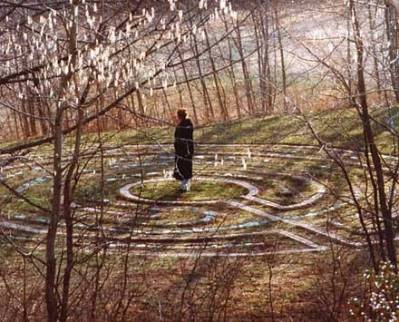



 WAGblog: Dum Spiro Spero