This is an extremely interesting article. Not for everyone, perhaps, but well worth reading.

This is an extremely interesting article. Not for everyone, perhaps, but well worth reading.
Please note about the post below that I already accept that some people will object to all I say, even accuse me of encouraging people not to take their “meds.” I have not done any of that. Education is education, and if you or your loved one needs to be kept ignorant in order to obediently accept being medicated, please don’t read this or let them read it either, that’s my best and only advice.
If you want to know someone else’s arguments on the subject, read THE ANATOMY OF AN EPIDEMIC, by Robert Whittaker. I do not agree with everything he writes there, but it certainly was a springboard for my thinking.
So! This post deals with what I see as a gross failing in 21st century psychiatry, the over-prescription of psychotropic drugs. Sometimes driven by psychiatric practitioners who have neither the time nor interest or training to do “talk therapy” or even basic counseling, sometimes driven by the desires of consumers/patients themselves for a no-trouble, “quick fix” for their problems (not all of which are strictly speaking pathological), it is driven certainly by the demands of pharmaceutical companies for profit.
This last, Big Pharma’s requirement for increased profit, has led to massive advertising campaigns and the legal and not so legal encouragement of “off-label” uses, a band wagon upon which both practitioners and, I would add, eager consumers leap. It is not without consequence that both the drug companies and many if not most psychiatrists / prescribers would have consumers believe that psychotropic drugs “treat” illness, that is to say that the drugs target a specific neurotransmitter that has been conclusively shown to cause a given condition and to be measurably “out of balance” compared to levels in so-called normal persons.
THIS IS NOT THE TRUTH. I repeat: It is not true that psychotropic drugs treat illness, not the way antibiotics treat infectious diseases. An antipsychotic or antidepressant drug is NOT a silver bullet specifically targeted at a pathological culprit. These drugs are prescribed to alleviate symptoms, to alleviate, for instance, hallucinations or delusions, and maybe, sometimes, to elevate a person’s mood when pathologically depressed. They may be prescribed for other “reasons” as well, though to call a drug that is used by a doctor/patient for a presumed condition a “treatment” is not the equivalent of saying that the drug is either indicated or effective. It only says that someone has decided to use it as if its purpose were to treat a supposed condition.
What do I mean? Well, take, for instance, antibiotics. Most of us know by now that they are useful and indeed curative in many cases of bacterial infection. We also know that sometimes ABs are prescribed i.e. used, in cases of viral infections and illnesses. But antibiotics can neither treat nor alleviate conditions caused by viruses. So if a physician gives a person a prescription for penicillin in the case of a cold or flu, (and for whatever reason) he or she may be said to “use” the drug for such and such, yes, but it says nothing about whether the drug is useful or effective or necessary. Which of course in such cases it is not.
Ditto some prescriptions for APs and ADs. Ditto maybe ALL such prescriptions: yes, they can use APs and ADs as if they targeted a “mental illness” but just because one takes a pill “for something” does not mean or definitively indicate that the drug is useful, helpful or harmless.
I know, I know, many people who will object that such drugs have helped them function in life much better than before, when they were self-described (or otherwise) “basket cases.” I cannot take that away or even deny that a couple of APs seem to have helped me more than they harmed me. Although I now swallow the APs Abilify and Geodon together (I cannot take them separately without ill effect) taking one AP, Zyprexa, seemed to me to have near miraculous consequences in my life –I have detailed these elsewhere but “take my word for it” I felt like life’s lights had been switched on in my brain. At the same time, Zyprexa’s other effects were devastating: obesity, high cholesterol and triglycerides, pre-diabetic blood glucose levels yada yada yada. (By the way, why is one effect a “treatment” and the others “side effects” and therefore discountable? Aren’t all effects of drugs effects of the drugs?)
So I am not saying that the drugs do “no good” ever or at all. And I am emphatically not advising anyone to stop taking whatever they have been prescribed. For one thing, abruptly stopping medications, particularly psychotropic ones, can be a prescription for disaster. Not only could the physical consequences be unpleasant, but to suddenly stop a med only sets one up for what looks like “relapse.” If your body is used to taking a drug, and it is abruptly and completely withdrawn, doesn’t it make sense that you will feel untoward effects similar to those the drug is supposed to treat? I used to take Inderal for headache prevention and akathisia, but another effect of it was that it lowered my blood pressure and slowed my heart rate. In one hospital, for some unknown reason, they stopped giving me Inderal (propranolol) — one day I was taking 40mg three times a day, and the next day I was taking, well, zilch.
Is it any wonder that within the next day or two, my “vitals”, though normal before I ever took the Inderal, rebounded way over normal limits, my heart racing painfully and my BP sky-high? Of course not. This was no proof that my heart-rate was pathologically rapid nor that I “had” high blood pressure. Of course, the doctor tried to tell me so, but in fact all it proved was that carelessly and rapidly stopping a beta blocker drug resulted — like a rubber ball dropped onto the pavement – in what was essentially withdrawal and temporary rebound.
So if you abruptly stop your meds because you think my argument here “holds water” you will be setting yourself up for two things: 1) apparent relapse of illness even if it is really just withdrawal or rebound symptoms, 2) possibly mistaken evidence that you need the drug. However, if you and your doctor decide that you might do okay without the medication, and you very, very slowly reduce it, then you have a much better chance of not inducing a relapse, and/or “proving” that the drug is essential to your mental health.
Note that whether a given medication really helps or not is up to you and your doc to ascertain. All I mean to say is this: do not drop any AP or AD without considering all the consequences of stopping it without a gradual taper.
Now I want to segue into some information from “reputable sources” so-called so you can see where I am coming from. Please continue below the following if you already know all this. I neither endorse it nor argue with it. I am just providing this official “information” – true or not so true — in order to further my argument below it.
For the purposes of the discussion, I deal only with antipsychotic drugs (APs) and antidepressants (ADs) of the SSRI, SNRI and tricyclic variety. I know there are other important medications used in psychiatric settings and treatment but for space and energy’s sake, I will limit this post to those two categories because for good or ill they are often prescribed together.
__________________________________________
Forgive me, NIMH, but I need to crib a short section from your website on the side effects of various psychotropic drugs http://www.nimh.nih.gov/health/publications/mental-health-medications/complete-index.shtml before I begin my discussion about them. Any emphasis (italics) or bracketed word/s are my own.
First NIMH (National Institute on Mental Health) has this to say about “anti-psychotic drugs”:
“Some people have side effects when they start taking these [antipsychotic] medications. Most side effects go away after a few days and often can be managed successfully. People who are taking antipsychotics should not drive until they adjust to their new medication. Side effects of many antipsychotics include:
“Atypical antipsychotic medications can cause major weight gain and changes in a person’s metabolism. This may increase a person’s risk of getting diabetes and high cholesterol.1 A person’s weight, glucose levels, and lipid levels should be monitored regularly by a doctor while taking an atypical antipsychotic medication.
“Typical antipsychotic medications can cause side effects related to physical movement, such as:
“Long-term use of typical antipsychotic medications may lead to a condition called tardive dyskinesia (TD). TD causes muscle movements a person can’t control. The movements commonly happen around the mouth. TD can range from mild to severe, and in some people the problem cannot be cured. Sometimes people with TD recover partially or fully after they stop taking the medication.
“Every year, an estimated 5 percent of people taking typical antipsychotics get TD.”
ANTIDEPRESSANTS
Antidepressants are common psychotropic drugs frequently prescribed. Here
is a block of quotes from the NIMH site regarding the use and side effects of SSRIs, SNRIs, and tricyclics. MAOIs are also mentioned, though they are far less often prescribed than in the past.
“Depression is commonly treated with antidepressant medications. Antidepressants work to balance some of the natural chemicals in our brains.* [see discussion that follows] These chemicals are called neurotransmitters, and they affect our mood and emotional responses. Antidepressants work on neurotransmitters such as serotonin, norepinephrine, and dopamine.
“The most popular types of antidepressants are called selective serotonin reuptake inhibitors (SSRIs). These include:
“Other types of antidepressants are serotonin and norepinephrine reuptake inhibitors (SNRIs). SNRIs are similar to SSRIs and include venlafaxine (Effexor) and duloxetine (Cymbalta). Another antidepressant that is commonly used is bupropion (Wellbutrin). Bupropion, which works on the neurotransmitter dopamine, is unique in that it does not fit into any specific drug type.
“SSRIs and SNRIs are popular because they do not cause as many side effects as older classes of antidepressants. Older antidepressant medications include tricyclics, tetracyclics, and monoamine oxidase inhibitors (MAOIs). For some people, tricyclics, tetracyclics, or MAOIs may be the best medications.
What are the side effects?
“Antidepressants may cause mild side effects that usually do not last long. Any unusual reactions or side effects should be reported to a doctor immediately.
“The most common side effects associated with SSRIs and SNRIs include:
“Tricyclic antidepressants can cause side effects, including:
“People taking MAOIs need to be careful about the foods they eat and the medicines they take. Foods and medicines that contain high levels of a chemical called tyramine are dangerous for people taking MAOIs. Tyramine is found in some cheeses, wines, and pickles. The chemical is also in some medications, including decongestants and over-the-counter cold medicine.
“Mixing MAOIs and tyramine can cause a sharp increase in blood pressure, which can lead to stroke. People taking MAOIs should ask their doctors for a complete list of foods, medicines, and other substances to avoid. An MAOI skin patch has recently been developed and may help reduce some of these risks. A doctor can help a person figure out if a patch or a pill will work for him or her.”
___________________________
First of all, do ADs treat a chemical imbalance? Is that statement even true, or just a fiction made up to “prove” that ADs work? If true, what does a “normal” balance consists of? Does anyone know how to measure the levels of these neurotransmitters, and if so, please let me know — give me numbers — where and what the “imbalance” ADs are correcting is.]
So all right, thems the “facts.”. Note that I say nothing about efficacy in what follows; I speak only of the side effects. But what about these so-called side effects? It seems to me to be hardly inconsequential when an AD, taken to improve the quality of one’s life and increase ones ability to feel pleasure, which is often absent in depression, simultaneously blurs ones vision (so you cannot read), causes weight gain (as tricyclics tend to do) and has sexual side effects that include reduced sex drive, and problems having and enjoying sex. For many people, maybe even most people, sex is one of the greater pleasures in life, at least sometimes. It certainly promotes better intimate relationships for most people and lets face it, people like it. So what is one to think of a drug that “treats” depression by inducing reduced sex drive, and problems having and enjoying sex. Is the reduction of pleasure in sex without importance? Or is the doctor saying, well, you can give up sex and sexual pleasure, what does it matter?
The thing is, reducing any pleasure, especially in a person who has trouble feeling pleasure at all, is not, in my considered opinion good treatment. Who has the right to tell a patient that if she or he takes an AD that they will have include reduced sex drive, and problems having and enjoying sex but that this isn’t important in the general picture. Of course it is important. Think of all the men who are devastated by “simple” impotence. To clinically induce impotence or the female equivalent, to clinically, biochemically reduce the ability to enjoy sex or to enjoy pretty much anything, is not just bad treatment it seems to me nearly criminal. How many people who have taken ADs and found themselves experiencing reduced sex drive, and problems having and enjoying sex actually got better? Well, okay, if perhaps you are not told and so do not understand that the drug itself causes this effect you might just say, “Ah well, I dunno why but sex is not important, I don’t really give a damn about it anymore..”. In short, you might “forget” — having no sex drive tends to do this — that sex was pleasurable and attribute it to your natural state. But in that sense you simply are denying that what you “don’t know” or feel any longer was ever important or a source of pleasure because you do not feel it now. Instead, you might accept that it is and always was a trivial concern.
But no one has told the millions of users of ADs that while they might feel some increase in pleasure elsewhere in their lives, their intimate lives will be fraught with reduced sex drive, and problems having and enjoying sex. How many people now feel utterly depressed because of their unexplainable reduced sex drive, and problems having and enjoying sex? Do they even understand that is is not “they themselves” not some inner deficiency, but a side effect of the drug that is/was supposed to make them “feel better.” If I were more paranoid than I am at the moment, I would say it sounds like some sort of ugly conspiracy by doctors and drug companies to avoid even informing patients of these serious consequences lest they refuse the drugs in the first place…So I ask you, how many of you, or how many people in general, would voluntarily, not to mention eagerly take a pill the effects of which include reduced sex drive, and problems having and enjoying sex?
Argh, it is getting very late and this has been a long treatise, impassioned in a curious way for someone who has never, drugged or undrugged, cared about sex…I so wanted to get to the APs and the dangers of adding them willy nilly to an AD “cocktail.” If reduced sex drive weren’t bad enough, is anyone telling these people who are being prescribed an AP either off-label or unnecessarily that it will almost certainly cause some weight gain, with all the usual concomitant consequences, and may even induce diabetes? Is anyone telling them about how it feels to suffer from akathisia, a very common effect of APs? Drug companies may discount it as mere “restlessness” but akathisia does not mean that you simply want to take a walk every afternoon…it is completely agonizing, those of us who have experienced it will with alacrity tell you. No one simply accepts akathisia – restlessness, hah! – and ignoresit. You cannot ignore it and it is devastating to all feelings of pleasure and all sources of enjoyment, should you, after losing your sex drive, have any left.
But as I wrote above, it is getting too late at night for me to write more, and perhaps I have said enough. You might accuse me of having “done enough damage” too, I dunno. But I believe these things and I think they need to be said, whether or not anyone takes them seriously.
Just wanted to update you on where I have been and how I am: I spent 6 weeks at Natchaug Hospital in Willimantic, Connecticut this past July and August and though I was discharged as much improved, I am still having a difficult time, both readjusting and well, simply having a hard time of it. Although in the hospital they did a little adjusting of meds, increasing both the Geodon and the Zoloft, I am not convinced that either one made much of a difference nor that it did less harm and more good on balance. In any event, Dr C and I (at my request) soon eliminated the 25mg increase in Zoloft, and are now dropping the 80mg increase in Geodon. She is concerned that the 240mg is making me very irritable and more upset and frantic rather than providing enough relief to make it worthwhile. Yes, the voices are much improved, but that could be the passage of time and perhaps due to a general decrease in paranoia, who knows? All I can say is that I cannot take this general state of overwrought irascibility, a tendency to snap at anyone who “looks at me crosseyed,” as my mother used to say.
Natchaug Hospital remains a very good place, the best I know, and just as I remembered, not least because they have a philosophy of kindness and compassion towards patients. In fact, they are excellent because they have a philosophy and are not simply flying by the seat of their pants, hiring whoever comes along needing a job, burned out or not. Not only is their philosophy based on compassion and not on controlling the patient, but they see no point in rules for the sake of rules. It is clear that if there is something in the unit set-up that doesn’t serve a particular patient, the Natchaug staff will bend it as far as they can and try to accommodate each patient’s particular needs. As I was frequently told, why make someone miserable when you can make them happy? It is difficult to be happy in a psychiatric unit, and many patients are miserable because of their illnesses, but not once did I ever see a staff member add to that misery willfully and certainly not to mine. (I frankly could not say this of two Connecticut area hospitals, one in Manchester and the other in Middletown.)
One thing that makes many patients happy at Natchaug, by the way, is that caffeinated coffee is provided at breakfast, a rare blessing in in-patient psychiatric settings. And since everything is served cafeteria style, so you can have all you want.
They used to provide hot decaf coffee on the unit itself, which was a treat. Because one very ill patient tossed a cup of coffee at a staff member, however, and she was injured, and because for some reason they decided that that patient could not be restricted individually from having hot coffee, now no one is permitted hot drinks on the unit at all. Yet, I suspect that even he would have not thought it unfair to be kept from the coffee pot! I know that in other hospitals I have had restrictions placed on me that others have not, and no one thought it wrong or unfair to me…Anyhow, I dunno what to think, but it was their policy, a misguided one, perhaps, but who am I to say? I know everyone went nuts for a while about having to drink lukewarm “swill.” Finally, though, the patients simply gave up on the “coffee” machine and did without. Anyhow, I have to admit that when I first saw the hot coffee machine, I couldn’t believe it, not because I was thrilled — though I was — but because I saw an “accident”or worse already in the making…
Note: one of the few hard and fast rules at Natchaug is one they cannot change because they will lose accreditation: no smoking. Smoking is simply not allowed, not even on hospital grounds. While certain patients have tantrums about this and might cause an uproar from time to time in order to try to force the staff to allow them to use the courtyard to smoke “just one cigarette, just this once, please, I am absolutely desperate!” it is simply not possible. But people are allowed the patch and gum and every effort is made to help smokers quit. Even though some staff acknowledge that the policy is unfortunate, even unfair, nothing can be done about it.
I was not, however, comfortable for most of my stay there, and was paranoid a great deal of the time. Of course, I did not understand that the staff was aware of this, so when I began to come out of my delusions of persecution, it surprised me mightily to discover that they knew that paranoia was the reason for my hostility all along. Nevertheless, up to the very day I was discharged, I was hearing people talk about me up and down the hall and at the nurses’ station.
Well, that is all I am going to write for today because I am, as of a week ago, in the middle of writing my new memoir, and as the days progress I plan to put parts of it up here, for comments and for suggestions. Feel free to do both!
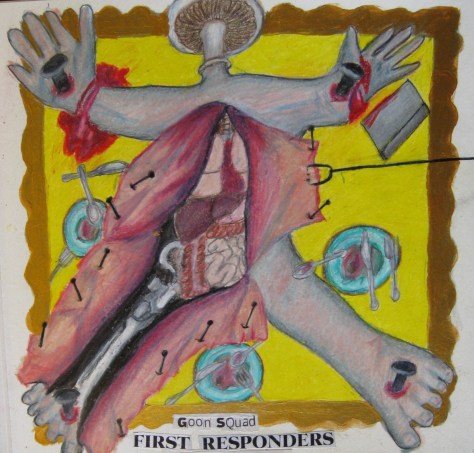
I will finish here with one of my latest drawings, which represents how I felt when I was restrained at Middlesex Hospital, both the time I described in a recent blog post, and the other(s) (for which I have amnesia) when Josephine told me I was more or less “out of control”…to which I can only respond: Violence begets violence, and perhaps if they had not perpetrated on me what they did, things might not have gotten out of hand, But then, that hospital is one that is guided by the Control for Control’s Sake philosophy and the nurses were bitter and angry people…Needlesstosay, they hated me if only because I refused to roll over and play dead, if not die.
Forthwith the picture.
Due to a personal tragedy, I have been off line for a long time. Please go to my other blog to read this review, just written tonight. I will be back here soon.
http://aboutschizophrenia.blogspot.com/search/label/Latuda
Thanks all,
Pam
I started the post below as a response to a very kind email from “Mary” but it eventually got so long and involved that it became more of an essay than a letter. I hope she will understand why I put it here, rather than sending it to her alone!
_____________________________________
First, here is her letter to me:
Thanks, Pam. I learned from your very well written account, “On Psychiatry and Authority.” I felt like I was in the room with you, it was so descriptive. I recently had a call from a man who is bipolar. He said while off his meds, he was in an encounter with his girlfriend and was arrested on domestic violence or disturbing the peace charges. He told the officers he was a psychiatric patient, but of course, jails have become America’s answer to mental illness. The police threw him into a cell after booking him, then released a police dog on him in the isolated cell rather than simply locking the door. He said the dog ravaged his leg, exposing bone, and he was taken to the hospital. There may have been a time when only black mental patients were treated this badly, but the caller was white. I wrote about more murders and abuses against mentally challenged people in my blog – Letter to Mary Neal’s Terrorists – http://freespeakblog.blogspot.com/2010/10/letter-to-mary-neals-terrorists.html
I am still undergoing much censorship, Pam, likely because my advocacy to decriminalize mental illness is a threat to the private prison industry. Over half the inmates in America are mentally ill. If they are released to community care under AOT programs or treated as hospital inpatients rather than prison inmates, depending on their offenses and functionality, it would not be more expensive for taxpayers, but it would negatively impact prison profits.As I read about your brutal treatment in the hospital, I was so sad. Here I am advocating hospitals rather than prison, and you were treated that way by psychiatric professionals. The only way I can continue after learning what happened to you and others who were in abusive hospital environments is by thinking about people like my caller who was not only tossed in an isolated cell naked, but a vicious dog was sent in to attack him after that. I also think about my brother Larry who was murdered under secret arrest because police were fed up with being his psychiatric caretakers. Although hospital care is only marginally more humane than incarceration in some cases, there are fewer permanent physical injuries and murders among hospitalized patients.
Thanks for sharing your experiences.
Mary Neal
Assistance to the Incarcerated Mentally Ill
http://www.Care2.com/c2c/group/AIMI
And my response:
Thanks so much for your email and sympathetic understanding of the traumatic aspects of my so-called “treatment” at Muddlesax Hospital last April. Such treatment was, at other hospitals especially in the 80s and 90s and even in the early 2000s, so much worse — I mean in terms of real physical violence perpetrated against me while being literally, bodily, forced into restraints — that I was almost reluctant to write about such a relatively mild incident. But the humiliation of having to put myself into restraints was almost more unbearable than the, in some sense, honorable freedom to resist! It just riles me completely…How dare they put me in such an untenable position? Then again, I suspect it was intentional.
Nevertheless, I am very much aware that in Connecticut hospitals way too many people have died while they were in restraints, and this in the not so distant past. In fact it was investigative reporters at the Hartford Courant back in the late 90s —and their article entitled, I believe, Deadly Restraint — that served as a national catalyst in getting hospitals to stop the wholesale use of seclusion and restraints. At the very least it started a national discussion about the use and abuses of force in psychiatric hospitals and (I think) juvenile detention centers. (God forbid anyone at all should care about jails and prisons however…Those people obviously deserve it, they are criminals after all… Right?)
But even though most hospitals in Connecticut claim to have reduced the use of force to the most extreme cases, (they will force medication though, through the use of forced medication hearings) I do not believe that can be so. Because I cannot believe that I alone “deserve” seclusion and restraints and yet I have been subjected to such abuse time and time again. Until 2005, I was put in S + R at least once almost every time I was hospitalized and quite often multiple times, for many long hours. After 2005, I would say the incidence was reduced by about half. That means that half the hospitals still indulged in this abuse, one of them, as I wrote earlier in this blog, employing them almost every day for a week and a half!
Of the hospitals that did not physically restrain me, most were still abusive, but more subtle about it…For instance, they would put me on Constant Observation, but then tell the “sitter” not to speak to me. Or they would institute the common but for all the commonness of it, still abusive policy, of making the one-to-one person being ignored sleep with her hands and head completely uncovered. Now, all hospitals are freezing these days, I do not know why. But it was well known that you had to bring a sweater or sweatshirt everywhere, because the air-conditioning would be out of control and everyone was too cold no matter the season. So to have to keep your hands exposed all night was cruel. But the reason that they insisted on it clearly had nothing to do with it being “safer” for the patient. No, it was punishment. That is ALL. The whole purpose of one-o-one in those places was punishment. You could not talk to the sitter, one, and the sitter had to follow you even into the toilet. And all the while deliberately ignoring you if you spoke to her..So what was the point, if they kept the close eye on you they were supposed to, they knew you could not hurt yourself. So the point was simply to humiliate and torment the patient so they would beg for “freedom” and pretend or at least mouth the words “I am safe.” Those magic three words were all that were needed, but you had to say them so that the nurses could hear.
For many years, I believed that this was a hospitals-wide, state-wide, business as usual policy, the no-talking, hands exposed rules, and that it was reasonable. Until I went to Natchaug and Sharon told me that Natchaug didn’t believe that one-to-one should be “punitive” in any way. And by the way, she said that word, “punitive,” not I. Nevertheless, at Natchaug, no one made me sleep with my hands outside of the covers and the sitters freely spoke with me. In fact, once they understood that I needed them not to share their own lives with me, because then I would feel the need to take care of them, something that would not be helpful to me, they wanted to find out specifically how they could help me.
But back to the use of restraints. I am only 5’ 3” and from 2005 until 2010, I weighed between 92-105 pounds. Surely I could not have been that great a threat to anyone. In fact, at one hospital, one I will not name, fearing them so much I wouldn’t put it past them to take revenge, they had a somewhat better policy of dealing with agitated patients. At a Code Orange, staff members from every unit converged on the “victim” (sorry but that is how it felt) and “held” her until she could calm herself. Now, this “holding” often consisted of pinning her bodily to the floor, which itself could be anxiety provoking. And at least once, in my case, a male nurse who openly detested me, tried to pin me to the floor on my stomach, which I had read was something to be avoided as people had died when held down prone, as opposed to supine (on the back)! But in general the technique worked, if the victim was held down long enough. Basically, if he fought, there were enough people holding him down to allow him to exhaust himself without doing anyone harm. And then, when exhausted, he would calm down and either take PRN medication, or assure the head nurse that he would be okay now. It worked, though, no matter what I thought about it, or of the people doing it. And it did avoid all use of restraints, though of course by itself it is already a form of restraining people, it just avoided the use of mechanical restraints. That though, still makes a big difference…
Forgive me if I segue again into another digressive subject for a minute or two, but the subject of 2010, which recently turned the decade corner into 2011, brought to mind the fact that having taken Zyprexa (most of the time) since then has caused me to gain a fair amount of weight, another subject that is near if not dear to my heart. Oh, the damage that psychoactive drugs do! How dare doctors blame us, the people with schizophrenia, for it? Don’t we have enough trouble without being blamed for the side effects of the very medications that they prescribe? Do you know that for decades, and sanctified as Truth in psychiatry textbooks, they insisted, without any reason and making less sense, that schizophrenia itself was the cause for so many of us to be obese? That was utter nonsense to my way of thinking. Every single memoir about sz that I ever read revealed that the author had been thin UNTIL she or he was treated with antipsychotic drugs, and then, blammo, food becomes the enemy. Yet the shrinks actually insisted, against all the evidence, that it was the illness and not the drugs that was behind the huge % of patients exhibiting this “signal obesity”.
Well, all along I thought they were full of shit, pardon my french. No, I didn’t just think it, I KNEW it. I had not a doubt in the world. And you know what? I was right. The latest research has borne out precisely what I’d asserted all along: when investigators looked at a population of people with schizophrenia that for one reason or another had never taken antipsychotic drugs, they discovered that this neuroleptic-naive group was thinner than average, and that it was in fact the drugs that had made us obese, sometimes massively so, rather than schizophrenia. And it just infuriates me, not just the obesity, it is not just the weight gain the drugs cause, it is the fact that we patients have been blamed for something that they, the doctors and nurses and their GD drugs, inflicted on us. Maybe it is especially difficult for me, with my history of anorexia and my intense wish simply to disappear, but what about those who will die from drug-induced heart disease or diabetes?
I know, I know, Mary, you may be on the other side of this argument, or it might appear that way, because you want more treatment to be available, not less. I do in general agree with you: Prisons are overflowing with the mentally ill, who should never have been there in the first place. In fact, I think the prisons are overflowing with an awful lot of people, especially those of a certain darker-hued skin, for little reason more than the very color of their skin! I mean, tell me why Robert Downey Jr and Lindsey Lohan, aside from their celebrity status, get caught again and again with drugs and cocaine etc, yet are sent off to posh rehab centers, with a smile. But should you happen to be an unknown, POOR, god forbid mentally ill person of a darker hued skin (and let’s face it, a light/white South African immigrant would not be treated the same way as a dark-skinned someone with Nigerian roots!) if you are that person and you offend in some way just 3 times, well, then, you are sent away to one of California’s really “posh” ha ha ha penitentiaries FOR LIFE! Things like that just make my blood BOIL. And don’t get me started on the insanity of our drug laws!
But forgive me for going so far astray. It is just that the whole subject of prisons and what we do to people in them is a really sore point with me, and not just how we treat the mentally ill there, though that is about as atrocious as it can get…Need I even mention the “extra beds” in unused supermax prisons being used to house “unruly” MI prisoners? It makes me want to scream and throw up at the same time.
Well, no doubt this “essay” is both incoherent, in the sense that it doesn’t cohere properly, and just plain incoherent! I admit to a bit of laziness, as it is late at night, and i need to take my MEDS and go to bed. So, at the moment, I am not going to polish and fix it. I am going to pretend that since this is “only” a blog I can get away with shoddy ill-organized writing, and call it a night. Which is what I am doing forthwith…Good night, and thanks, Mary N, thanks a million again.
PW
Please note: For my final take on what happened at Middlesex, please jump to this link: https://wagblog.wordpress.com/2012/05/15/useless-psychiatric-mediation-and-a-poem/ (added in September 2012)
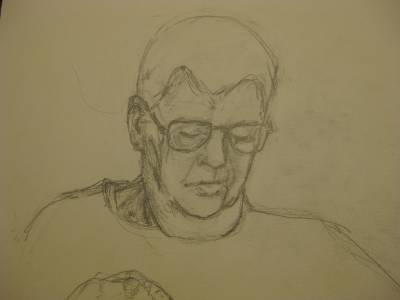
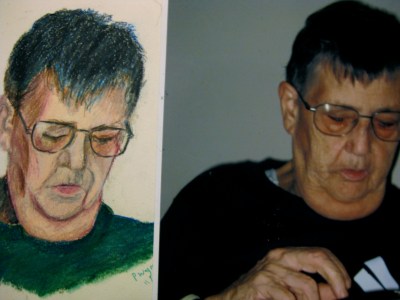
First, before I start my post today, I wanted to share my newest artwork, which is a colored pencil “painting” of a woman who lives in my building, whom I will call Rose. She did not ask me to paint her; she was simply someone who sits quietly for many hours in the community room, and so was a good subject for a portrait, and a photo. I also happen to find her a very agreeable person, one of the nicer ones here (most are gossips and backbiters, or if not most, then the most vociferous and visible of the residents). I think she will be quite pleased with how it turned out, so long as she does not expect anything but a portrait that is faithful to life, rather than an idealized one. I believe, however, that Rose is very down to earth and knows what she looks like, and will appreciate what I have painted.

_______________________________________________________
Now I want to discuss, yet again, the use of restraints in Connecticut psychiatric units, particularly as it pertains to my treatment there. As I recall, I have not gone into much detail about the last hospital stay, back in April and May, largely I think because it again was so traumatic and in many ways similar to the previous one, that I could not bear to contemplate it.
However, as very little as I recall, I do remember more of the stay than the complete amnesia I still experience for the stay in Manchester, back in October or November of 2009. When I say I have a loss of memory with regards to this other hospital stay in the spring of 2010– in Middletown — I meant it more for the specifics of certain episodes. And for any of the people there who staffed the unit. (Except for Christabel the OT). With regard to much that occurred I believe a lot could be brought back to me, under the right circumstances. I do, for instance, continue to have an overall memory of what the place looks like and where my room was and some details about what happened. What I do not, and did not remember, not even the next day, was most of what precipitated the use of restraints and seclusion during this stay. Or at least, of the two or three incidents of S and R two are jumbled together, so that it takes some mental probing for me to straighten out any of it. but one incident remains too clear in my mind for comfort though even at the time, or immediately afterward, as well as now, I have no idea what was the actual precipitant.
Anyhow, what I recall of that episode is this: I had been taken off Geodon, which I took regularly with my Abilify up till then, both in order to boost its antipsychotic properties as well as to temper any Abilify-induced irritability. The irritability was physical as much as mental — and with the resultant tendency to get into verbal fights and arguments with anyone who, as my mother used to put it, looked at me crosswise. I have no idea why they did this, took me off Geodon, given that I know I explained the rationale for the use of two antipsychotics. But many MDs seem to find this objectionable, however effective. Perhaps they considered the 20mg Zyprexa, which they had talked me into taking on an acute basis, would be an adequate substitute for the calming effect of the Geodon. They had wanted to stop the Abilify, too, using Metformin, a diabetes drug, for weight control, but I had insisted on taking it both in an effort to combat Zyprexa’s tendency to cause weight gain, but also because I believe that it is the Abilify that has so massively enhanced my creativity.
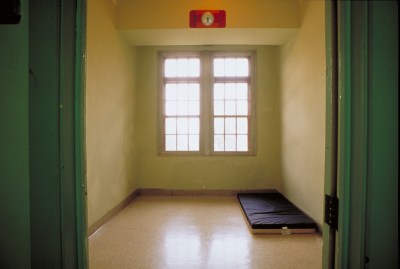
So there I was, on Abilify untempered by Geodon, and taking Zyprexa, which induces its own “upsetness” when my weight invariably increases…I assume that I must have been hostile, loud, and disruptive, for I do not know why else they would have made me go into the seclusion room. I do remember that I could not calm down, and that in the flimsy johnnies they had clothed me in, I was freezing, so that even when the nurse doing constant observation told me to lie down and rest, I was unable to do so for all my shivering. I begged for a blanket, but no deal. I pulled the entire bare mattress over me as a covering. Well, this was apparently seen as a self-destructive act, or something, as immediately they pulled it off me and dragged the mattress itself from the room. Now I had nothing for warmth, except my own anger at having been treated in such a fashion.
I remember that I was yelling a lot, and that I wouldn’t lie down on the cold linoleum and “calm myself.” No, I wanted to talk, and begged the nurse to do so. Instead, she only turned away and told me again to lie down on the floor. Well, this enraged me, and I went to the door to complain again. She said nothing, only stood in front of the open door so that I could not leave. Finally, getting no response, and still anxious and “het up” I suppose you could say, or over-activated by the Abilify, I tried to push my way through her into the opening. Immediately two “guards” pushed me back into the room. I yelled at them, and pushed back. One of them asked me what was wrong with me, why I didn’t just ask to talk with the nurses instead of resisting physically…I looked at him and said that I did ask to talk, and she refused. He seemed somewhat surprised by that. Nevertheless, he ordered me to go back into the room and lie down.
I was having none of this dictatorial behavior on their part, and as I recall, at one point — no, I do not remember what happened. I only know that suddenly the guards were on top of me, and one had pinned my arms behind my back and was pushing my face into the linoleum floor. It was as if I were a recalcitrant inmate of a prison and this was a cell “take-down.” I was hurt and I was furious.
When they let me up (and why they had pinned me to the ground I have no recollection, only that when they let me up, I was finally allowed to talk to the nurse nad stand out in the hall with her. I heard some talking behind my back and a commotion, followed by feet going down the hall away from us. I had a bad feeling about it, and asked the nurse, “What are they doing?” She responded, ominously, “They are preparing a bed for you.” “a bed? what sort of bed? She remained silent and I understood that they were putting restraints on my bed…”You can’t restrain me, I am out here calmly talking to you. You haven’t even offered me a PRN and I will tell you now that I would be more than willing to take one. But I am NOT a danger to myself or others, and you cannot legally put me in restraints.” The nurse continued to remain silent. My heart began to race. I called down the hall, “I will not let you use restraints on me, I am calm and this is not allowed.”
Some of the staff approached me and told me to come down to my bed room with them. I complied, because I knew that if I didn’t they would have some reason to say I “deserved” to be restrained. When I got to the room, I found I had been correct: there on my bed were the straps and shackles of four-point restraints, attached to the bed frame.
“I am calm and I am not a danger to myself or others,” I carefully declared. I will take medication and I do not need restraints.”
“Lie down on the bed, Pamela” someone told me. I refused, saying that this was punishment pure and simple and that they had no cause to do this nor any legal right. “I will ask you one more time to lie down on the bed, Pam, or the security team will help you do so.”
At this point, I understood that they were going to use this form of discipline on me no matter what I did. That they were out to get revenge and that they would use any excuse to excuse such measures. So if I “made” them force me into the restraints, that would by itself prove that I “deserved” them. So, more humiliated than I believe I have ever been in my life, I sat down on the bed, then lay down on my back and said out loud, “I am now placing my limbs into four-point restraints, and I want a record of the fact that I am calm and not resisting and that I have asked for a PRN instead.”
It was no use, though, as they went ahead and shackled me, then left me alone in the room, except for a staff member monitoring me through the door, left partially ajar. My heart was racing with rage, and I could feel the pain of such profound humiliation surging through me. But I did and said nothing, I think, because I was going to prove to them that the drastic measures and punishment they had inflicted on me was WRONG. After about an hour and a half someone came back and let me out. I was neither compliant now, nor placated and as soon as I was free and out of that room, I let it be known, loudly that I intended to file a complaint. But no one said a thing, no even spoke to me the rest of the night…
THAT is what I remain so traumatized by, at least with respect to this time: the utter humiliation of what you might call “cutting my own switch,” along with the clear understanding — even mutual acknowledgment — that they were punishing me.
This continues to preoccupy me, that is when I allow myself to think about it, or when I continue to try to read the records of that stay, which records I only a week ago obtained (having sent for them many weeks ago…). I cannot help but re-experience the same brutality and the same extreme and exquisite humiliation, and once again it hurts beyond belief. The worst thing perhaps is that when I told my family about what the staff had done to me they didn’t come to my support, they didn’t unconditionally defend me. They didn’t even seem to care, or to believe, that I had done nothing to “deserve” four-point restraints (as if anyone deserves them). Another family would have automatically come to their member’s defense and declare that NO one deserves such brutality, and that as their family member I should never have been treated that way. Another family would have done –oh forget it! No, my family is always so eager to please the staff and to believe that I am in the ‘wrong” at these hospitals, to believe that I am at fault, (this is the story of my life!) that they simply told me I must have caused their use of such brutal methods of control by my own behavior, I surely deserved it, and besides “what else could they do?” Shackling me, calm and rational, me to a bed was clearly the only option and entirely justified…So much for MY family’s loyalty and compassionate support, huh?
Well, bitterness solves nothing, so I won’t dwell on the last subject, but I will say that if I can, I intend to file an unoffical complaint, or barring that, an official one. The problem with the latter is that I will not then be able to confront my persecutors. whereas if I did so unofficially, it might yet be possible, if only to avoid a messy public affair. After all, I could easily write something…No, I won’t go there. For now, I only wanted to describe what continues to occur at Connecticut psychiatric units, despite the regulations and general disavowal of the use of cruelty in the treatment of those with mental illness. It still goes on, it just happens behind the closed doors of the hospital and the continued use pf seclusion and restraints as discipline and as a salve for frustration, depends on the assumption that no patient will bother, after the fact of discharge, to do anything about it, except try to forget.

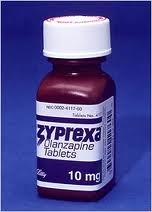
Yes, I am kinda sick of this rollercoaster, myself. But there you have it. If I will not or cannot take the medication, and I have no other choice, what is a person to do? I know it is a miracle drug, yet I fight taking Zyprexa at every possible turn. Why? Because, frankly, I cannot tolerate the enormous weight gain it caused the first time I took it – and for many years, off and on. I simply cannot stand being that visible, eating up so much of others’ air, intruding, in truth obtruding into their space as I do even now…People will ask me questions about some “trade-off” as if it were so easy as that, as if THEY could easily decide, would have no trouble opting to take the drug, and die early from diabetes, which almost a foregone conclusion after becoming obese on Zyprexa. Hell, even without the obesity factor, people develop diabetes on the drug…And that’s only for starters, what about the cholesterol and triglyceride levels that go up and up? Or is that part of the trade off too? That a person with schizophrenia should not care about elevated levels the way anyone else does…
I have mentioned here, I believe, the recent studies that have shown that people with SZ become overweight and obese SOLELY on account of the medications. Without these medications, as a group we would tend to be thinner than the average adult. I have suspected this for many years. It would seem to me that every time I read a memoir by someone with sz, they would tell a tale of being a very slim person, until they were plied with some typical or atypical anti-psychotic, at which point they started gaining weight. Now, it was never clear to me whether or not the old drugs really helped much of anything, except to alleviate a few positive symptoms in some people.
Oh, those who disturbed the peace could be quieted, calmed yes,but no one was cured. I met very few people who wanted to take meds because the drugs actually made them feel better. Oh, perhaps they did, since if one got rid of the hallucinations and delusions of course one would feel better. But for myself the old neuroleptics didn’t work particularly well on either positive or negative symptoms, and the side effects were awful, esp the deadening lethargy the drugs produced. I would never choose to take any of those drugs and I agreed to take prolixin because it was the lesser evil because otherwise, they would threaten me with consequences far worse…But had I had the choice no way would I have chosen to take any of those drugs.
I’m terribly sorry, but I must stop here. I just wanted to get start on someting, but it is 4 am and I need to go to sleep, plus my eyes are so wonky all over again that I can barely see what I am doing, and at times I cannot at all. My eyes are going nuts again, crossing over or going outwards whatever! All I know is the text dances around and I cannot see through the jumble of letters frlying around. It is hard even to figure out which hand is doing what!
Well, enough for now. I hope to be back here tomorrow, but time has a way of getting away from me…
Certainly, the side effects of drugs like Thorazine were problematic enough to begin with. And count weight gain among them. How is it that any doc in state institutions could not see this correlation? But as you know, “there are
none so blind as those who will not see…”
Before I tell you about the most recent medication change, I want to let you know about My Pyramid Tracker at http://www.mypyramidtracker.gov, a website of the USDA’s Center for Nutrition Policy and Promotion. My Pyramid refers to the new and improved USDA food pyramid (http://www.mypyramid.gov) which, by the way, recommends only five and a half ounces of meat or beans a day, which is just a little over a quarter of a pound. The pyramid tracker website is one I highly recommend, however, especially if you are interested in losing weight or in keeping track of what you eat and how much you exercise. In fact, it is a website worth looking at even if you are only curious about how many calories you expend in everyday activities. You can use it every day or once a week or on any schedule you choose, and all you need to do is follow the easy instructions at the end of any given day to see how you did, though it helps if you jot down what you eat during the day, so you don’t forget entirely. Every time you log in, the site keeps track, so you can see stats later on about how you are trending.

My Pyramid and the Pyramid Tracker are great sites for general nutrition info, calorie calculation and the general calculation of energy expenditure in your daily life. You can compare what you expend to your daily calorie requirements. That is, by counting such activities of daily life as dish-washing and childcare and yard-work as forms of exercise the site will tell you how many calories you expended on them. It also calculates your BMI — body mass index — your ideal weight, and how to achieve it as well.
If you happen to be interested solely in finding out how many calories are in a given food, however, the Nutrient Data Lab website is great. It has a large number of brand name foods as well as fresh and raw foods as well: http://www.nal.usda.gov/fnic/foodcomp/search/index.html
Should you be on medication that causes weight gain, or makes it difficult to lose what weight you formerly put on, check out those sites (above). They could make a big difference, or at least be a helpful tool in your efforts to keep your weight under control. But two things nonetheless are very important:
In fact, in FACT, it is your meds and the chemical changes that they produce in your brain that has caused you to gain weight. It is NOT your schizophrenia and it is NOT your fault. Do not believe whatever they say about research “proving” a close link between your diabetes and your having schizophrenia. That is utter B.S. Diabetes is on the rise everywhere in the country and its increase is directly related to obesity: one gets obese because one eats more calories than one expends. Being more than a little overweight is known to be a huge factor in Diabetes, type II (insulin insensitivity).
Now it is true that you might have been or become overweight without the meds, but I assure you that certain meds all but guarantee it. When researchers have the gall to say that somehow obesity is directly or in some sense causally related to schizophrenia, or that diabetes is genetically connected to schizophrenia, that is a load of hogwash, and I suspect those researchers are on the take from certain well-known drug manufacturers. I’ll bet that for many of you who were once thin before you took medication, whether it was the older drugs or the newer atypicals, it was only when you started taking antipsychotics (and some antidepressants as well) that you began to gain weight, sometimes massive amounts. But “they” want to tell you that it has “nothing to do with the meds” no, it is YOU, it is your illness, not the Zyprexa or the Seroquel or the Risperdal that caused the weight gain, or for that matter, not the Thorazine or the Mellaril or the Prolixin. We know better. They also want to tell us that if we die 25 years earlier than our peers, that is our mental illness speaking or our own fault (somehow) and not their iatrogenic — that is to say, medically-caused, doctor-caused — drug-related obesity, diabetes and heart disease. I won’t even mention the generally dismissive attitude of many doctors towards the physical complaints of anyone with a major psychiatric diagnosis, it is no minor problem.
So, what to do? Well, there is not much you can do at this time, if you have found a med that works well for you and are able and willing to tolerate the weight gain and potential side effects from it. In some ways I admire those who will make this trade-off, though I worry that they will lose their new found lives early because of it, in which case is it really worth it? But I know that for some people it indeed is, and I would never question their choices. For me, I am lucky enough to have responded to at least one less-weight problematic drug besides the miracle drug/drug from hell Zyprexa, which is the combo: Abilify/Geodon. The Geodon by itself seemed to me virtually worthless, at least it seemed to do almost nothing for me in terms of improving my cognition or creativity. The Abilify vastly increased my cognition and such, but at the expense of extreme irritability and rage. However, the serendipitous co-administration of the two solved the problems of each so that now I can feel creative and cognitively less impaired (I still cannot read, alas) and yet I am not at all irritable or enraged. Added to that is the fact that my appetite is under control again. While I have not yet started to lose weight, which is already at a decent level, according to most people (just not me) I no longer find myself raiding the fridge constantly or exhibiting uncontrollable food-seeking behavior all day, hungry or no. It feels much better not to feel yanked around by the nose by a med that never let me feel in control of myself…
But what happened to the Saphris? Well, two things: one, I simply could not sleep, and that is a weird thing for someone with narcolepsy to complain of! It was great to be awake all day, but I was awake all night as well. I would but up except for an hour or two for days on end, and it was exhausting. But worse, according to my psyche, was the fact that I ate less than 700 calories a day, walked 8 miles a week, — keeping track via mypyramidtracker.gov and the nutrient data lab — and yet after 2.5 weeks, I didn’t lose a single pound. This was so terribly depressing that I had to change it, had to go back to the Geodon and Abilify on which I got to the weight I was truly comfortable at a couple of years ago…Now, though, I have to try hard, and i will, because I am determined to get there. My father is always saying, Appetite comes in eating. Well, he is absolutely correct. But the opposite is also true, because the less I eat, the less I want, and the more I forget to eat, the more I, well, forget to eat…As far as I am concerned that is fine with me.
I think that is all that I have energy for today, because I want to continue to read Karen Sorensen’s site and blog, which I haven’t seen for a long while. Her art is so creative. It might be called, as my professionally trained artist friend said, Outsider Art, but nevertheless she has such an imagination that I feel stunned. I simply cannot let myself go and “let it all hang out” as we used to say in the “old days.” I don’t know how to do it, not graphically. Not pictorially. I am so hung up on getting my pictures and portraits perfect that I cannot relax and let my mind run free. I can do so in poetry, let things happen, and to hell with what my inner self is “really” saying, Let the shrinks figure it out! But in a painting or collage, I have to be in control, I don’t know why. Perhaps because I am so new at it…?
Thanks Karen. I love your gallery, where I can “flip through” your art works and see them en masse.
I also have to visit Kate Kiernan’s Ying and Yang blog as her writing is as good as her art, which is saying a great deal. I am not sure which I like better, though I don’t really need to choose, as her writing is very different from her paintings. Kate is also a terrific songwriter/singer as well. On her blog you can sample all three. She is truly one of the most talented people I know.
You can find both Karen’s and Kate’s websites on my sidebar.
Sorry for the long absence. I was in yet another Connecticut hospital for 6 weeks, and as usual it was horrible. I admit that they — the staff — must have hated me as much as I hated most of them as well. I do not think that they understood quite how much I was “not myself” most of the time I was there. Luckily, perhaps, the weekend doctor was one who had treated me years ago and for several years at that, and she said quite openly that she had never seen me like that and knew something was wrong. But the other staff did not know me and so they took my rage and irritability as “bad behavior,” as one nurse called it. Why it didn’t occur to them that there was something strange about the fact that I didn’t even remember from day to day what had happened or what “I did” I do not know.
Anyhow, now I am on a trial of Saphris but I do not think it is going well. I cannot motivate myself to do much of anything, including writing, reading or any kind of art. I even look at my beads and wonder what on earth ever possessed me to want to do jewelry making. I am hoping that I will be switched back to Abilify soon (not Zyprexa on which, after the hospital, I gained at least 10 pounds). At the very least it must be added to the mix. Otherwise I do not know what I will do. Dr B and the visiting nurse probably will not agree, feeling as they do that it does not work for me. But I think it does and frankly I will not take anything else, so it is the Abilify and the Geodon, or the Abilify and the Saphris, or nothing at all. There is nothing else that works at all that I will take.
I will also add that after struggling to feel that Dr B was helping me, and that he “cared,” I have decided that we do not work well together. Maybe some other male psychiatrist and I would, but for now I am switching over to a female doctor, Dr C.. She seems very nice, and if she and I do not work out, there is yet another that seems promising. But so far I felt very good about Dr C right from the start.
So for now that is all that I have the energy to write. For the short time that I was on Zyprexa right out of the hospital I wrote a poem called, “How to Swim: Poetry Manual #2”, and I wish I could share it here, but I have sent it out for possible publication and I do not think the magazine would appreciate it if I printed it here first (they are fussy about things like that, alas.) So I will leave you with one that I think will go into my second book but which I probably won’t publish before then instead.
ARTICLES OF FAITH
Black ice. An accident’s chain-
reaction like toppled dominoes,
and you steer into a skid
on the frictionless slick
missing, by the merest sleet needle,
a chrome-crumpler 28 cars long. It’s night,
your face glows dashboard green
touched with gold as we pass
streetlights in review.
Someone up there
must be watching out
for us, you say, meaning you,
me, and this carcass of a 1986 Chevy,
in ‘03 still too good to let go.
But it is something more than
mischief in me when I remind you
of the 28 drivers whose cars accordioned
in the whiplash of impact.
Was the the big guy upstairs
not watching out for them, then,
or worse, deliberate in his neglect?
But this is not a theological poem,
it is only a prayer whistled
devil-may-care into the void
by a nonbeliever who knows nothing
is guaranteed save that none of us
will survive our lives. The pile-up
behind us, we’re wowed breathless
by the nearness of our miss
and though there’s still
the matter of those hapless 28,
even I whisper Thank God!
to still my trembling hands.
(When I pasted that in it came out in double space, but it was meant to be single spaced. Not sure how it will appear in the blog…)
That’s all I have the energy for tonight. When I have a little more, I will get back to you. Please do not give up on me. Thanks.
Pam
I am always sleepy. I am always sleepy. I am always sleepy.
That said, my best time, if I have had enough sleep the day/night before, is after midnight. Dr O — whom if you recall I now refer to as Mary in most other contexts, since she is no longer my doctor and has temporarily retired from the “business” or is “on sabbatical” as she calls it — told me once that the notion of some people being “night owls” and some being “early birds” is a real phenomenon and not just a myth, that in fact there are reasons why certain people like me prefer the hours post-midnight and feel most alert and alive then, and why I claim that it is then that I get my best work done. As I understand it, there are actual “chemicals” — I hate that generic term for more specific biological substances! — which impel a person towards sleep and that these are at their lowest in the morning and constantly building up during the day until for most people, or at least for those whose drive to sleep peaks at around 10 or 11pm or so, the sleep pressure is such that they feel the urge to sleep and usually do so easily around that time. (I think this is modified somewhat by the fact of artificial light and that in fact were we bound by (some would say limited to) the natural cycle of daylight, our “sleep chemicals” might take on another pattern, pushing us to sleep whenever it got dark enough that sleep was our only recourse. Of course, we still don’t really know why we sleep at all, but the fact that there is nighttime, that it is too dark to see in and do anything in, or was before we acquired artificial means to light up the darkness, and that there is nothing to do then except sleep seems to me to be reason enough. Better sleep than fidget! And better sleep than try to venture outside of your warm cave and get yourself killed in the dark…
But as I was saying, I am always sleepy. Or almost always. Sometimes, when my medication is actually helping me, and when I have added to it a strong cup of coffee (often it seems that the coffee is a more effective alerting agent than the methylphenidate, oddly enough, since I can easily sleep through 40mg of the latter but not through the 150mg of caffeine in a cup of coffee …) I feel somewhat able to get things done. No, I can’t read, or not very often. Reading more than a few pages is usually beyond my concentrating abilities. This is partly because my eyes, with their strange tendency to conflate inability with lack of desire, reject it and partly because reading simply overwhelms all the powers of any alerting agent to keep me awake: To sit down and read and stay awake seems literally impossible. However, years back, in the 1990s and early 2000s, when I took Zyprexa 35mg, reading was massively important to me, more important to me than any other activity I could imagine (due to the Zyprexa having wakened me to the world…). Dr O, who became my sleep specialist as well as my psychiatrist in 2000 and so was able to monitor both my schizophrenia as well as my narcolepsy, was aware of this and treated it with both methyphenidate SR and ER and Provigil and sometimes Adderall as well. These in varying combinations plus the Zyprexa were at least helpful. I remained sleepy, and continued to suffer from hypnogogic/hypnopompic hallucinations — that is, REM intrusions into waking states, or dreaming while awake, and not just when getting up or falling asleep but in the middle of the day — but I was alert enough to read as much as I wanted to, at least during part of the day.
Now, however, my eyes refuse to let me read, even when it might be possible. And when I do at least try to read, that is, when other activities such as writing are possible and so reading ought to be as well, I find myself falling asleep because of eye strain and fatigue. Talk about a vicious circle. Yet I will work around both of those in order to write! Weird…Even now I can barely see what I am writing, have to contort myself to “get around” the confusion of dancing and shimmering letters, but I continue to write nonetheless, as my eyes do not refuse to do that. Yet they do and would refuse to read someone else’s blog, especially anything longer than a short paragraph, if that.
Sleep sleep sleep and that well known “ravell’d sleeve of care” as in Shakespeare’s MACBETH:
“…Sleep that knits up the ravell’d sleeve of care, The death of each day’s life, sore labour’s bath, Balm of hurt minds, great nature’s second course, Chief nourisher in life’s feast….”
Balm of hurt minds…Indeed, yet I did not sleep well last night. I was both too upset and riled, and too raveled or would we say, unraveled by the things that I felt I had to do to please too many people. I didn’t, I thought, have the right, or the wherewithal to say No to anyone, I didn’t know how, I didn’t feel, after I had said “Yes, I will, I would, I can, I should,” to then say, essentially, “F—K off,” and “No, I won’t after all.” Well, of course, to say, “No, I can’t,” is not necessarily to say, “F—k off!” to any one, but I was feeling that way. I felt so angry but also so terribly tired and so overwhelmed and crazed by people demanding of me more than I could cope with and then just that one inch more that I thought I would die…and then, and then…it was basically “F—k you, everyone! I cannot take it anymore. I quit!”
Luckily I didn’t tell anyone that, not exactly, and not in the middle of the night. I didn’t even call Lee and tell him that I felt overwhelmed and unable to take it any longer. I cried, yes,. And I wrote emails to people I could scream to, in despair without jeopardizing our friendships or my freedom…I always have to worry about that! (*Nor did I admit to anyone — except one pen-friend — that I also feel, frankly, obese, so obese that I want to —but I won’t say it, won’t say it, won’t say it…All I will say is that I hate myself and that I will never again take either the Zyprexa or 30mg of Abilify. If I had known that the additional 15mg of Abilify would make me gain 20 pounds in 6 months I never would have agreed to stay on it after the hospital stay last spring. If I hadn’t taken it after I got out, I would not be in this horrible situation now. No one, least of all the visiting nurse who presses both drugs on me in the name of keeping me sane (hah), seems to understand how insane it makes me) But I have digressed yet again…
I was speaking of how tired and over-committed I was, and how I felt that I could not say, “No, I cannot do this, that or the other” to anyone, most especially after I had made a commitment, however unwilling– or even unwittingly. That is not to say that I did not want to do all of what I had to do, only that I had signed up for too much and now had to draw back and decide what my priorities were. Even those I wanted to do, I had to choose among as well. But I wasn’t calm enough to think this last night, let alone to do such choosing.
Instead, though I had taken my Xyrem, the sleep medicine for narcolepsy that usually zonks me right out, and had taken it early, I tossed and struggled with the green microfiber cushions of my recliner for about an hour, trying to find a tunnel into sleep, so that I could forget my woes for a while. But it was, as you can imagine, useless, even with the Xyrem. So instead of fighting the green any longer, and tearing holes in it, I turned the lights back on and pulled the lever and sat up again. To my small satisfaction, I discovered that I had in fact slept a little in my tossing, and that it was 3 a.m. and not just midnight. Good, so I was not going to be up the entire night. At least I could say that I’d slept a few hours…But I was wide awake now. So instead of brooding the more, I decided to…well, there were some poetry contests with December 31 deadlines, so I started the long process of finding poems and making duplicate copies and such to enter those…and it was in doing that, and cleaning the apartment, that the night finally came to an end…
Today, of course, I suffered from extreme sleepiness, until now, when it is nearly midnight, and I am awake again. Go figger.
Ceterum censeo MAGA esse delendam.
The opinions expressed are those of the author. You go get your own opinions.
Kate Greenough's daily drawings
Réussissez toutes vos certifications de langues
Not your third grade paper mache
Portrait Art and Paintings by Jon Amdall
Books, papers and blogs by Joanna Moncrieff
"While I breathe, I hope"
My Life After Narcissistic Abuse
An intellectual, emotional and spiritual spittoon.
The latest news on WordPress.com and the WordPress community.
Everything Matters
Ceterum censeo MAGA esse delendam.
The opinions expressed are those of the author. You go get your own opinions.
Kate Greenough's daily drawings
Réussissez toutes vos certifications de langues
Not your third grade paper mache
Portrait Art and Paintings by Jon Amdall
Books, papers and blogs by Joanna Moncrieff
"While I breathe, I hope"
My Life After Narcissistic Abuse
An intellectual, emotional and spiritual spittoon.
The latest news on WordPress.com and the WordPress community.
Everything Matters

 WAGblog: Dum Spiro Spero